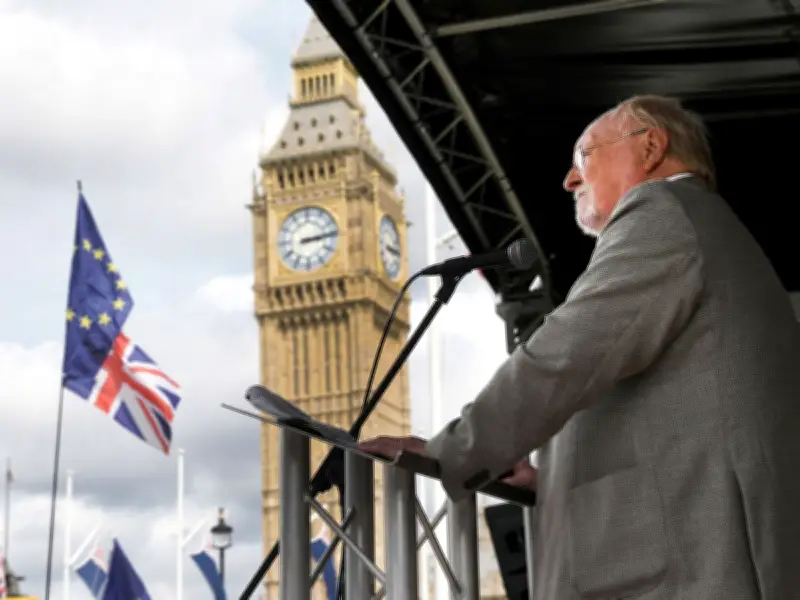
Former Labour leader Neil Kinnock, who also served as a European Commission Vice President, has written for The Mirror arguing that the case for rejoining the European Union is patriotic, as the 10th anniversary of the Brexit referendum approaches.
Kinnock states that ten years on from the referendum and five years after fully leaving the EU and the Single Market, Brexit is an unmitigated and absolute disaster. He cites independent analyses showing a 6-8% loss to the national economy, a resulting reduction of £60 to £80 billion in revenues for vital services, a 12-18% loss to investment, a 15% drop in goods trade, and employment and productivity down by 3 or 4%. This inflicts an average cost of £3,000 on each adult in the UK, or £6,000 for a normal household.
Public Awareness and Political Corrosion
According to Kinnock, opinion polls show that the British people know this is happening not because they read boring details but because they feel it in their pockets, purses, jobs, lost opportunities, and impediments to travel. He adds that Brexit is politically corrosive: the UK was a significant partner in deciding the condition and development of the continent, but now it is merely an applicant for engagement in security alliances.

Kinnock notes that all this has occurred while Trump's tariffs and tantrums shred the global economy and international law, Putin wages criminal war against the West, China's advance is colossal, and the Middle East is in bloody turmoil. He argues that the UK is trapped in Brexit, and if anything else was doing this much harm, the demand to escape would be irresistible.
The Call for Rejoining
The former Labour leader insists that the British people must demand release from this damage. He describes the call for rejoining as practical and patriotic, coming from people whose families and future are in the UK to stay. Kinnock welcomes the Labour Government's efforts to re-align with the EU and rebuild trust, but says it is essential to turn those steps into a great stride of progress towards a future of prosperity and security.
He acknowledges the need to respect the past but emphasises that as a democracy, the UK must never be ruled by the past. This is especially true when new generations of young people were not part of the decision ten years ago. They deserve the right to decide their future when two realities are starkly clear: first, only superpowers now have stand-alone power, and for middle countries like the UK, modern economy, security, and sovereignty have to be collective because nations are interdependent; second, the UK's special relationship has to be with its neighbours in Europe.
The Path to Rejoining
Kinnock argues that rejoining the European Union is the only option, as there can be no pick-and-mix partial membership. European laws will not allow it, and the UK cannot accept a continual future of all pay and no say. He acknowledges that joining again will be arduous, must be mutually advantageous, will take time, must be democratically sealed by election or referendum, and must involve overcoming the glib liars who brought Brexit and still generate distrust.
He concludes that it must be done because of proximity to the markets of Europe with 450 million consumers, and because of shared history and destiny with the rest of Europe. To those who say it is too difficult, time-consuming, or subject to impediments, Kinnock responds that the UK cannot be stuck forever in a limbo where nothing moves forward. He warns that in a changing world, standing still means going backwards, and the slide must be stopped.
After ten years of cost and decline, Kinnock asserts that the case for rejoining the Union is imperative, realistic, patriotic, and vital for Britain to advance again.