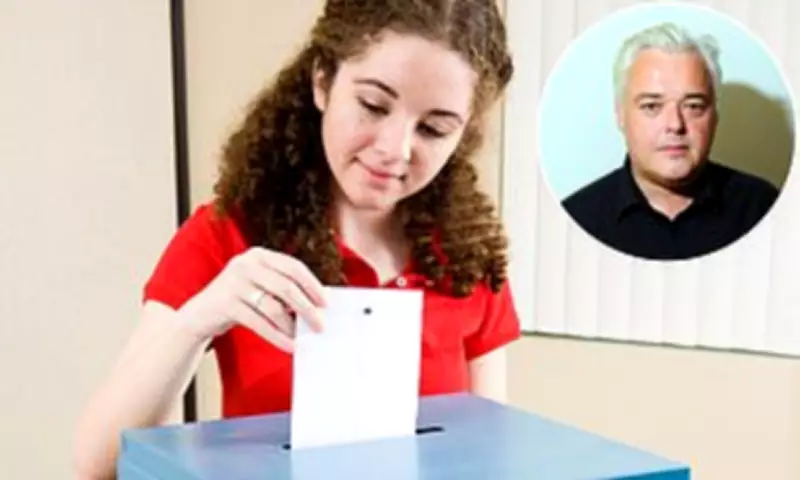
Generational Divide: A Father's Struggle as His Teenage Son Embraces Politics
It begins with a simple question over dinner: "How do you plan to vote this year?" and escalates into his declaration that I am "pretty much a fascist." I retort, "Well, you're an idiot." We sit in silence for a minute or two, until my phone pings. My son smirks as I open a text message he sent from just two feet away—another meme featuring his current political hero, which I promptly delete. "You can't handle the truth," he says, laughing.
The Rise of Youth Voting in Scotland
His 18-year-old sister has navigated life with little interest in politics, but my son, who turned 16 last December, is more than compensating. Thanks to legislation passed at Holyrood in 2015, 16 and 17-year-old Scots have the right to vote in Scottish parliament and council elections. This year, he fully intends to exercise that right. While I am comprehensively disappointed by the policies and performance of all major parties and unlikely to vote in May's Holyrood election, he is excitedly planning his first trip to the ballot box.
When the SNP government announced plans to allow 16 and 17-year-olds to vote in the 2014 independence referendum, then First Minister Alex Salmond emphasized the importance of encouraging young people to engage with politics, claiming that extending the franchise strengthened democracy. However, this rhetoric concealed a cynical truth: the primary reason for granting the vote to under-18s was that the vast majority supported independence. Of the 3.6 million Scots who voted in the referendum, 100,000 were aged 16 or 17, with polls suggesting over two-thirds backed the SNP's plan to break up the United Kingdom.

Shifting Perspectives on Youth Engagement
Initially, I opposed extending voting rights, especially for such opportunistic reasons, but my position soon changed. If we expect 16 and 17-year-olds to pay tax and national insurance, the argument against excluding them from the democratic process weakens. Beyond taxation, shouldn't we want young people to engage with issues that affect their lives? My son's passion for politics has developed rapidly; a year ago, I struggled to interest him in elections, but now he is becoming obsessed.
He recently asked, "Would you rather have Nigel Farage or Zack Polanski as Prime Minister?" I replied that the thought of either the Reform or Green leader at the top of government fills me with dread. When pressed to choose, I refused, leading him to conclude I must be a Farage supporter. As a 56-year-old man, he believes I am doomed to slide further to the right.
The Evolution of Political Awareness
In the 1980s, being interested in politics marked you as an oddball. While it was obligatory to Tippex a CND logo onto your schoolbag, actively engaging with issues required a commitment few were willing to make. Before 24-hour news and the internet, seeking detailed political analysis took effort. Today, my son—like the rest of us—cannot escape politics, and it comes at us fast.
Political parties, particularly insurgent groups like Reform and the Greens, have excelled at using social media to spread their messages. For my son, this means a steady diet of TikTok clips where politicians and activists reach huge audiences of young people disinterested in traditional media. This double-edged sword allows youth to engage with national and international debates shaping their world, but social media is a fraught and angry place where nuance dies.
The Dangers of Partisan Media
Young people are not merely invited to support positions; they are asked to condemn opponents, who are portrayed as malign rather than merely wrong. I react to my son's updates with caution, pleased he is interested in power structures but anxious about how he learns political debate. I resist dismissing his discoveries, yet without filters, the news he consumes is not always true. Lies from populist leaders go viral before truth can respond.

Discussions about conflicts, such as in the Middle East, are especially difficult. He is bombarded with highly partisan, often nonsensical "analysis" of Israel's actions, alongside pro-Palestinian activism presented as fact. Intriguingly, mainstream politicians like Prime Minister Sir Keir Starmer and opposition leader Kemi Badenoch barely register on his radar; he sees them as part of a dying generation, out of touch and irrelevant. Even the SNP, which granted him voting rights at 16, seems of another age.
A Father's Dilemma and a Son's Choice
As an opinionated loudmouth by profession, I instinctively want to tear apart his political positions, listing why I believe he is wrong and I am right. But that is not my job—he has the right to be wrong. During a viewing of "Jurassic World Rebirth," he reveals his voting plan for May: one party in the constituency and another on the regional list. Horrified, I say nothing about his choices. Instead, I explain that the constituency party won't win, and the list party doesn't need his vote. I advise swapping the votes to maximize effectiveness: "If you're going to be a fool, at least be an effective one."
"You're a fascist," he says. "You're an idiot," I reply. I restart the movie, and my phone pings. "Aren't you going to read that?" he asks, continuing our cycle of generational clash and digital disruption.