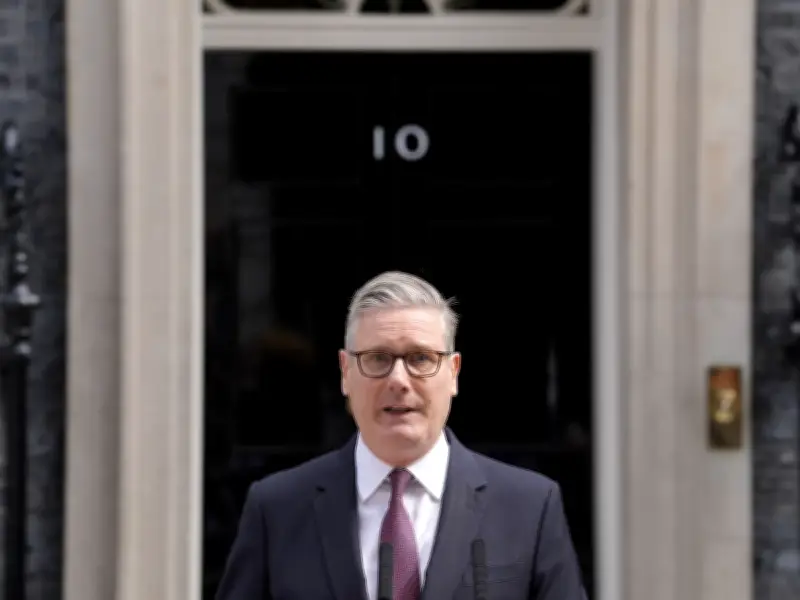
Sir Keir Starmer has announced his resignation as Labour Party leader and prime minister, setting the stage for a leadership contest to determine the next occupant of 10 Downing Street. The prime minister stepped out of Number 10 at 9:30 a.m. on Monday, accompanied by his wife Victoria, to deliver a statement to the nation. Arriving to cheers and applause from his team, he described becoming prime minister as the "proudest moment of my life."
Departure Statement and Legacy
Starmer reflected on the changes within the Labour Party since he became leader six years ago, citing the "ripping out the poison of antisemitism, restoring trust on the economy, defence, and national security, and becoming a party that once again stood proudly with, not against, our national flag." Announcing his resignation, he said: "The question my party is asking now is whether I am best placed to lead us into the next general election. I have heard the answer of my parliamentary party to that question, and I accept that answer with good grace. Every decision I have taken has been about putting the country I love first. That is why I will resign as leader of the Labour Party."
Transition Timeline
Starmer will remain prime minister until a new leader is selected. He has asked Labour's governing body to set out a timetable for his replacement, beginning on July 9 and concluding by the summer recess, to "ensure a new leader is in place before Parliament returns in September." He pledged to do all he can to ensure an "orderly" transition of power.

Leadership Contest Rules
Only Labour MPs are eligible to stand in the leadership contest. Candidates must secure nominations from 20 percent of sitting Labour MPs—a total of 81—submitted in writing to party general secretary Hollie Ridley.
Potential Candidates
Andy Burnham, now an MP after winning the Makerfield by-election, has made his intention to stand clear. Former health secretary Wes Streeting has insisted he has the required 81 nominations. Al Carns, a former Royal Marines officer who quit as armed forces minister over defence funding and treatment of Northern Ireland veterans, has hinted at a bid, but his nomination tally remains uncertain.
Voting Procedure
If only one candidate secures the required nominations, they become leader without a contest. Otherwise, voting is open to Labour Party members and affiliated trade union supporters under a one-person-one-vote system. Eligible voters rank candidates in order of preference. The winner is the first to secure over 50 percent of the vote; if no candidate achieves this, the last-place candidate is eliminated, and votes are redistributed. This process repeats until a winner emerges.