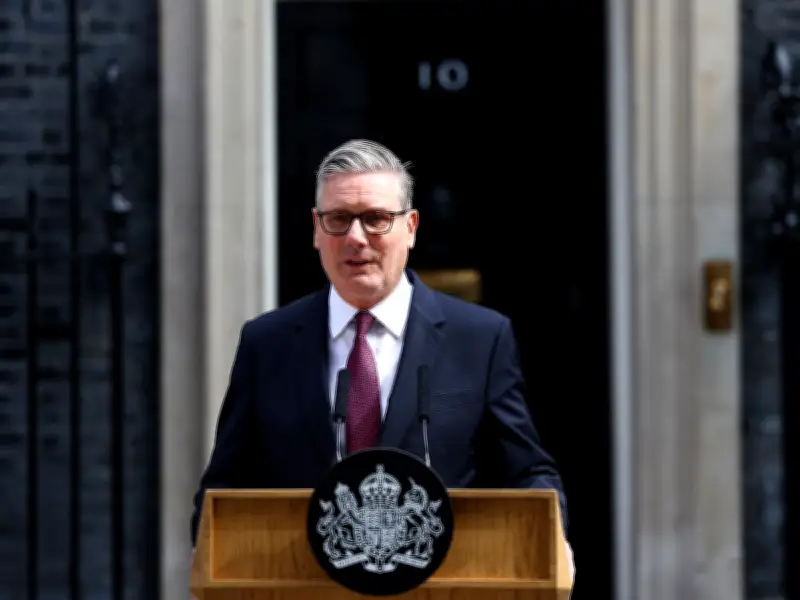
Sir Keir Starmer has announced his resignation as Prime Minister, effective immediately, in a historic statement outside 10 Downing Street on June 22. The move comes just three days after Andy Burnham was elected MP for Makerfield, widely seen as a precursor to a leadership bid.
Starmer's Legacy and Resignation Speech
Addressing staff and supporters, Starmer reflected on six years as Labour leader and two as Prime Minister since 2024. He described leading Labour from 'political, financial and moral bankruptcy' to a landslide general election victory, but acknowledged that 'questions are being asked' about his leadership. 'I have heard the answer of my parliamentary party, and I accept that answer with good grace,' he said, confirming his resignation as party leader.
Orderly Transition and Royal Notification
Starmer confirmed he had informed His Majesty the King of his decision earlier that morning. He emphasized his commitment to an 'orderly transition' of power, stating, 'Every decision I’ve taken has been about putting the country I love first.' The resignation paves the way for a leadership contest, with Andy Burnham, the newly elected MP for Makerfield, expected to be a frontrunner.

Political Context and Next Steps
Burnham's election on June 19 was seen as a catalyst for Starmer's departure. The former Greater Manchester Mayor now returns to Parliament, positioning himself for a potential leadership challenge. Starmer's resignation marks the end of a tumultuous period for Labour, which he rebuilt from opposition to government after 14 years in the wilderness.