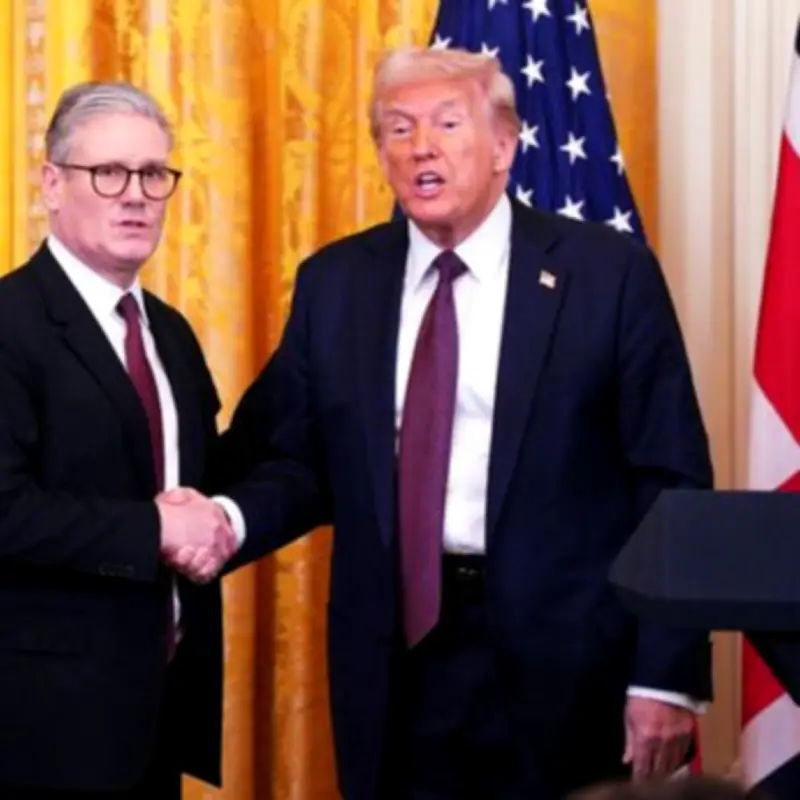
Sir Keir Starmer and Donald Trump have had a rocky relationship since the US President returned to the White House in 2025, with flare-ups over Iran, energy, and immigration culminating in Starmer's resignation in June 2026.
Initial Honeymoon Turns Sour
Initially, the two leaders appeared to have forged a respectful friendship when Trump took office in January 2025. However, within a year, the 'bromance' was over, with Starmer taking an emboldened stand against Washington amid repeated White House barbs. Despite early praise for his conciliatory approach, Starmer faced challenges from the outset, including Trump's tariffs and criticism of NATO.
Key Flashpoints
Trump imposed tariffs on imported goods and renewed criticism of NATO, prompting Starmer to increase UK defence funding by cutting overseas aid. Starmer also sought to smooth relations by presenting Trump with a handwritten note from the King inviting him for a second state visit. However, Trump made clear his administration would take a different direction, joining Russia, North Korea, and Iran at the UN to vote against a resolution condemning Moscow's aggression in Ukraine.

Trump branded Ukraine's President Volodymyr Zelensky a 'dictator' and suggested Kyiv started the war, culminating in an Oval Office clash. In response, Starmer formed the 'Coalition of the Willing' of European leaders to establish a peacekeeping force for Ukraine, signalling a shift away from overreliance on the US.
Energy and Immigration Disputes
Trump intervened in UK domestic issues, urging Starmer to exploit North Sea oil and 'drill baby drill', while Starmer's government ruled out new oil and gas licences. Trump also opposed wind turbines, accusing Starmer of 'windmilling the country to death'. On immigration, Trump suggested Starmer use the military to tackle small boats and branded UK policies 'insane', claiming the country was being 'invaded'. Trump also criticised the appointment of Peter Mandelson as US ambassador.
Trade and Diplomacy
Despite tensions, Starmer secured a trade deal with Trump in 2025, though Trump hinted it could be changed. Trump's state visit to the UK in September provided a 'diplomatic honeymoon', and the AUKUS nuclear submarine deal survived a Pentagon review. However, tensions escalated over Iran, with Starmer refusing to give the US free rein in using British military bases for bombing campaigns. Limited permission was granted for defensive actions after Tehran launched retaliatory strikes, leading Trump to brand Starmer weak and 'no Winston Churchill'.
Fallout and Resignation
The White House signalled it could review its position on the Falkland Islands and threatened tariffs if the UK did not drop its digital services tax. Trump also flip-flopped over the Chagos Islands deal, ultimately hardening his stance against it. The King's state visit to the US led to the removal of tariffs on Scotch whisky, but cooler relations persisted. At the G7 summit in June 2026, Trump made a parting salvo, declaring Starmer would resign and accusing him of failing on immigration and energy. Starmer subsequently fell on his sword, ending his premiership.