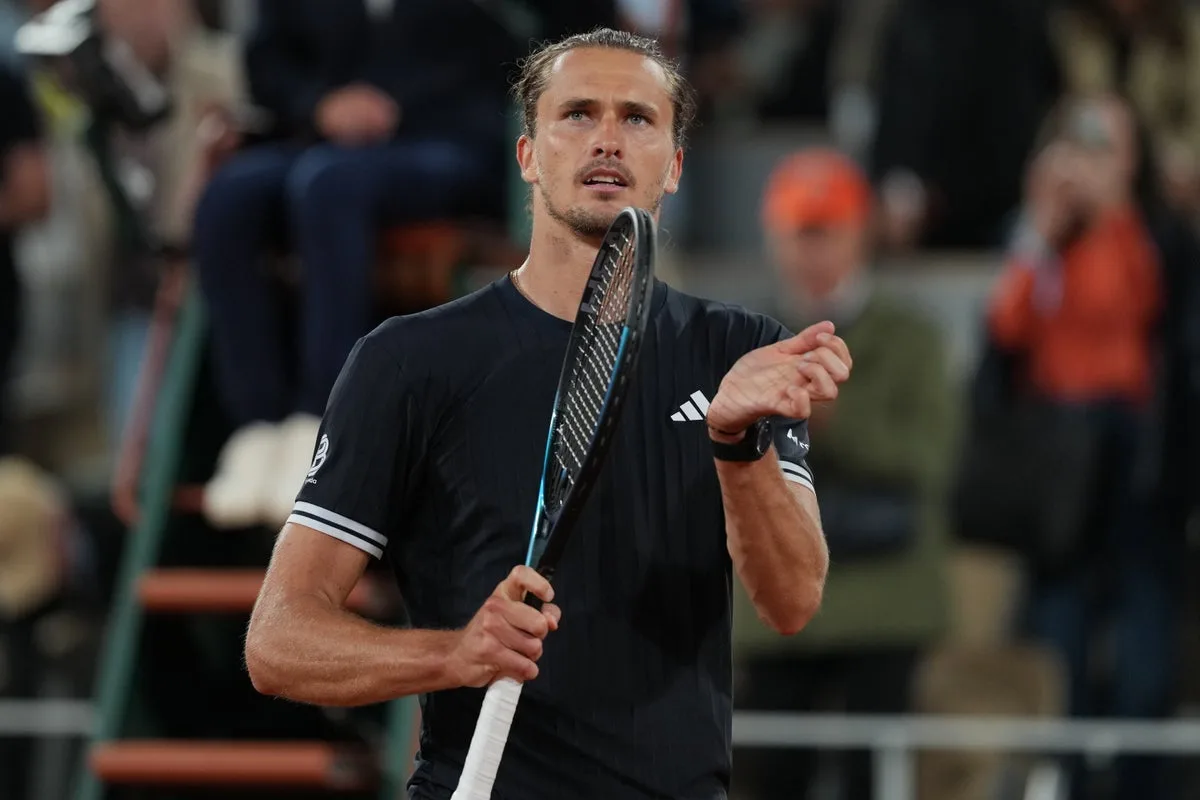
As Alexander Zverev stood at the microphone after his quarter-final win over Rafael Jodar, a violent hailstorm hammered the Court Philippe-Chatrier roof, interrupting his victory speech. For many observers, it felt like the heavens opening in disapproval of one of the most controversial players on the tour.
Two things can be true at once: Zverev, a three-time slam finalist and the favourite to lift the Coupe des Mousquetaires, is the most complete player left in the draw and the best player of the last decade never to have won a major. But his presence makes a significant section of tennis observers distinctly uncomfortable.
In October 2023, Zverev was issued a penalty order and fined almost £400,000 for committing bodily harm against a previous girlfriend, Brenda Patea, after she accused him of strangling her. Under German law, a penalty order is issued when a trial is considered unnecessary, for example, when there is compelling evidence. Zverev reached an out-of-court settlement with Patea in June 2024, meaning proceedings were discontinued without a finding or admission of guilt. He has repeatedly denied the allegations.

He had previously been accused of domestic abuse by another former girlfriend, Olga Sharypova. Zverev denied the claims, and a 15-month ATP investigation found insufficient evidence to substantiate them. However, the ATP failed to follow its own rules allowing provisional suspension of players charged under criminal or civil law. The ATP only introduced a safeguarding policy in December 2025, more than five years after the allegations first surfaced.
Zverev’s processional run through the draw has dampened enthusiasm for some observers. He spent less than 12 hours on court to reach the last four, compared to 16 for his semi-final opponent Jakub Mensik. He faces world No 14 Flavio Cobolli in the final. The phrase “anyone but Zverev” has become common on social media, reflecting glum resignation.