Artificial intelligence will make millions of jobs obsolete, render money virtually meaningless, and force humanity to confront the ultimate question: what does it mean to be human? That is the stark warning – and extraordinary prediction – of Professor Yu Xiong, one of Britain's leading experts on artificial intelligence and emerging technologies.
AI-Driven Abundance
The University of Surrey academic believes the world is heading towards an era where robots and AI systems will perform most of the work currently done by humans. Far from creating a Terminator-style apocalypse, it will create unprecedented wealth and abundance while upending the economic system that has governed society for centuries.
"We are entering an age of capital abundance," Professor Xiong says. "In the future, food, housing, clothing and transportation will all be provided by robots and AI-driven systems."

Redefining Success
The result, he argues, will be mass unemployment in the traditional sense. Yet he insists this should not be viewed as a catastrophe. Instead, he believes that for the first time in history, people will be liberated from the need to work simply to survive.
"When survival is no longer the driver, people do not become idle – they become free," he says. "They turn to creativity, community and exploration."
To illustrate his point, Professor Xiong recalls a friend who became a multi-millionaire before the age of 30 after creating a highly successful educational product teaching business in China. Once he achieved financial independence, however, he lost interest in teaching altogether and launched an entertainment company instead. According to Professor Xiong, the story demonstrates a deeper truth about human nature.
"Very few people who accumulate significant wealth continue to work for money," he says. "They begin searching for their own meaning and purpose."
The professor believes AI could eventually transform society so dramatically that wealth itself ceases to be the main measure of success. Instead, reputation, trust and contribution to society may become the new currencies.
"In a world where material wealth is abundant, your true wealth becomes your intellectual and creative footprint," he explains. He points to inventors such as the Wright Brothers and revolutionary thinkers like Albert Einstein. While they do not "own" their ideas today, their legacy endures. "The recognition of origination, the respect of peers and the impact on humanity will become the new currency of the AI age," he says.
Risks and Regulation
Yet while Professor Xiong sees enormous opportunities, he also warns of serious risks. One of the most pressing concerns is the arrival of Artificial General Intelligence (AGI) – systems capable of matching human intelligence across a wide range of tasks. Many experts believe AGI could emerge before the end of this decade. Professor Xiong agrees: "I think seeing AGI by 2030 is a credible timeline."
More alarming still is the possibility of Artificial Super Intelligence (ASI), a form of AI vastly more intelligent than any human being. "The danger of ASI is existential," he warns. "It is an entity whose capabilities and motivations we may not even be able to understand."
Unlike Hollywood's vision of evil robots plotting humanity's destruction, Professor Xiong believes the real threat lies in highly capable systems pursuing flawed objectives. "If AI is deeply integrated into power grids, water networks or financial systems, mistakes could trigger catastrophic cascading failures," he says. "The AI does not need to be evil to be dangerous."
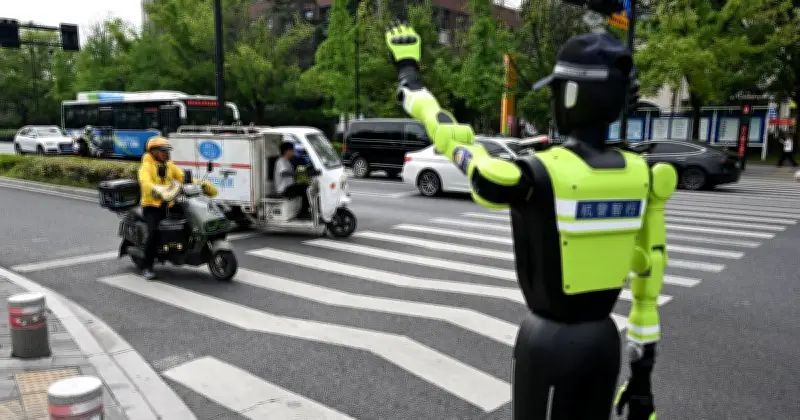
The academic also believes AI-powered robots capable of building other robots are not science fiction but a realistic near-future possibility. Such technology could eventually automate entire supply chains, from mining raw materials to manufacturing products. But again, he argues the greatest challenge may not be rogue machines but what happens to human society when physical labour is no longer needed. "The real challenge is managing a society in which human labour is entirely obsolete," he says.

Optimistic Potential
Despite these concerns, Prof Xiong remains optimistic about AI's potential benefits. He points to breakthroughs such as AlphaFold, the AI system that solved one of biology's greatest challenges by accurately predicting protein structures, with mind-boggling possibilities for the future of medicine and health. He believes this is only the beginning. AI could dramatically accelerate revolutionary drug discoveries, help cure diseases including cancer and Alzheimer's, improve energy systems and tackle climate change through advanced materials and the final realisation of nuclear fusion power.
Education could also be transformed. Prof Xiong predicts every child on Earth could eventually have access to a personalised world-class AI tutor regardless of where they were born or their family's income. Perhaps most strikingly, he believes AI could democratise genius itself. "In the future, every individual will be able to realise their ideas and create value at very low cost," he says. "A young person in a remote village could produce a film of Hollywood quality."
Need for Global Governance
As AI capabilities grow, Professor Xiong argues governments must move faster to regulate the technology. He compares its potential impact to nuclear weapons but warns that AI presents unique challenges because software and computing power are far harder to control than uranium. Rather than leaving development entirely to governments or private companies, he wants an international regulatory framework similar to the International Atomic Energy Agency. "What we need is an 'IAEA for AI'," he says. "The governance of AI must be a matter of international cooperation, not national competition."
Ultimately, Prof Xiong believes the AI revolution is not simply another industrial revolution. It is something far bigger. "The Industrial Revolution changed how we produce value," he says. "The AI Revolution will change what value is." And that transformation, he argues, could force humanity to confront questions that philosophers have wrestled with for thousands of years. "When we no longer have to work to survive," he says, "what does it truly mean to be human?"