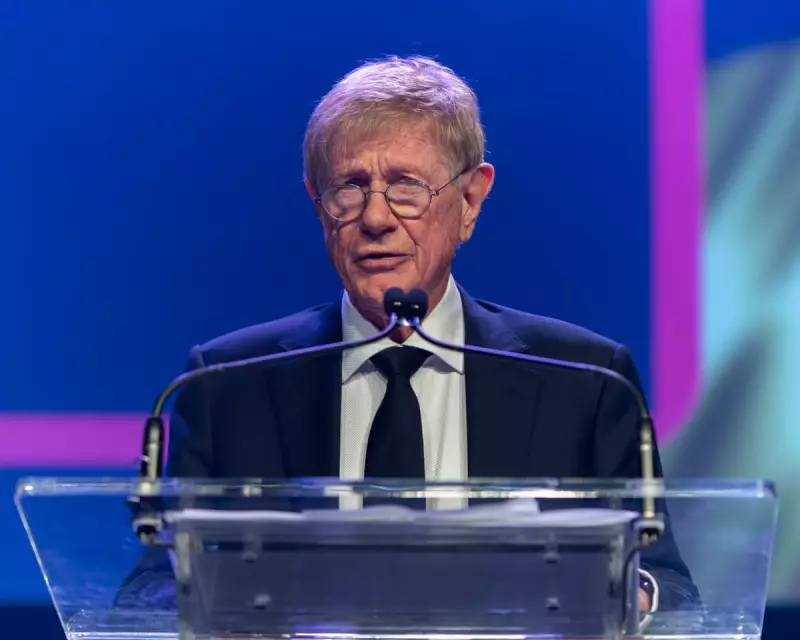
In a speech that reverberated through Australia's media landscape, veteran journalist Kerry O'Brien used his Walkley Award acceptance to deliver a thunderous warning about the existential threat facing Australian journalism.
A Watershed Moment for Australian Media
On November 28, 2025, at the prestigious Walkley Awards ceremony, O'Brien received the Walkley Award for Journalistic Leadership and transformed what is typically a celebratory occasion into a powerful call to action. The 78-year-old broadcasting legend, whose career spans more than five decades, issued what many are calling his most significant public statement on the state of Australian media.
O'Brien didn't mince words when describing the current media environment, portraying it as being in a state of profound crisis that threatens the very foundations of Australian democracy. His address highlighted how the convergence of technological disruption, corporate consolidation, and political pressure has created what he termed a "perfect storm" for quality journalism.

The Core Threats Identified
The veteran journalist pinpointed several critical issues endangering Australian media. Media concentration emerged as a primary concern, with O'Brien warning that the increasing dominance of few players has severely compromised media diversity. He particularly emphasized how this concentration threatens the essential role of journalism as democracy's watchdog.
O'Brien also highlighted the financial pressures that have led to widespread newsroom cuts and the closure of numerous regional publications. This economic reality, he argued, has created news deserts across the country, leaving many communities without adequate local coverage or accountability journalism.
Perhaps most alarmingly, O'Brien addressed the growing political interference and attempts to undermine press freedom. He spoke passionately about the need for journalists to resist both overt pressure and subtle forms of censorship that can compromise editorial independence.
Consequences for Australian Democracy
The implications of this media crisis extend far beyond newsrooms, O'Brien stressed. He painted a stark picture of what happens when public interest journalism diminishes: corruption goes unchecked, powerful interests operate without scrutiny, and citizens make democratic decisions without adequate information.
O'Brien particularly emphasized the threat to regional communities, where the loss of local newspapers has created information vacuums that harm community cohesion and democratic participation. He warned that without urgent intervention, this trend would only accelerate, leaving more Australians in news blackspots.
The veteran journalist also addressed the challenge of misinformation in the digital age, arguing that the decline of trusted news sources has created fertile ground for false narratives to flourish. He stressed that quality journalism provides the antidote to this problem, but only if it can survive current pressures.
A Call to Action for the Industry and Public
O'Brien's address wasn't merely diagnostic; it contained a powerful call to action for multiple stakeholders. He urged media organisations to reinvest in quality journalism and resist the temptation to prioritize profits over public service. Journalists themselves were encouraged to maintain their ethical standards and commitment to truth-telling despite increasing pressures.
Perhaps most importantly, O'Brien called on the Australian public to recognize the value of quality journalism and support it through subscriptions and engagement. He argued that saving Australian media requires a collective effort that extends beyond newsrooms to include citizens, policymakers, and civil society.
The speech concluded with a note of cautious optimism, suggesting that while the challenges are significant, the Australian media tradition contains the resilience and talent needed to navigate this crisis. However, O'Brien stressed that this would require urgent and concerted action from all quarters.

As the applause faded in the Walkley Awards venue, it was clear that O'Brien had delivered more than an acceptance speech; he had issued a defining statement about one of Australia's most pressing democratic challenges that will likely shape media policy discussions for years to come.