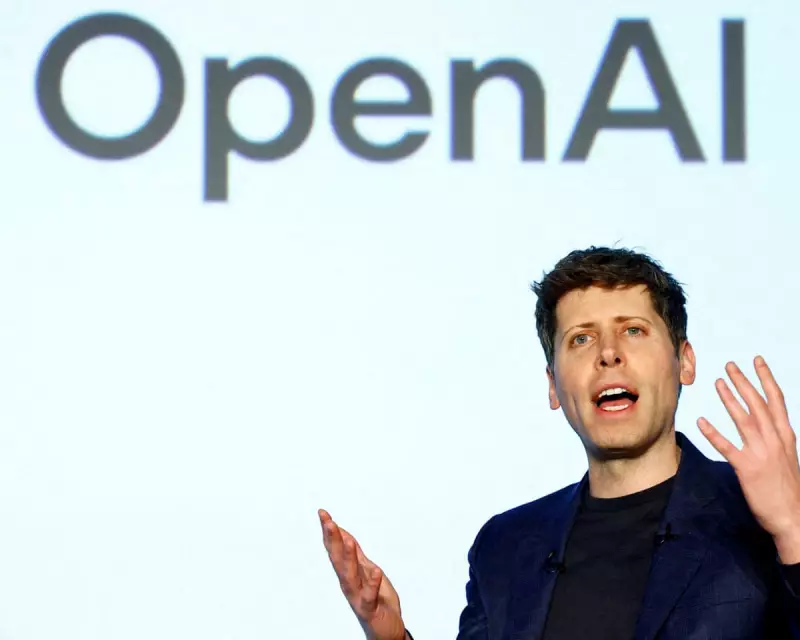
Sam Altman's OpenAI is placing one of the biggest bets in technology history, committing to a staggering $1.4 trillion in computing costs over the next eight years despite currently generating annual revenues of just $13 billion. This enormous financial gap has become central to growing investor concerns about potential bubble warnings in the artificial intelligence sector.
The Compute Conundrum
The company behind the revolutionary ChatGPT requires vast computing power - known as 'compute' in industry jargon - to train its models, produce responses and develop increasingly sophisticated AI systems. The scale of this commitment, covering AI infrastructure including chips and servers, dramatically overshadows OpenAI's current financial performance and has triggered market nerves about sustainable AI spending.
Recent weeks have seen this financial challenge come into sharp focus. During a podcast appearance, Altman engaged in an awkward exchange with Brad Gerstner of Altimeter Capital, a major investor in OpenAI. Gerstner described the company's ability to finance over $1 trillion in compute costs while generating $13 billion annually as a critical question "hanging over the market."
Altman's response was telling: "First of all, we're doing well more revenue than that. Second of all, Brad if you want to sell your shares, I'll find you a buyer. I just, enough."
Controversial Financing Suggestions
The situation intensified last week when OpenAI's chief financial officer, Sarah Friar, suggested that the US government might underwrite some chip spending. She told the Wall Street Journal that an "ecosystem of banks, private equity, maybe even governmental" support could "really drop the cost of financing."
This prompted immediate clarification efforts from OpenAI leadership. Friar took to LinkedIn to deny the company was seeking a federal backstop, while Altman used X to state clearly: "we do not have or want government guarantees for OpenAI datacenters." He emphasised that taxpayers should not bail out companies making "bad business decisions," though he suggested the government might build its own AI infrastructure or provide loan guarantees for domestic chip manufacturing.
According to tech analyst Benedict Evans, OpenAI faces a fundamental challenge compared to established tech giants. "OpenAI wants to match or exceed the infrastructure - the tens and hundreds of billions of dollars of compute - of the big platform companies. But those companies have cashflows from their existing businesses to pay for this and OpenAI does not, so it's trying to bootstrap its way into the club," he explains.
The Revenue Roadmap
Altman remains bullish about OpenAI's financial prospects. He revealed that the company expects to end the year above $20 billion in annualised revenue, with ambitions to reach "hundreds of billion[s]" by 2030. This confidence stems from several revenue streams currently being developed.
The company's income primarily comes from ChatGPT subscriptions for consumers, accounting for 75% of current revenue. Additional sources include corporate versions of ChatGPT, allowing businesses to build their own products using OpenAI's models, and potential future hardware devices developed in collaboration with iPhone designer Sir Jony Ive.
OpenAI boasts an impressive user base of 800 million weekly users and 1 million business customers. The company reports accelerating business adoption, with its corporate ChatGPT version growing nine times year-over-year, attracting customers from banking, life sciences and manufacturing sectors.
However, scepticism remains. Carl Benedikt Frey, author of How Progress Ends and associate professor of AI and work at Oxford University, points to recent US Census Bureau data showing declining AI adoption among companies with more than 250 employees. "We do not know exactly why, but it does suggest that we are at a stage where some users and businesses feel they are not quite getting what they hoped for from AI so far," Frey notes.
He adds that without "new breakthroughs" at the company, he doesn't see OpenAI reaching $100 billion in revenue by 2027 - a figure Altman has previously hinted at.
While OpenAI disputes reports of specific financial losses - including claims of $8 billion lost in the first half of the year and about $12 billion in the third quarter - it doesn't deny operating at a loss or provide alternative figures.
Altman acknowledges the gamble might not pay off, writing on X: "But of course we could be wrong, and the market - not the government - will deal with it if we are." The success of OpenAI's ambitious bet now depends on whether future demand for AI products and ever-improving models can justify one of the largest financial commitments in technology history.