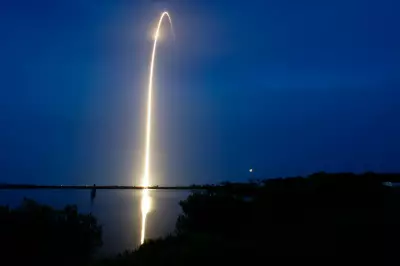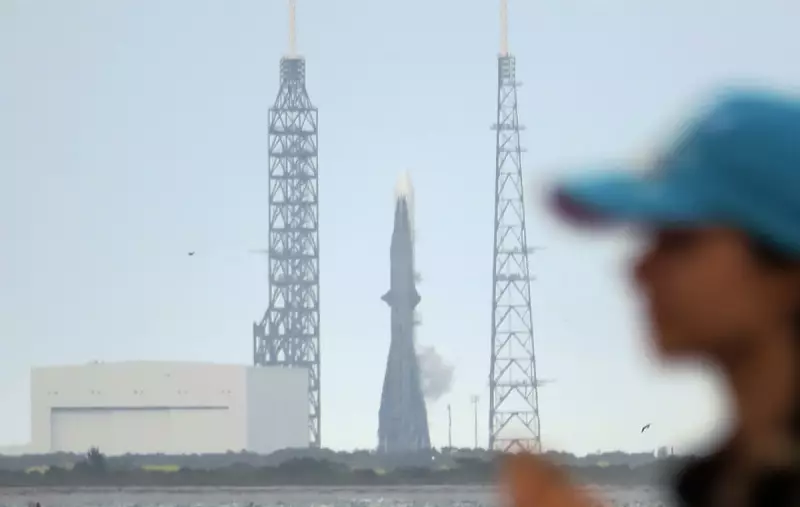
Jeff Bezos's space venture, Blue Origin, was forced to stand down on Sunday, postponing the highly anticipated second launch of its massive New Glenn rocket. The decision was made due to a combination of unfavourable weather conditions and a technical issue at the Cape Canaveral Space Force Station in Florida.
Launch Scrub Details and New Window
Rain and an unspecified ground system problem initially delayed the countdown. As the 88-minute launch window progressed, managers were ultimately thwarted by cumulus cloud cover, leaving no choice but to scrub the mission. The company announced late Sunday that, in coordination with the Federal Aviation Administration (FAA), it is now targeting a new launch attempt as soon as Wednesday. The planned launch window is between 2:50 pm and 4:17 pm Eastern Standard Time.
This postponement comes at a critical time, as the FAA is set to limit commercial rocket launches starting Monday to relieve airspace congestion during the US federal government shutdown. Blue Origin's successful coordination to secure a new slot so quickly highlights the mission's priority.
The Mission: Mars and Booster Recovery
When it does launch, the primary task for the 98-meter (322-foot) New Glenn rocket is to carry NASA's Escapade mission to Mars. This involves sending twin spacecraft to study the Red Planet's climate history, a crucial step towards potential future human exploration.
Equally important for Blue Origin is the secondary objective: achieving a successful booster recovery. The company's inaugural flight in January was marked a success as its payload reached orbit, but the first-stage booster, designed to be reusable, was lost during its descent and failed to land on its Atlantic platform. A successful recovery in this second effort would represent a significant technical breakthrough, placing Blue Origin closer to its rival, SpaceX, which has already mastered this feat.
The Intensifying Commercial Space Race
The scrubbed launch underscores the intensifying competition between the space companies of billionaires Jeff Bezos and Elon Musk. This commercial space race has recently escalated, particularly as NASA has opened bids for its planned moon mission, having expressed concerns that SpaceX was falling behind schedule.
Mason Peck, an aeronautics professor at Cornell University and former NASA chief technologist, commented on this rivalry. He stated that increased competition between SpaceX and Blue Origin could "expand our options with regard to launch". "More launches means more ideas in space," Peck said. "It can't be a bad thing to have Blue Origin, even trailing behind."
The pressure on commercial spaceflight is further amplified by the current US administration's push for NASA to accelerate its progress in sending a crewed mission to the Moon, amid a parallel space race with China.