Mysterious Interstellar Visitor Defies All Expectations
Astonishing new observations of the interstellar visitor known as 3I/ATLAS have revealed it has mysteriously decreased in size, shedding an incredible 13 percent of its material just weeks before its scheduled closest approach to Earth. NASA confirmed this dramatic change occurred after the object passed near the sun last month, raising profound questions about its true nature.
Evidence Mounts for Artificial Origin
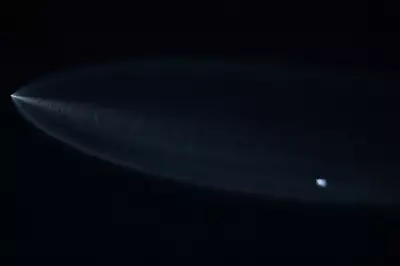
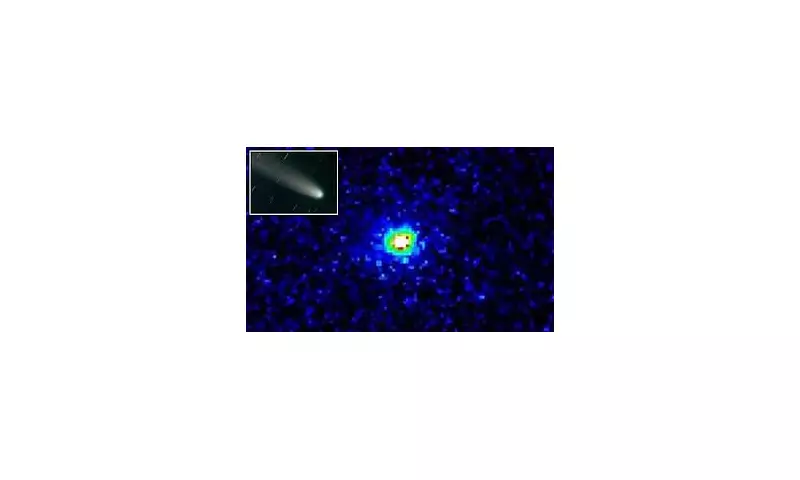
Harvard Professor Avi Loeb, who has been studying the enigmatic object since summer, directly connected this sudden shrinkage to noticeable alterations in 3I/ATLAS's trajectory. "For a typical comet, this should have resulted in a massive coma with dust and gas that would have been pushed by the solar radiation pressure and the solar wind to the shape of a typical cometary tail pointing away from the sun," Professor Loeb stated in a recent blog post. "No such tail is visible in the new images from November 5, 2025."
The mystery deepened when a ground-based telescope in Chile detected a mysterious increase in the object's speed. NASA's Jet Propulsion Laboratory confirmed that 3I/ATLAS's unexpected movement couldn't be explained by the sun's gravity alone. Instead, the object clearly pulled away from the sun and turned on its side – behaviour Professor Loeb suggests indicates possible course correction by a rocket engine.
Defying Conventional Space Science
For a normal comet to execute such a manoeuvre naturally, it would need to lose significantly more than 13 percent of its mass, creating enormous jets of gas that would act like a rocket engine. However, this process would leave clear evidence – approximately five billion tons of gas and dust trailing through space. NASA's latest images from November 5 show absolutely no signs of such activity, despite the confirmed shrinkage and altered course.
Professor Loeb, who leads the Galileo Project dedicated to searching for extraterrestrial life, has identified at least ten unusual characteristics suggesting 3I/ATLAS might be artificially constructed. These anomalies include:
- A strange 'anti-tail' pointing toward the sun during its closest approach
- Repeated colour changes, including turning blue near the sun
- Minimal physical changes since July Hubble Telescope observations
Unlike typical comets that turn red as their surfaces absorb blue light, 3I/ATLAS displayed the opposite behaviour. Professor Loeb emphasised that while science might explain one strange occurrence, the probability of ten simultaneous anomalies is astronomically low, strongly pointing toward intelligent design.
Despite these compelling observations, NASA and hundreds of researchers maintain that 3I/ATLAS is simply an unusual comet from outside our solar system. The interstellar object will make its closest approach to Earth on December 19, 2025 – just six weeks from now – potentially providing more answers to this cosmic mystery.