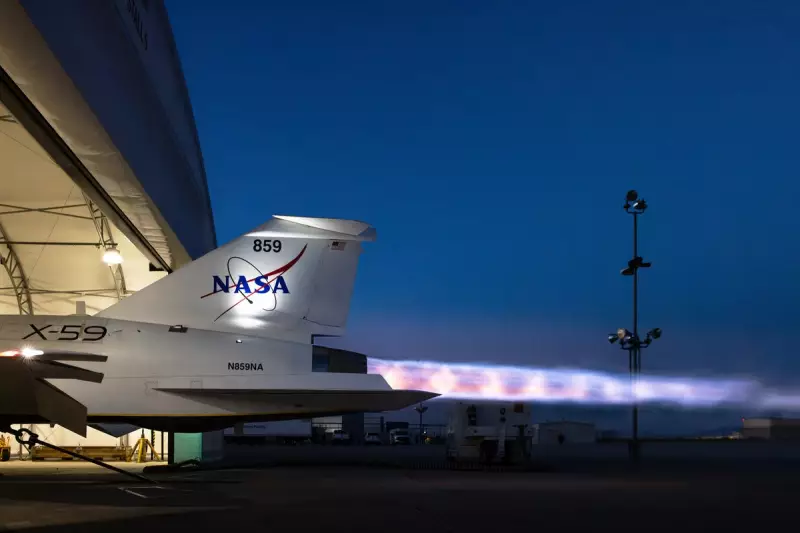
In a landmark achievement for aviation history, NASA and Lockheed Martin have successfully launched their revolutionary X-59 quiet supersonic aircraft into the skies above California. The groundbreaking test flight marks a crucial step toward transforming air travel as we know it.
A New Era for Supersonic Travel
The X-59 took off from Lockheed Martin's Skunk Works facility in Palmdale, California, embarking on a mission that could eventually make commercial supersonic flight over land a reality. This represents the first major breakthrough in supersonic technology since the retirement of Concorde in 2003.
What makes this aircraft truly revolutionary is its ability to fly faster than sound while producing significantly reduced sonic booms. Instead of the window-rattling explosions typically associated with breaking the sound barrier, the X-59 creates what engineers describe as mere "sonic thumps" - about as loud as a car door closing nearby.
Technical Marvel Takes to the Skies
The unique design features of the X-59 include:
- An extraordinary elongated nose measuring 38 feet
- Strategically positioned cockpit that provides limited forward visibility
- Advanced aerodynamics that shape shock waves to reduce noise
- State-of-the-art quiet supersonic technology
During this initial flight, pilots focused on basic systems checks and aircraft handling rather than testing supersonic capabilities. Future flights will progressively push the boundaries toward breaking the sound barrier safely.
The Road to Quieter Supersonic Flight
NASA's ambitious Quesst mission aims to collect data that could persuade regulators to reconsider current bans on supersonic flight over land. The next phase involves the X-59 flying over selected US communities to gather public response to the quieter sonic signature.
This research could fundamentally change aviation regulations, potentially opening the door for new commercial supersonic aircraft that connect cities in half the current flight time without disturbing people on the ground.
The successful maiden flight represents years of collaboration between NASA's aeronautical experts and Lockheed Martin's legendary Skunk Works division, known for developing some of the world's most advanced aircraft.
What This Means for Future Travel
If the technology proves successful and gains regulatory approval, we could see:
- Dramatically reduced flight times across continents
- New commercial supersonic aircraft development
- Revitalised interest in advanced aviation technology
- Potential for same-day transatlantic business travel
The X-59 programme demonstrates NASA's continued commitment to advancing aeronautical research that could transform how we experience air travel in the coming decades.