In an unprecedented move highlighting the growing need for international cooperation in space, the space agencies of the United States and China have worked together to prevent their satellites from colliding. This rare instance of collaboration comes as the low-Earth orbit becomes increasingly crowded with thousands of new satellites.
A Historic Manoeuvre
The significant event was revealed by Alvin Drew, the director for NASA’s space sustainability programme, at the International Astronautical Congress in Sydney. He described the moment as a cause for celebration.
"We had a bit of a celebration because, for the first time, the Chinese National Space Agency reached out to us and said, 'We see a conjunction amongst our satellites. We recommend you hold still. We'll do the manoeuvre,'" Mr Drew explained. This marked the first time such direct coordination had ever taken place between the two space powers.
The Growing Congestion in Orbit
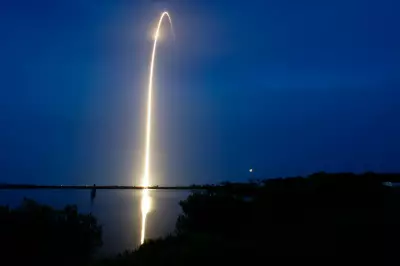
This collaboration is set against a backdrop of a rapidly filling orbital environment. Both China and the US are launching a strikingly high number of satellites, often in the form of megaconstellations, which significantly increases the risk of collisions.
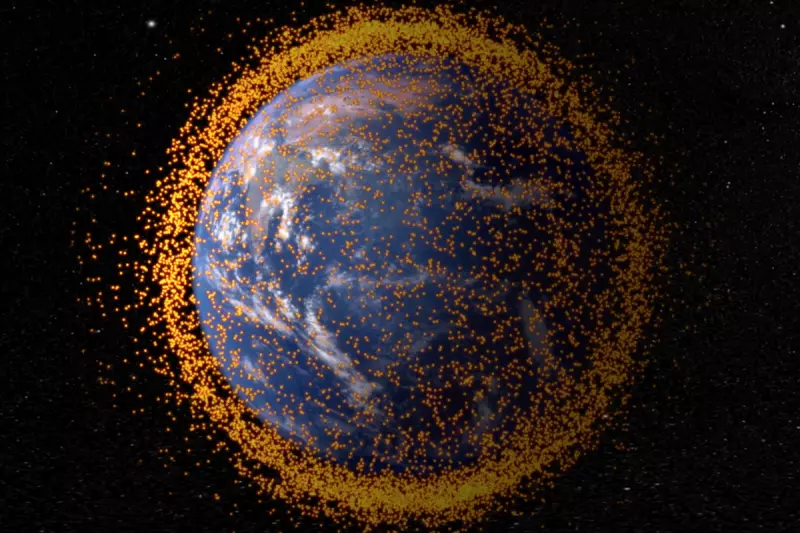
Currently, there are 12,955 active satellites in low-Earth orbit. A dominant portion of these, over 66 per cent or 8,500 satellites, belong to SpaceX's Starlink constellation. Elon Musk, the chief of SpaceX, has ambitions to expand this network to over 42,000 satellites, with current permission to launch 12,000.
Not to be outdone, China has announced a plan to have over 10,000 satellites orbiting the Earth by the 2030s.
The space around our planet is not just crowded with active craft. It is estimated that low-Earth orbit is populated by:
- Approximately 200,000 objects measuring between 1cm and 10cm.
- Tens of thousands of objects larger than 10cm.
Implications and Growing Risks
Despite the clear and present danger, sustained collaboration between American and Chinese space agencies remains uncommon. This is largely due to the 2011 Wolf Amendment, which restricts NASA from using federal funds for bilateral cooperation with China without specific approval from the US Congress.
The risks of inaction are severe and growing daily. The threat extends beyond satellite collisions to the safety of astronauts. Just this week, three astronauts were stranded on China’s Tiangong space station after their return capsule was struck by what is suspected to be space junk.
Furthermore, astronomers are raising the alarm about the impact on scientific research. Legal expert David Koplow warned that the proliferation of satellites is creating a major problem for observatories. As they pass overhead, they block views of distant cosmic phenomena, leaving obliterating white streaks on imagery and obscuring vital data.
In a recent publication in the Vanderbilt Journal of Transnational Law, Koplow wrote that with tens of thousands of new satellites and associated debris being launched, "the dangers of congestion, collisions, and interference will soar accordingly."