

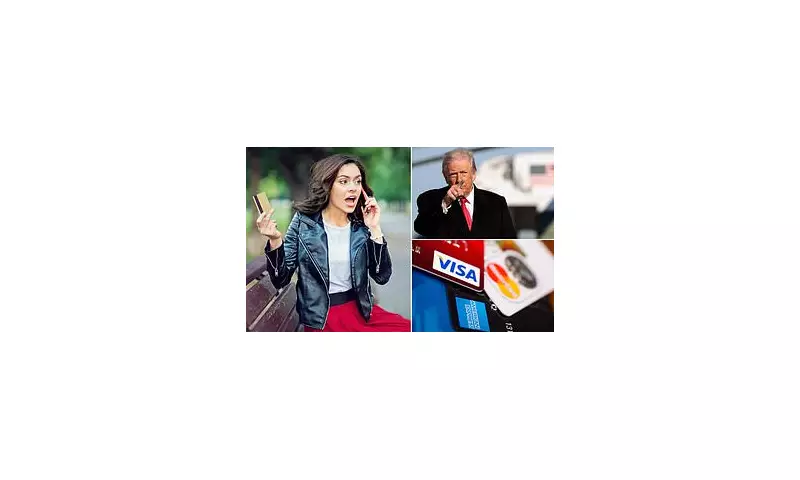
America's largest financial institutions are mounting a fierce rebellion against a proposal from former President Donald Trump to impose a strict limit on credit card interest rates, cautioning the plan risks cutting off vital credit lines for countless US citizens.
Banking Giants Unite in Opposition
Following an initial warning from JPMorgan Chase on Tuesday, rivals including Citigroup and Wells Fargo have swiftly joined the counter-offensive. They contend that capping annual percentage rates (APR) at around 10 percent would make it commercially unviable to offer cards broadly. Trump has framed the suggested one-year cap as a central plank of a wider affordability agenda, alleging lenders are 'ripping off' Americans with rates that frequently sit between 20 and 30 percent.
However, executives argue the policy would produce the opposite of its intended effect. Jeremy Barnum, Chief Financial Officer of JPMorgan, stated lenders would likely respond by reducing the supply of credit to less affluent Americans rather than lowering its cost. 'Instead of lowering the price of credit, we’ll reduce the supply of credit — and that will be bad for everyone,' Barnum cautioned.

Warnings of Economic Contagion
Wells Fargo echoed this stark assessment on Wednesday. Its CFO, Mike Santomassimo, highlighted the 'significant negative impact on credit availability for a wide spectrum of people.' He further warned of the proposal's potential to hamper the broader US economy, suggesting a cap 'would have a negative impact on economic growth.'
This concern stems from the pivotal role of consumer spending, which is heavily supported by credit access. According to financial data firm Bankrate, credit cards facilitate roughly 70 percent of all retail payments in the United States, with the average APR currently near 19.6 percent—almost double the level Trump envisions.
On the same day, Mark Mason, CFO of Citigroup, reinforced the message, stating a cap would restrict credit ‘to those who need it most’ and potentially trigger a broader economic slowdown with 'unintended consequences on the consumer.'
How Credit Card Economics Would Fracture
The banking sector maintains that a government-mandated rate ceiling would fundamentally disrupt the credit card business model. The profitability of cards relies heavily on high interest charged on unpaid balances, which helps banks offset losses from fraud, customer defaults, and fund lucrative rewards programmes.
If lenders cannot charge interest sufficient to cover these risks, they may be forced to drastically curtail issuing new cards, reduce credit limits, or withdraw from serving higher-risk borrowers entirely. This comes amid an intense market battle where issuers like Chase and American Express are competing fiercely by adding premium perks—funded in part by interest income—and raising annual fees, with Amex's Platinum Card now costing $895.
Notably, one fintech firm is testing a different approach. Bilt, known for its no-fee rent payment card, launched three new products on Wednesday with introductory rates capped at 10 percent for the first year. Trump's proposal, however, would apply a blanket cap across the entire market. While figures like Senator Bernie Sanders have previously advocated similar 10 percent limits, no such federal cap exists in US law, and the banking industry is now signalling a determined legal and political fight should the plan advance.






