

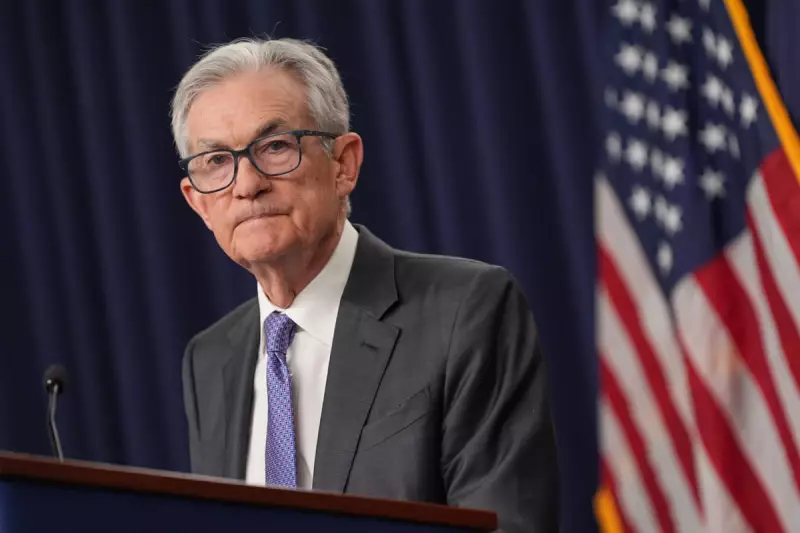
The US Federal Reserve has opted to maintain its current interest rate levels, resisting significant political pressure from the White House as Chair Jerome Powell faces a criminal investigation initiated by the Trump administration.
Fed Maintains Steady Course on Monetary Policy
Following its first rate-setting meeting of the year, the Federal Open Market Committee (FOMC) voted to pause its series of interest rate reductions. This decision leaves the benchmark federal funds rate within a range of 3.5% to 3.75%, a level established after three consecutive cuts during the autumn months.
The move represents a deliberate stance of caution from the central bank, which convenes only eight times annually to determine monetary policy. Economists widely regard the Fed's operational independence as a cornerstone of economic stability, a principle now under unprecedented strain.

Unprecedented Political Pressure on Central Bank
The Trump administration has mounted a sustained campaign urging the Fed to implement more aggressive rate cuts. President Donald Trump has publicly criticised the central bank's approach, claiming that maintaining higher rates costs the US economy hundreds of billions of dollars in potential growth.
These assertions have been accompanied by personal attacks directed at Chair Powell, whom Trump has labelled "stiff" and accused of insufficient action. The political pressure escalated dramatically when the Justice Department opened a criminal investigation into Powell's testimony regarding renovations at the Federal Reserve headquarters.
Criminal Investigation Targets Fed Chair
The investigation focuses on statements Powell made last summer concerning refurbishment projects at the central bank's offices, which have exceeded their initial budget. While the Trump administration alleges fraudulent conduct, Powell maintains the renovations were essential safety upgrades to ageing infrastructure.
In a remarkable public statement, Powell characterised the investigation as a "pretext," framing it as retaliation for the Fed's commitment to evidence-based policy making. "This is about whether the Fed will be able to continue to set interest rates based on evidence and economic conditions – or whether instead monetary policy will be directed by political pressure or intimidation," Powell declared.
Broader Implications for Economic Governance
The confrontation raises fundamental questions about the separation between monetary policy and political influence. Powell emphasised that the threat of criminal charges represents a consequence of the Federal Reserve prioritising its assessment of public interest over presidential preferences.
Despite the ongoing investigation and political tensions, the FOMC's decision reflects its current assessment that the economy is sufficiently positioned to allow for a period of observation. As Powell noted in December, "We're well positioned to wait and see how the economy evolves from here."
The situation continues to develop, with Powell scheduled to face media questions for the first time since the investigation was announced. The business community and some Republican lawmakers have expressed concern about the implications of this unprecedented challenge to central bank independence.






