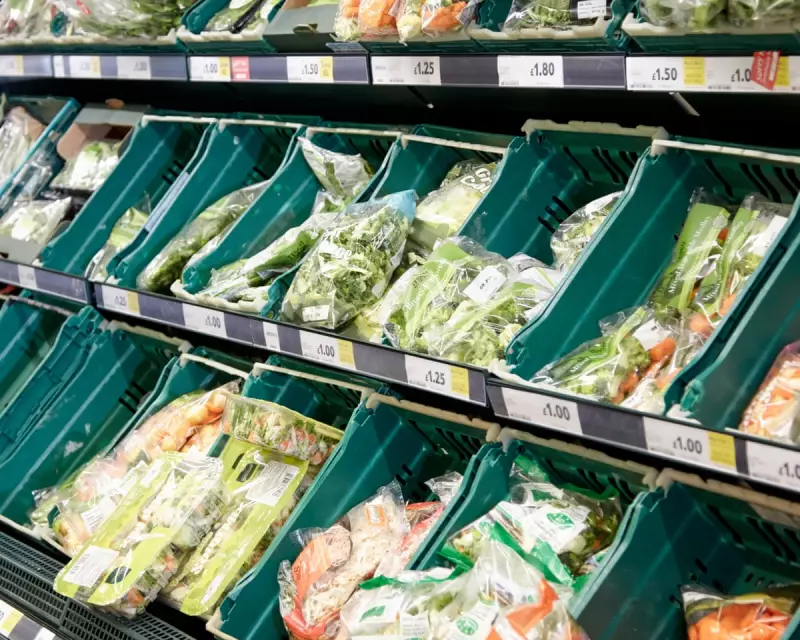
Fresh Food Inflation Accelerates to 4.4% as Retailers Point to Policy and Energy Costs
Fresh food inflation in the United Kingdom has risen significantly, reaching 4.4% year-on-year in January according to the latest data from the British Retail Consortium. This increase forms part of a broader uptick in shop price inflation, which climbed to 1.5% in January compared to the same month last year, a notable jump from the 0.7% rise recorded in December.
National Insurance and Energy Bills Drive Price Pressures
The British Retail Consortium, the leading trade body for UK retailers, has explicitly linked the surge in food prices to two major factors: escalating energy bills and the recent hike in employers' national insurance contributions implemented by Chancellor Rachel Reeves. The overall food price inflation rate increased to 3.9% year-on-year in January, up from 3.3% in December, as suppliers and supermarkets find it increasingly difficult to absorb these mounting costs.
Helen Dickinson, Chief Executive of the BRC, stated that the figures contradict any notion that inflation has peaked. "Shop price inflation jumped this month due to high business energy costs and the hike to national insurance continuing to feed through to prices," she explained. Dickinson highlighted that categories such as meat, fish, and fruit were particularly affected, suffering from weak supply chains coupled with stronger consumer demand.

Policy Impact on Employment Costs
The policy changes referenced include the increase in the employers' national insurance contribution rate from 13.8% to 15%, which took effect last April following Labour's return to power. Concurrently, the threshold for these contributions was reduced from £9,100 to £5,000 annually. Analysis conducted by the BRC indicates that, combined with a 6.7% rise in the national minimum wage, the cost to retailers of employing a full-time minimum wage worker increased by approximately 10%, with part-time workers seeing a 13% increase.
"It is a challenging time for households. Retailers do what they can to keep prices down in a competitive market, but thin margins and rising costs of government policy make it harder," Dickinson added, noting that these increased employment costs are now permeating throughout the entire food supply chain.
Broader Inflation Context and Consumer Behaviour
The BRC report adds to mounting evidence that inflation in the UK is proving more persistent than many forecasters had anticipated. Official statistics released recently showed inflation rose to 3.4% in December, up from 3.2% in November. Furthermore, a key business survey, the S&P Global Purchasing Managers' Index, indicated that UK companies reported a sharp rise in costs during January.
In contrast to food, inflation for non-food items remained far lower, at 0.3% in the year to January. This represents an increase from the 0.6% price decline seen in December. Mike Watkins, Head of Retailer and Business Insight at NIQ, which assists in compiling the BRC report, suggested that cautious consumer spending is likely to force retailers to extend discounting periods beyond the typical winter sales.
"Shoppers are always cautious about spending in January and this will not be helped by the continuation of inflation. However, there are still savings to be made at the checkout as some non-food retailers are still on promotion and many food retailers continue to reduce prices on everyday items as a way to drive footfall," Watkins commented.
Government and Industry Perspectives
A Treasury spokesperson defended the government's fiscal decisions, stating they were "fair and necessary" to deliver on priorities such as cutting waiting lists, reducing debt and borrowing, and lowering the cost of living. The spokesperson acknowledged the struggle with rising prices but pointed to the Bank of England's forecast that food price inflation peaked in December and is expected to decline.

The BRC also emphasised that "spiralling energy charges" for retailers and suppliers, partly driven by increasing green levies, are contributing to higher retail prices. The organisation's monthly price monitor confirms that the current shop price inflation rate of 1.5% is not only higher than economists' expectations of 0.7% but also exceeds the three-month average of 0.9%.