

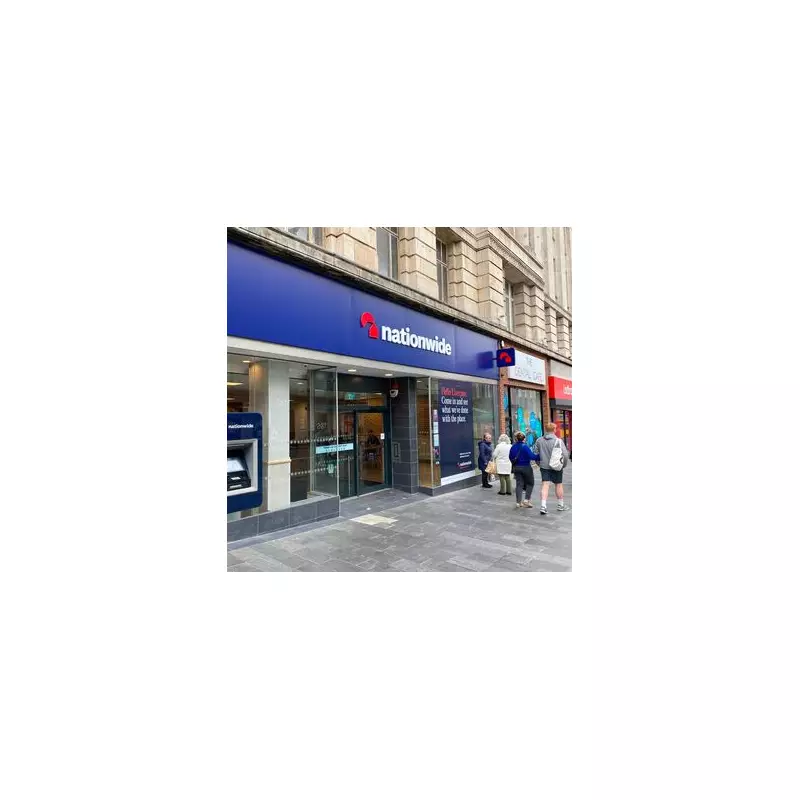
Nationwide Implements Widespread Savings Rate Cuts Following Bank of England Move
The Nationwide Building Society has confirmed a significant overhaul of its savings account interest rates, with reductions set to impact a total of 37 separate products. This unpopular decision will see many savers earning less on their deposits, with the changes scheduled to commence from Tuesday, February 10.
The move directly follows the Bank of England's recent reduction of the base rate, which has sent ripples throughout the entire savings market. In response, Nationwide has announced it will be trimming rates across a broad spectrum of its offerings, with cuts ranging between 0.15% and 0.25%.
Which Accounts Are Affected by the Rate Reductions?
The sweeping changes will touch multiple categories of savings products, leaving few customer groups untouched. Regular savings accounts, children's savings vehicles, limited access accounts, and instant access products are all included in the overhaul.

Regular savers will witness falling rates on key products such as the Help to Buy ISA and the Continue to Save account. Parents and guardians are also set to bear the brunt, with several children's products including Child Trust Funds, Junior ISAs, and Future Saver accounts being affected.
Limited access savers are among the hardest hit, with rate cuts applied to Triple Access, Single Access, and Limited Access savings accounts and ISAs. Instant access customers are not exempt either, with numerous Flex Instant Saver issues and Reward Saver accounts experiencing reduced returns. Some Flex Saver and Flex ISA products will also yield less interest across various balance tiers.
A Detailed Breakdown of the Rate Changes
The following table outlines the specific adjustments Nationwide is making across its product range:
- Regular Savings: Help to Buy ISA (2.50% to 2.25%, -0.25%), Continue to Save (1.75% to 1.50%, -0.25%)
- Children’s Savings: Child Trust Fund / Smart Junior ISA (3.05% to 2.80%, -0.25%), Branch Future Saver / Future Saver (3.05% to 2.80%, -0.25%)
- Limited Access: 1 Year Triple Access Online Saver / ISA (3.50% to 3.30%, -0.20%), Branch Triple Access (1.55% to 1.30%, -0.25%), Reward Single Access ISA / Saver (3.05% to 2.80%, -0.25%), Branch Limited Access / e-Savings Plus (1.50% to 1.25%, -0.25%)
- Instant Access: Flex Instant Saver – Issues 2-6 (2.50% to 2.30%, -0.20%), Branch Reward Saver / ISA (3.00% to 2.75%, -0.25%), Branch Flex Saver / ISA (1.25%-1.45% to 1.15%-1.25%, -0.20%), Branch Easy Access / Instant Access (1.10%-1.35% to 1.10%-1.20%, -0.15%), Branch Instant Access Maturity (1.45% to 1.25%, -0.20%)
Context: The Bank of England's Decision and a Silver Lining
This action from Nationwide comes in the wake of the Bank of England's Monetary Policy Committee (MPC) voting in December to reduce the base rate from 4% to 3.75%. Governor Andrew Bailey stated that the UK has "passed the recent peak in inflation," allowing for this cut—the fourth of the year. He cautioned, however, that "with every cut we make, how much further we go becomes a closer call." Economists suggest the pace of future cuts may slow as inflation approaches the Bank's 2% target.
Nationwide has emphasised that most of its rate reductions are smaller than the full Bank of England cut. In a minor piece of positive news for some savers, the building society has announced an increase in the rate on its five-year Fixed Rate Bond and ISA to 4%, offering a better return for customers prepared to lock away their funds for a longer period.
Accounts That Will Remain Unchanged
Not all products are facing reductions. Nationwide has confirmed that several accounts will see no changes to their current interest rates. Savers holding the following can breathe a sigh of relief:
- Flex Regular Saver
- FlexOne Saver
- Start to Save products
- Smart Instant Access & SmartSaver
- Smart Limited Access
The building society is now encouraging all its savings customers to scrutinise their account details carefully to determine if they hold any of the 36 products directly impacted by these forthcoming reductions.






