

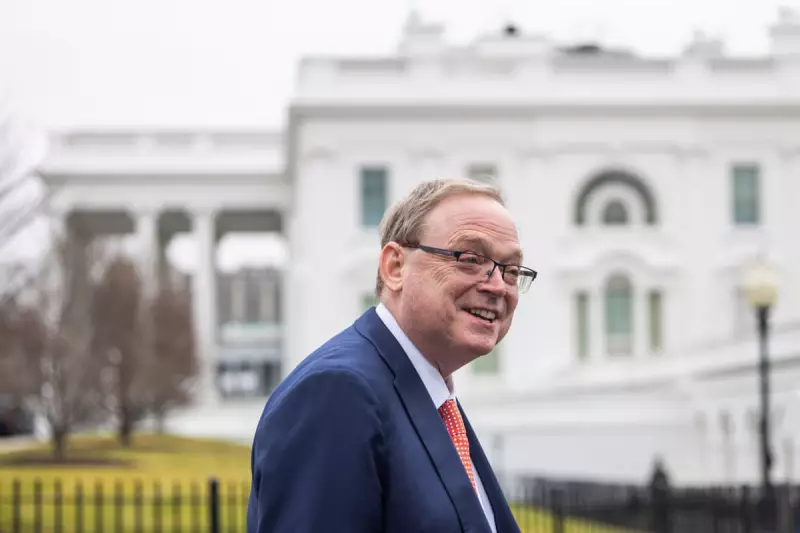
A senior economic adviser to Donald Trump has publicly downplayed a criminal investigation into Federal Reserve Chair Jerome Powell, suggesting he expects to find "nothing to see" in a case that has sparked a fierce debate over the central bank's independence.
Escalation of an Extraordinary Attack
The controversy erupted after it was revealed the US Department of Justice had served the Federal Reserve with grand jury subpoenas. This move marks a significant escalation in what critics describe as an unprecedented attack on the institution's operational autonomy. The investigation focuses on the multi-billion dollar renovation of the Fed's historic Washington headquarters.
For months, allies of former President Trump accused the Fed of mishandling the costly project, with Trump himself repeatedly threatening legal action. The justice department is now examining the renovation and, crucially, whether Jerome Powell lied to Congress last summer about its scope during his testimony.

Powell has previously asserted that the administration was targeting him because the Fed resisted Trump's persistent demands for aggressive interest rate cuts. US Attorney for the District of Columbia, Jeanine Pirro, has stated her office makes decisions "based on the merits," while Trump claimed he was unaware of the investigation before it became public.
Hassett's Public Defence of Powell
Weighing into the fray is Kevin Hassett, the chair of Trump's National Economic Council and a leading contender to replace Powell when his term expires in May. In a Friday morning interview with Fox Business Network, Hassett offered a nuanced but telling perspective.
While expressing a wish that the Fed had been "more transparent" in its congressional testimony regarding the renovations, Hassett directly supported Powell's character and explanation. "Jay's a good man – I expect that there's nothing to see here, that the cost overruns were related to things like asbestos, as he says," Hassett stated.
He emphasised a broader principle of governmental transparency, applying it to both the White House and the Fed. "All corners of government... we have a responsibility to the American people to be transparent," he said, adding that, as Fed chair, he would "insist on transparency."
Global Condemnation and a Defence of Independence
The justice department's probe has triggered a powerful backlash from the global financial community. In a rare show of unity, every living former Fed chair condemned the investigation this week. They warned that similar prosecutorial attacks in other nations had led to "highly negative consequences" for living costs and argued such tactics have "no place" in the United States.
Adding to the chorus of support, central banks around the world issued a joint statement expressing "full solidarity" with Chair Powell. This international reaction underscores the deep concern that political interference could undermine the credibility of monetary policy.
When questioned about potentially succeeding Powell, Hassett framed his approach around dual commitments. He said he would accept the role with a pledge to uphold both "independence and transparency," noting that transparency was an area where "the Fed could have done better in the past." His comments attempt to navigate the delicate balance between criticising the Fed's communication while defending its leader and core principle of political independence amidst a heated legal and political battle.






