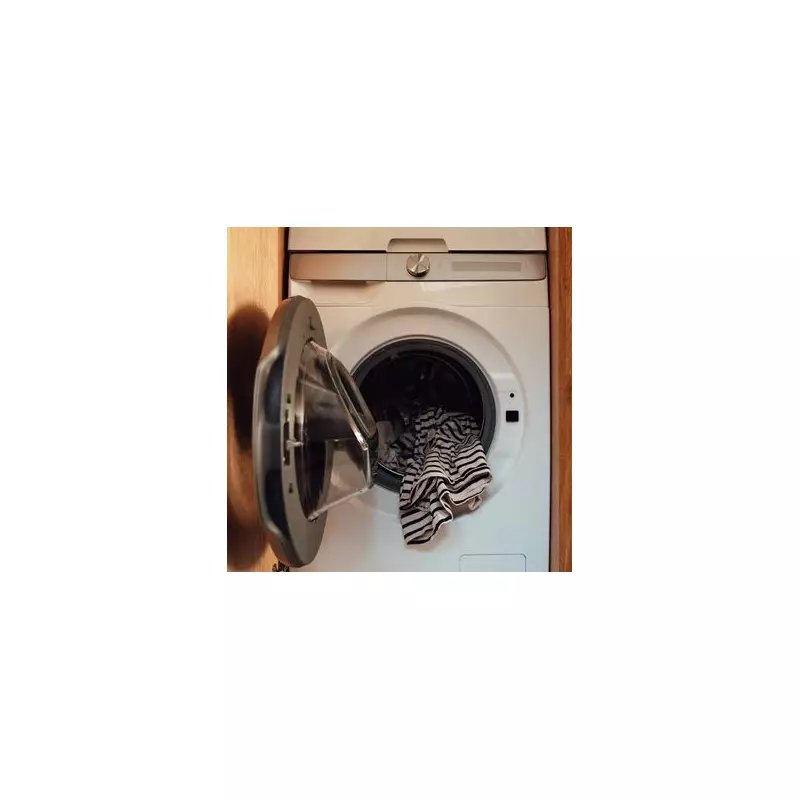
Proper care is essential for any washing machine, regardless of its age, to ensure it runs efficiently and leaves your laundry fresh. While many know about the need for a regular service wash to clean the drum, one expert highlights a frequently overlooked problem area: the detergent drawer.
The Hidden Cause of Detergent Drawer Mould
If you've spotted unsightly black mould in your machine's detergent compartment, a popular laundry product could be the culprit. An appliance service and repair expert from Melbourne, Australia, has identified fabric softener as a primary cause of this build-up.
During a recent client visit, the expert noticed mould was only present on one specific side of the drawer. He asked the homeowner if she used fabric softener, to which she replied, "Sometimes, not very often." This observation was later shared on TikTok, where the expert stated, "No matter what you buy, softeners are not good even the sensitive [ones]." He demonstrated that the mould was exclusively in the softener bay, even after removing the drawer for inspection.

The 35p Supermarket Swap That Works 'Like Magic'
Instead of using chemical-laden softeners, which he claims are "full of chemicals, causes mould in the machine and irritation on the skin," the expert recommends a simple, budget-friendly alternative. His solution is to use white vinegar, which costs around 35p at supermarkets like Aldi and Tesco.
First, he advises thoroughly cleaning the drawer to remove any residual softener. Then, he suggests filling the softener compartment with white vinegar instead. To add a pleasant fragrance, he recommends adding "two drops of essential oil," such as lavender or rose, to the vinegar. "Works like magic," he said. "Your clothes will become soft. They will have a bit of smell from the essential oil."
Addressing Corrosion Concerns
Some viewers raised concerns online that the acidity of vinegar could damage rubber seals or cause metal parts in the machine to rust. The expert addressed these worries in a follow-up video, acknowledging that scientifically, prolonged exposure could cause corrosion.
However, he explained that when vinegar is added to the detergent drawer, it is quickly dispensed into the drum during the wash cycle. "You would need to soak it in white vinegar to cause corrosion," he clarified. "When you put it in the washing machine it [goes] through the plastics, through the rubbers and it gets washed out by the end of the cycle. It's not going to sit in the machine." He did caution that allowing vinegar to come into direct, prolonged contact with the machine's external 'body' could cause damage over time.
As with any appliance hack, it is always recommended to check your washing machine's manual first for specific cleaning and maintenance guidelines to keep your appliance in optimal working order.