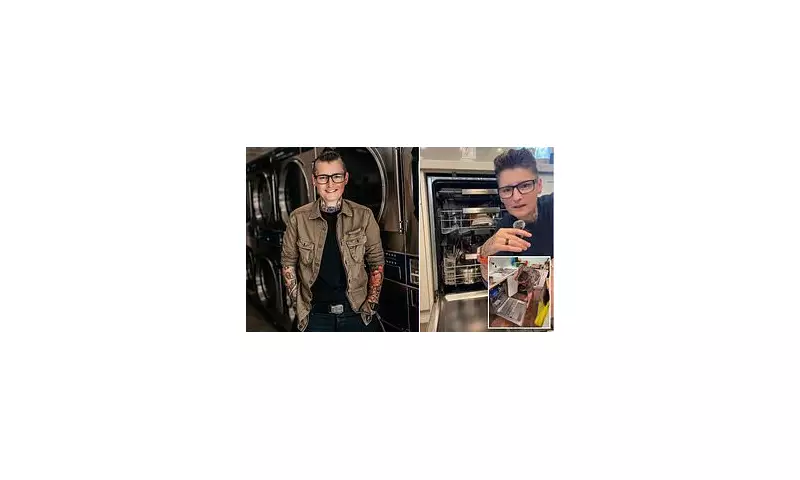
A Canadian content creator has sparked widespread amusement and recognition after highlighting a seemingly universal, yet peculiar, habit in Australian households. The focus of her observation? The persistent presence of energy efficiency stickers on whitegoods like dishwashers, fridges, and washing machines, long after they have been purchased and installed.
The Sticker Phenomenon Spotted Online
Melissa Pateras, a washing appliance expert known online as @laundrytok, made the discovery after watching a video by Australian comedian Christian Hull. While critiquing his dishwasher stacking technique, she was struck by something else entirely. The energy rating label was still prominently displayed on the front of his machine.
"My question is not about how you load your dishwasher," Melissa said in her response video. "It's about the sticker on the front. And I can always tell an Australian TikToker because of the appliance stickers."

These stickers, which use a star system and show estimated annual electricity consumption in kilowatt-hours, are designed to inform buyers at the point of sale. Yet, in Australia, they frequently become a permanent fixture.
A Household Mystery and Cultural Clash
Melissa, who is married to an Australian woman named Trace, shared that the sticker habit caused a minor domestic culture clash. She recounted that her wife never considered removing them, even finding the idea strange. "She also feels like maybe it's not allowed or a little illegal," Melissa laughed, noting that the first time she peeled one off, her wife "looked at me like I had keyed her car."
Her video, which called for an explanation, quickly went viral, attracting thousands of comments from Australians who were largely unaware the practice was unusual. Many expressed surprise, having never questioned why the stickers remained.
"As an Aussie, this is literally the first time I've ever been made to consider that those stickers aren't actually a fundamental part of the appliance like the door or the on button," one person wrote.
The Theories Behind the Habit
The online discussion unearthed several popular theories for why Australians are so attached to their appliance stickers:
- Resale Value: Many suggested it's ingrained to keep proof of the appliance's efficiency and specifications for a potential future sale. "I always thought we had to keep the sticker on just in case we ever sold it," one comment read.
- Removal Difficulties: A repeatedly cited reason was that the stickers are notoriously hard to remove cleanly. "They don't come off clean and it looks awful so we leave it on," explained another.
- Badge of Honour: Some saw the star rating as a point of pride. "Everyone gonna see how energy efficient I am," wrote one, while another joked it was motivation: "One day I’ll have a 6 star and then I know I've made it."
Others offered more humorous explanations, with one person claiming the sticker's condition correlated with the appliance's lifespan: "The sticker finally fell off and the washing machine broke five months later. Clearly the sticker is a lifespan indicator."
A Widespread, Unspoken Rule
Melissa Pateras is not the only one to recently notice this detail. Sydney-based creator Emily Gilmore also sparked a similar conversation, admitting in a video she had only just realised removing the sticker was optional. "Why did I think it was illegal to take it off? I'm baffled," she said.
The responses confirmed it was a widespread, unspoken national quirk, with New Zealanders also chiming in to say the same applies there. Many framed it simply as part of the culture, with one stating definitively: "It's Australian culture. Don't take it off."
Ultimately, the consensus leaned towards a mix of practicality and passive acceptance. The stickers stay because they serve a vague purpose, are difficult to remove, and, as many concluded, a whole sticker looks better than a half-torn, sticky residue. For overseas visitors, it may seem like clutter, but for many Australians, the humble energy rating sticker is an unquestioned part of the household landscape.