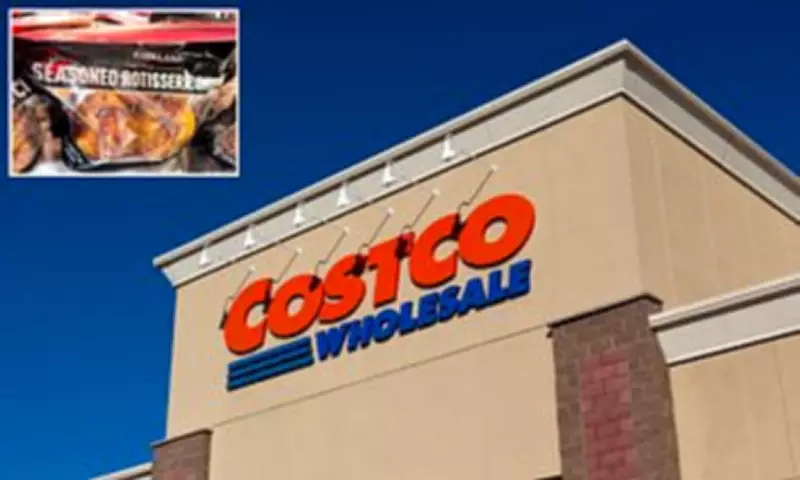
Costco Wholesale Corporation is confronting a significant legal challenge following allegations that it misled customers about the contents of its immensely popular rotisserie chicken. A class action lawsuit, filed in California on January 22, accuses the warehouse retail giant of falsely advertising its Kirkland Signature Seasoned Rotisserie Chicken as containing 'no preservatives'.
Allegations of Misleading Marketing
The legal complaint, brought by plaintiffs Bianca Johnston and Anastasia Chernov, asserts that the beloved chickens actually contain two added preservatives: carrageenan and sodium phosphate. The lawsuit claims that by quietly including these ingredients on the product label while prominently displaying 'No Preservatives' signage in stores and online, Costco has 'systemically cheated customers out of tens—if not hundreds—of millions of dollars'.
Ingredients Under Scrutiny
Carrageenan is commonly used in meats as a thickening agent, while sodium phosphate helps maintain moisture and enhance flavour. Although the Food and Drug Administration lists both ingredients as safe for consumption, scientific studies have raised concerns. Research indicates that carrageenan may cause gut irritation, while excessive sodium phosphate intake could potentially lead to kidney or heart complications.

Legal and Consumer Implications
The lawsuit alleges that Costco violated multiple consumer protection laws in both California and Washington State, where the company maintains its headquarters. According to the complaint, Johnston and Chernov purchased their chickens in 2024 and 2025 from California Costco stores and claim they would never have bought the product had the advertising been accurate or the price appropriately adjusted.
'Consumers reasonably rely on clear, prominent claims like 'No Preservatives,' especially when deciding what they and their families will eat,' stated the California Managing Partner of the Almeida Law Group. 'Costco's own ingredient list contradicts its marketing. That's unlawful, and it's unfair.'
Costco's Response and Actions
In response to the allegations, Costco issued a statement defending its use of the ingredients while acknowledging changes to its labelling practices. 'We use carrageenan and sodium phosphate to support moisture retention, texture, and product consistency during cooking. Both ingredients are approved by food safety authorities,' the company explained.
The retailer confirmed to USA TODAY that it has removed statements concerning preservatives from in-store signs and online presentations 'to maintain consistency among the labeling on our rotisserie chickens and the signs in our warehouses/online presentations.'
Broader Context and Customer Concerns
This legal action emerges against a backdrop of existing customer dissatisfaction regarding Costco's rotisserie chicken packaging. The product faced considerable scrutiny in 2024 when the company transitioned from hard plastic shell containers to plastic bags. Shoppers continue to complain about the bags' leak-prone design, which frequently results in meat juice spills in shopping trolleys, vehicles, and refrigerators.
The rotisserie chicken represents one of Costco's most successful products, with the warehouse retailer selling over 100 million units annually according to Chief Executive Ron Vachris, as cited by the Seattle Times. This popularity makes the accuracy of its labelling particularly significant for millions of consumers nationwide.
Plaintiffs' Objectives and Future Prospects
Johnston and Chernov are seeking several remedies through their lawsuit. They aim to compel Costco to cease misleading customers, provide refunds to affected consumers, and return profits allegedly gained through false advertising. Interestingly, both plaintiffs have expressed their hope to purchase the chickens in the future should they become genuinely preservative-free.
The Daily Mail has reached out to Costco for additional comment regarding the ongoing legal proceedings. As this case develops, it highlights important questions about food labelling accuracy, corporate transparency, and consumer trust in major retail brands.