

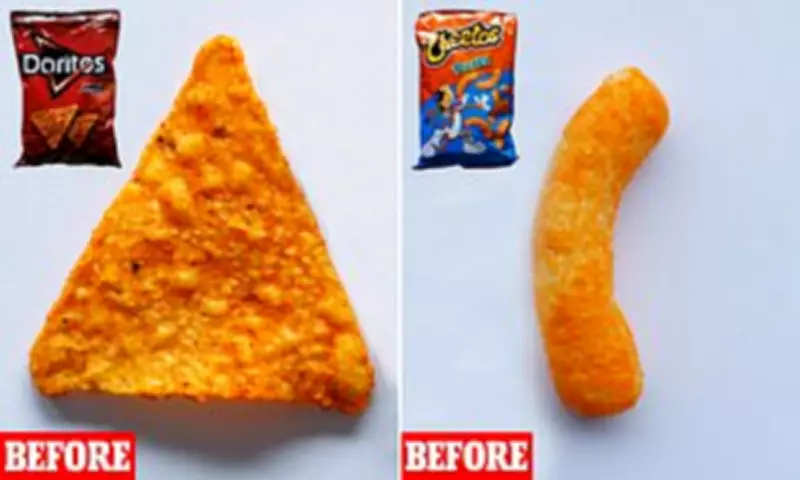
In a significant shift for the snack industry, PepsiCo has unveiled new versions of its iconic Doritos and Cheetos products under the 'Simply NKD' branding, which eliminates artificial ingredients. The move responds to increasing consumer demand for cleaner labels and follows pressure from health advocates, including figures like Robert F Kennedy Jr.
A Visual and Formulation Transformation
The 'Simply NKD' snacks are easily distinguishable by their stark white packaging, a deliberate design choice to signify their 'naked' or additive-free nature. Inside, the chips have undergone a noticeable colour change: Doritos now appear in a faded yellow hue, while Cheetos are nearly white, a stark contrast to their traditional vibrant red and orange colours. This visual alteration results from the removal of petroleum-based food colourings, including Red 40, Blue 1, Yellow 5, and Yellow 6.
Maintaining Flavour Amidst Change
PepsiCo executives have emphasised that the texture and taste of the snacks remain consistent with the original versions. Rachel Ferdinando, CEO of PepsiCo, stated in a release: 'Rest assured, our iconic Cheetos and Doritos remain unchanged. Simply NKD is an alternative option, not a replacement, introduced to meet consumer demand.' The company asserts that the bold flavours fans expect are preserved, even without the visual cues provided by artificial dyes.

The reformulation also excludes several flavour enhancers such as monosodium glutamate (MSG), disodium inosinate, disodium guanylate, and sodium diacetate. These ingredients have been associated with various health concerns, including headaches and nausea, in some individuals.
Consumer Reactions and Market Positioning
Initial reactions to the 'Simply NKD' range have been mixed. Many consumers have taken to social media to praise the new snacks, with comments highlighting that they 'taste identical' to the original versions and possess a 'delightful, crunchy texture.' One enthusiast noted: 'Doritos NKD honestly taste identical to the regular ones.'
However, not all feedback has been positive. Some customers have expressed disappointment, with one stating: 'They were disgusting. Does not at all taste like a Nacho Cheese Dorito, not to mention they leave a gross taste in the mouth afterwards.' Another pointed out a lack of the characteristic cheese dust on their fingers after eating.
The new products are retailing at a similar price point to the originals, approximately £3-£4 per bag in the UK, and are being sold alongside them rather than as direct replacements. This strategy allows PepsiCo to cater to diverse consumer preferences without alienating loyal fans of the traditional recipes.
Health Considerations and Nutritional Profile
Despite the removal of artificial dyes and flavours, the 'Simply NKD' snacks are still classified as ultra-processed foods. They contain multiple ingredients not typically found in home kitchens, such as citric acid and lactic acids, which act as preservatives and flavour enhancers.
Nutritionally, the new versions show slight improvements in some areas. For instance, the Simply NKD Nacho Cheese Doritos contain approximately seven grams of fat and 150 milligrams of salt per serving, compared to eight grams of fat and 200 milligrams of salt in the original. However, the Flamin' Hot Cheetos Simply NKD variant contains slightly more cholesterol. Calorie counts remain largely consistent, with around 150 calories per serving of 11-12 chips.
Broader Industry Context and Regulatory Pressures
PepsiCo's initiative aligns with a wider industry trend towards reducing artificial additives. Health and Human Services Secretary Robert F Kennedy Jr has been a vocal advocate, criticising petroleum-based dyes as 'toxic' and urging companies to eliminate them. His 'Make America Healthy Again' movement has placed additional pressure on food manufacturers.
While compliance remains voluntary at the federal level in the US, state-level legislation and consumer advocacy are driving change. A recent review indicated that nearly 40% of the packaged US food and beverage supply has committed to removing artificial dyes in the near term. Companies like Campbell's and Nestle have pledged to eliminate them by the end of 2026, with others targeting 2027.

However, challenges persist. Some manufacturers cite cost, scarcity of natural alternatives, and potential impacts on product appearance and sales as hurdles. For example, Conagra Brands found that using beet extract as a replacement for Red 40 resulted in a greyish hue for its red velvet cake mix, which could deter consumers.
Future Developments and Corporate Strategy
PepsiCo has indicated plans to extend the 'Simply NKD' approach to other products, although specific details have not been disclosed. Hernan Tantardini, CMO of PepsiCo Foods US, described the launch as part of a 'snacking revolution,' emphasising the company's commitment to expanding choices while protecting its iconic brands.
The initiative reflects a balancing act: meeting evolving consumer demands for healthier options without compromising the sensory experience that has made these snacks globally popular. As PepsiCo navigates this landscape, the success of 'Simply NKD' could influence broader industry practices and regulatory discussions surrounding food additives.





