

11 UK Cities and Towns Where Living Standards Rose Over Twice as Fast as Rest of UK
A groundbreaking new report from the influential thinktank Centre for Cities has uncovered a stark geographical divide in living standards growth across the United Kingdom. The analysis reveals that disposable income has increased at more than double the national rate in eleven specific urban areas since 2013.
Stark Contrast in Economic Performance
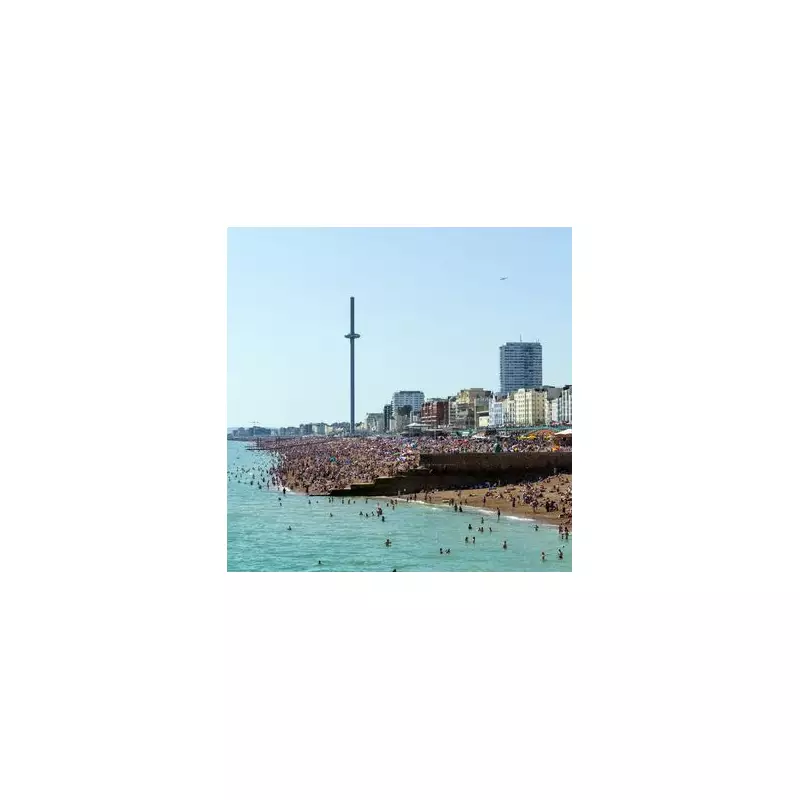
The research indicates that living standards, measured by real-terms disposable income, grew by an impressive 5.2% in these top-performing locations. This stands in sharp contrast to the national average growth of just 2.4% over the same period. Brighton emerged as the highest performer, boasting a remarkable 8.1% rise in disposable income.
Worthing followed closely with a 7.8% increase, while London recorded a solid 5.8% growth. As a collective, these eleven cities and towns experienced overall economic growth of 27% between 2013 and 2023, significantly outpacing the national figure of 18.4%.

The Financial Impact on Residents
The report's findings translate into substantial real-world financial consequences for residents. Researchers calculated that if all 63 of the UK's largest cities and towns had matched the growth rate of these top performers since 2013, their inhabitants would have enjoyed an average extra £3,200 in disposable income over the decade.
The disparity becomes even more pronounced when examining underperforming areas. In Cambridge, where real-terms disposable incomes actually declined by 3% since 2013, residents missed out on a potential £10,900 extra over the ten-year period. Similarly, in Wigan, which saw a 1.6% fall, the figure amounts to £7,200 in lost disposable income.
Expert Analysis and Policy Implications
Andrew Carter, Chief Executive of Centre for Cities, provided crucial context for these findings. "It is understandable that the Government has shifted its emphasis onto the cost of living in recent weeks, but ultimately it is stronger economic growth that raises household incomes," he stated. Carter emphasised that without sustained growth, any cost-of-living measures can only provide temporary relief.
He highlighted the concerning national trend, noting that "the last decade has delivered the same amount of growth in living standards as we typically experienced in a single year prior to 2008." However, he pointed to success stories like Warrington and Barnsley, where economic growth has directly translated into higher household incomes and reduced deprivation.
Carter attributed these successes to deliberate policy choices, stating: "That isn't accidental: it is shaped by policy choices on skills, transport, housing, and support for businesses." He identified the Government's planning reforms, devolution agenda, and Industrial Strategy as crucial components for supporting urban growth and improving living standards consistently.
The Path Forward for Urban Economies
The report underscores the importance of developing jobs in the new economy, particularly in sectors championed by the Industrial Strategy such as life sciences, digital technology, and artificial intelligence. These high-value jobs tend to cluster in urban areas and generate broader economic benefits, even for those working in more traditional sectors of the "everyday economy."
Carter concluded with a forward-looking statement, echoing the Prime Minister's sentiment that 2026 should be a year where "politics shows it can help again." He set a clear benchmark for success: "The test, at the end of this year, will be whether we are seeing more jobs, higher wages, and stronger local growth in more places across the country."

UK Towns and Cities with the Largest Growth in Living Standards
- Brighton - 8.1%
- Worthing - 7.8%
- London - 5.8%
- Barnsley - 5.6%
- Warrington - 5.3%
- Bristol - 4.6%
- Wakefield - 4.6%
- Doncaster - 4.4%
- Chatham - 4.3%
- Preston - 4%
- Milton Keynes - 2.9%





