New analysis has identified specific locations across the United Kingdom where residents' financial wellbeing has significantly outpaced the national trend, offering a blueprint for broader economic recovery.
Pockets of Prosperity Defy National Stagnation
While the UK overall has experienced a prolonged period of sluggish growth in living standards since 2013, a distinct group of 11 towns and cities has demonstrated remarkable resilience and progress. According to comprehensive research from the influential think tank Centre for Cities, disposable income in these areas grew at more than double the national rate between 2013 and 2023.
The Standout Performers
The study examined 63 of the UK's largest urban centres and found that residents in Warrington, Bristol, Barnsley, Brighton, and seven other locations saw their average disposable income increase by 5.2 per cent over the decade. This starkly contrasts with the national average growth of just 2.4 per cent during the same period.

If all major UK cities and towns had matched this accelerated growth rate, the analysis suggests that the typical resident would have benefited from an additional £3,200 in disposable income over those ten years.
Brighton Leads the Way
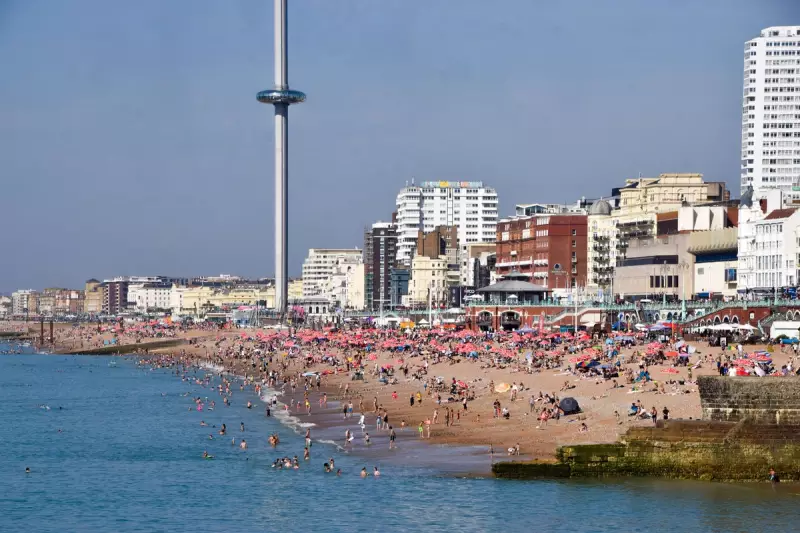
The coastal city of Brighton emerged as the top performer, recording a total disposable income growth of 8.1 per cent between 2013 and 2023. Meanwhile, Warrington achieved the highest total economic growth at an impressive 41 per cent, significantly exceeding the national economic growth figure of 18.4 per cent for the decade.
The Growth Formula: Policy Choices Matter
The research indicates that the strongest-performing areas shared common strategic approaches that fostered their economic success. These included a dedicated focus on building more robust local economies, enhancing access to employment through targeted skills support and improved transport infrastructure, and actively reducing constraints on both housing and commercial space development.
Andrew Carter, Chief Executive of Centre for Cities, emphasised the critical link between policy and prosperity. "Economic growth in areas like Warrington and Barnsley has directly translated into higher household incomes and reduced deprivation," he stated. "That isn't accidental: it is shaped by policy choices on skills, transport, housing, and support for businesses."
The Cost of Stagnation
The report also highlights the substantial financial penalty faced by residents in areas where living standards declined in real terms. For instance, in Cambridge, where real-terms disposable incomes fell by 3 per cent since 2013, residents would have been £10,900 better off over the decade had the city matched the growth rates of the top-performing locations.
A Call for Fundamental Economic Focus
The think tank issued a stark warning to policymakers, arguing that the government must implement strategies that genuinely strengthen long-term economic growth rather than merely addressing symptoms.
"By focusing on tinkering with the symptoms, the government runs the risk of losing sight of the cause," the report cautioned. "The problem underpinning cost of living pressures, stagnant incomes, and persistent deprivation is the lack of economic growth. Redistributing slices of the existing pie will not achieve increases in standards of living 'felt by everyone, everywhere'. Growing the pie is the only way forward."
Future-Proofing Local Economies
Mr Carter further advocated for cities to actively support job creation in high-growth sectors such as life sciences, digital technology, and artificial intelligence. "These jobs cluster in urban areas and generate benefits for those working in the 'everyday economy', too," he explained.
Reflecting on the national picture, he added, "Nationally, the last decade has delivered the same amount of growth in living standards as we typically experienced in a single year prior to 2008." He concluded by framing the political challenge: "As the prime minister has said, 2026 needs to be the year that 'politics shows it can help again'. The test, at the end of this year, will be whether we are seeing more jobs, higher wages, and stronger local growth in more places across the country."

The Ministry of Housing, Communities and Local Government was approached for comment on the findings.