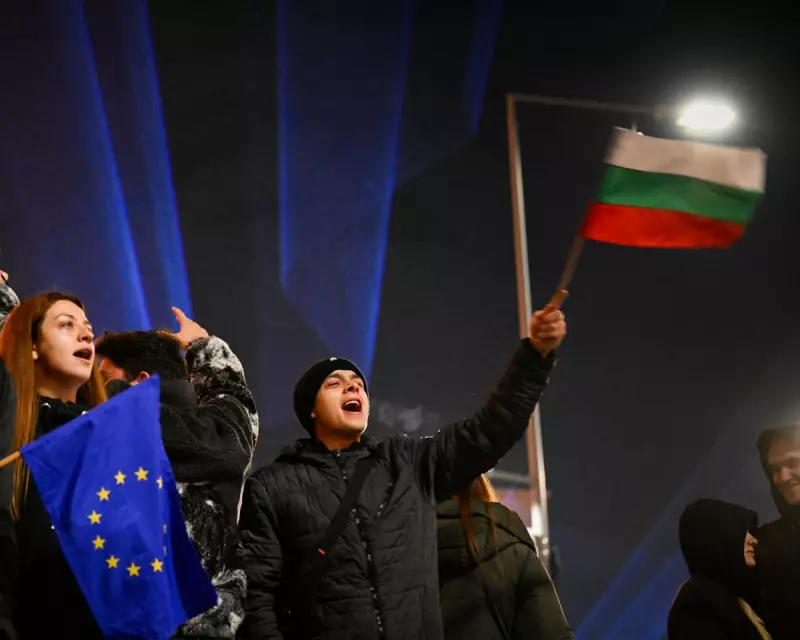
Bulgaria has formally entered the Eurozone, a landmark move that analysts say delivers a significant strategic setback to Russia's efforts to spread malign influence and disinformation within the European Union's southeastern flank.
A Historic Entry Amidst Geopolitical Tensions
On 1st January 2026, Bulgaria officially adopted the euro as its national currency, replacing the Bulgarian lev. This long-anticipated transition sees the nation become the 21st member of the Eurozone, a process set in motion by its centre-right coalition government led by Prime Minister Kiril Petkov. The accession is not merely an economic milestone; it is widely viewed as a profound political statement of Bulgaria's unwavering commitment to the European project at a time of heightened regional instability.
The decision culminates years of preparation and comes despite a sustained and sophisticated Russian disinformation campaign aimed at sowing public doubt. Pro-Kremlin outlets and online networks have persistently circulated false claims suggesting the euro would cause price spikes, diminish national sovereignty, and lead to economic hardship. However, the Bulgarian government, with support from EU institutions, mounted a robust public information effort to counter these narratives.

The Economic Imperative and Security Dimension
Economically, the shift is expected to bolster stability and attract investment. Finance Minister Assen Vassilev has highlighted that adopting the euro will lower transaction costs, reduce currency risk for businesses, and provide a stronger buffer against external shocks. The country has met the Maastricht criteria, including maintaining inflation within the required bounds—a notable achievement given the recent global economic pressures.
Yet, the implications extend far beyond finance. Security experts within the EU have long identified the Western Balkans as a key battleground for information warfare. Bulgaria's integration into the Eurozone is seen as a critical step in insulating it from external manipulation. "By anchoring Bulgaria more deeply into the EU's core economic and political structures, we are removing key pressure points that hostile actors seek to exploit," explained a senior EU diplomat familiar with the matter. This move strengthens the collective security of the bloc, making it harder for Moscow to drive wedges between member states.
Countering the Kremlin's Narrative
The Russian campaign sought to capitalise on historical and cultural ties, portraying the euro as an imposition from a distant Brussels bureaucracy that disregards Bulgarian interests. The government's counter-strategy involved transparent communication, emphasising the tangible benefits of integration, such as easier travel and trade, and enhanced access to EU recovery funds.
Prime Minister Kiril Petkov framed the accession as a sovereign choice for a modern, prosperous future. "This is our decision, for our people," he stated in a recent address. "It is about securing Bulgaria's place at the heart of Europe, with all the stability and opportunity that brings. The voices trying to scare our citizens are the same ones that do not wish for a strong and united Europe."
The successful transition, despite the disinformation onslaught, is being hailed as a case study in resilience. It demonstrates that with clear political will and effective public engagement, the corrosive impact of foreign interference can be mitigated. The event is likely to encourage other EU aspirant states in the region, showing that the path to deeper integration remains open and beneficial.
As Bulgaria begins a new chapter with the euro in its wallets, the message to external adversaries is clear: the bonds of the European Union, forged through shared currency and values, are proving to be a formidable defence against division and deceit.