

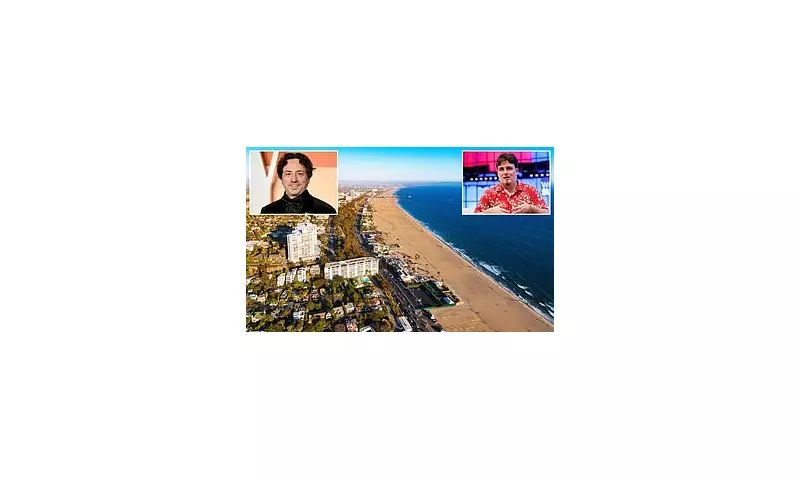
A fierce political and financial battle is raging in California over a proposed one-off tax targeting the state's wealthiest individuals, sparking warnings of a billionaire exodus and exposing deep divisions within the tech elite.
The Controversial 'Billionaire Tax Act'
The 2026 Billionaire Tax Act would impose a one-time levy of five percent on the net worth of any California resident whose fortune exceeds $1 billion. The tax, which would be applied retroactively from January 1, 2026, would include assets like stocks, art, and intellectual property in its calculation.
Championed by Democratic Representative Ro Khanna, the measure aims to recoup funds for essential state services such as healthcare, education, and childcare. In a statement, Khanna argued for balancing Silicon Valley's 'dynamism' with ensuring the working class benefits from prosperity.

Supporters, including the Service Employees International Union-United Healthcare Workers West, claim the tax is an emergency measure to prevent the collapse of California's healthcare system, partly blaming cuts from the era of former President Donald Trump. They estimate it would affect roughly 200 people with a combined wealth of $2 trillion.
Silicon Valley's Civil War: Flight vs. Fight
The proposal has triggered a stark schism among California's ultra-wealthy. While some high-profile figures threaten to leave or have already begun relocating assets, a notable few are standing firm.
Leading the exodus are Google co-founders Larry Page and Sergey Brin. Page, the world's seventh-richest person, moved his California-based businesses and transferred holdings to Delaware ahead of the deadline. Brin has re-registered at least 15 of his California-based limited liability companies, with seven moving to Nevada.
Other prominent critics include:
- Palmer Luckey, founder of Anduril, who lambasted the tax on social media, arguing it would force founders to sell company chunks to 'pay for fraud, waste, and political favours.'
- Bill Ackman, the hedge fund manager, who opposes wealth taxes as an 'expropriation of private property' but advocates for a fairer overall tax system.
- Elon Musk, who defended his wealth being tied up in Tesla and SpaceX shares, implying it represents productive capital.
- Reid Hoffman, LinkedIn co-founder, who called the bill 'badly designed' and warned it would incentivise 'avoidance and capital flight.'
- Vinod Khosla, the venture capitalist, who told Rep. Khanna he was 'so wrong' and predicted a drain of the state's most important taxpayers.
In a rare show of support, Nvidia's founder and CEO Jensen Huang, with a net worth of $157.8 billion, stated he was 'perfectly fine' with the tax, emphasising his commitment to Silicon Valley for its talent pool.
Political Opposition and the Road to November
Even the state's top Democrat, Governor Gavin Newsom, has staunchly opposed the act, calling it 'damaging' and vowing to protect the state from its potential economic impacts. He expressed confidence it would be defeated.
The proposal requires approximately 900,000 signatures to be placed on the state ballot in November. Should it pass, Governor Newsom would be unable to veto the voter-approved measure.
With California home to more billionaires than any other U.S. state—including over 80 on the Forbes 400 list—the outcome of this fight could reshape the economic landscape of America's most populous state and set a precedent for wealth taxation nationwide.






