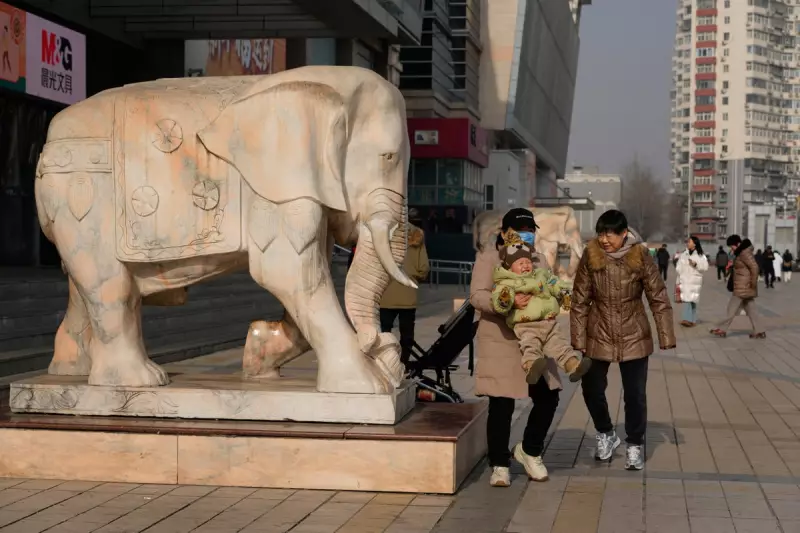
China's population has contracted for a fourth successive year, with the number of new births plummeting by a stark 17% in 2025. The latest government statistics reveal the profound demographic challenges facing the nation, despite a decade of efforts to encourage larger families following the end of its infamous one-child policy.
A Decade of Policy Reversal Fails to Boost Births
New data released on Monday, 19 January 2026, shows China's total population stood at 1.404 billion in 2025, a decrease of 3 million from the previous year. The number of babies born last year was just 7.92 million, a decline of 1.62 million from 2024. This sharp drop indicates that a slight uptick in births witnessed in 2024 was not the start of a sustained recovery.
For years, the government has attempted to reverse the trend. It first relaxed the one-child rule to a two-child limit in 2015, before allowing three children per family in 2021. However, these policy shifts have had limited impact. Most families cite the immense financial cost and societal pressure of raising children in a highly competitive environment as primary deterrents, concerns magnified by a recent economic downturn.

Incentives and Taxes: A Mixed Approach
In a bid to incentivise childbearing, authorities have introduced a range of measures. In July 2025, the government announced direct cash subsidies of 3,600 yuan (approximately $500) per child to families. Simultaneously, in a move aimed at shaping behaviour, China removed contraceptives like condoms from a value-added tax exemption list.
This means a 13% tax on condoms came into effect on 1 January 2026. To further promote family life, kindergartens, daycare services, and even matchmaking services have been added to the tax-exemption list.
The Stark Reality of a Falling Fertility Rate
The core of the issue lies in China's critically low fertility rate. While the government last officially reported a rate of 1.3 in 2020, experts now estimate it has fallen to roughly 1.0. Both figures are far below the replacement rate of 2.1 needed to maintain a stable population size.
This sustained decline has significant long-term implications for the world's second-most populous nation, which was overtaken by India in 2023. The demographic pressure of an ageing population and a shrinking workforce now poses a formidable challenge to China's future economic and social planning.
Shihuan Chen in Beijing contributed to this report.