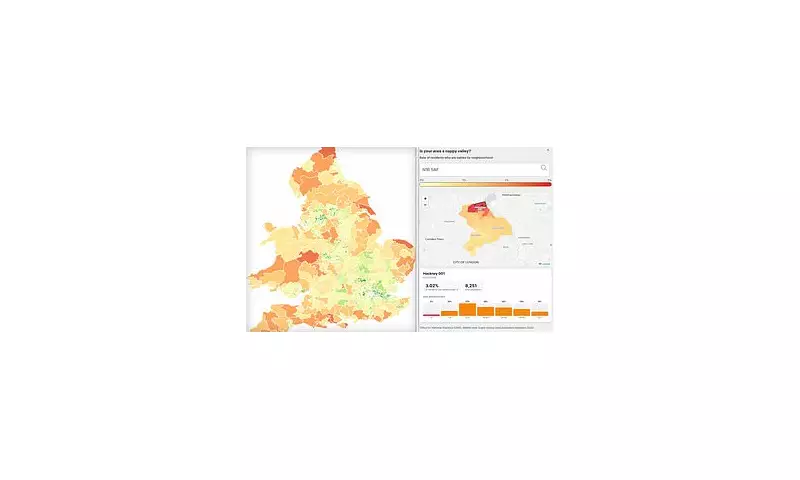
A groundbreaking new interactive tool, powered by official population data, allows Britons to discover the precise demographic character of their neighbourhood, revealing a stark national divide between areas teeming with young families and those dominated by retirees.
The Baby Boom and Bust Postcodes
The analysis of mid-2024 estimates from the Office for National Statistics (ONS) pinpoints Stamford Hill in the London borough of Hackney as having the highest concentration of babies in England and Wales, with infants making up 3% of the local population. This rate is a staggering 50 times higher than in Durham City, where babies account for just 0.06% of residents in an area described as "swarming with students."
Other urban centres with notably low proportions of babies include Piccadilly & Ancoats in Manchester (0.07%) and Leeds City Centre (0.12%). The tool maps all 7,265 Middle Super Output Areas (MSOAs), offering a street-level view of age distribution across the nation.

Seaside Retreats Become Pensioner Havens
At the other end of the spectrum, the data highlights coastal villages as bastions for the over-65s. The charming West Sussex village of East Preston & Rustington East in Arun tops the list, with 53.3% of its population aged 65 or over. It is closely followed by the Lincolnshire seaside town of Sutton-on-Sea (53.2%) and Barton on Sea in the New Forest (52%).
Demographers note that so-called "nappy valleys" are typically characterised by a higher proportion of foreign-born residents and people in their late 20s and 30s—demographic groups more likely to be starting families. Professor Berkay Ozcan of New York University Abu Dhabi told the Daily Mail these areas often feature "good-quality childcare, access to well-rated primary schools, green spaces and parks, and reliable transport links."
A Nation Facing an 'Underpopulation' Crisis
This detailed geographic snapshot comes against a backdrop of a severe national fertility decline. The average number of children for women in England and Wales has plummeted to a historic low of 1.44, far below the "replacement" rate of 2.1 needed to maintain a stable population without immigration.
Experts warn this trend risks leaving the UK overly reliant on immigration to support the economy, with an insufficient younger workforce to pay taxes and care for a growing elderly population. Professor Ozcan argues that local baby numbers can be a "leading economic indicator," reflecting people's confidence and expectations about their future.
The reasons behind the national baby bust are complex. They include women focusing on education and careers, the high cost of living and housing, and changing societal attitudes. Professor Jonathan Portes, an economist at King's College London, pointed to expensive childcare and labour market structures that make it difficult to combine work and family life.
While some advocate for government intervention—such as longer parental leave, better childcare funding, and tax incentives—others believe the shift towards smaller families is a permanent societal change. The UK is not alone; similar fertility declines are being recorded across Europe and in the United States, with researchers warning of global "underpopulation" by the end of the century.