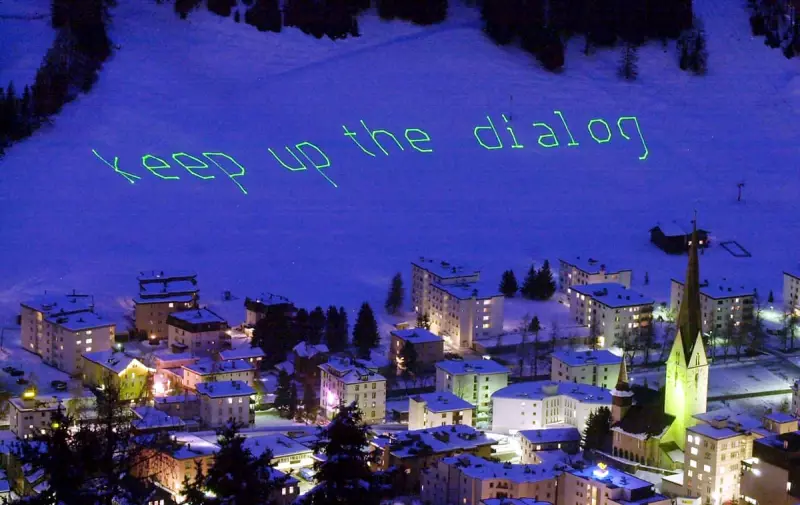
In a striking visual from January 25, 2001, a laser beam projected an SMS message onto the snow-covered Bolgenhang slope in Davos, Switzerland, during the World Economic Forum. This image, captured by Juergen Staiger, symbolises the blend of technology and high-level discourse that has characterised the event for decades. The archive reveals a rich history of this gathering, where world leaders and business elites converge in the Alps, often amid fluctuating snowfalls and heated economic debates.
Hot Air in a Cold Climate: The 1971 Origins
The first World Economic Forum meeting, then called the European Management Symposium, was held in January 1971. As reported by The Observer on January 3, 1971, it marked the rise of the management seminar cult, with 500 of Europe's top businessmen each paying about £700 to attend. Organised by the Geneva business school, Centre d'Etudes Industrielles, to celebrate its 25th anniversary, the event included registration fees of £500, £100 for accommodation, and travel costs, such as a £53 fare from London. Speakers like Herman Kahn and John Kenneth Galbraith disseminated costly wisdom, while management consultants Urwick Orr ran a massive business game using four computers, highlighting the forum's early focus on innovation and expense.
The 1990s: Networking and New Realities
By February 3, 1990, Davos had become a hub for what Alex Brummer described as "high-level global personalised interaction." Participants, largely captains of industry, paid $7,500 plus expenses for intellectual benefits and the chance to meet an "alternative government" of 70 ministers. Despite three years of snow drought turning the resort muddy, attractions included plenary sessions on economic outlooks and secret assemblies. Notably, Chancellor Helmut Kohl of West Germany and Prime Minister Hans Modrow of East Germany networked on reunification, with forum founder Klaus Schwab switching to German in recognition of Europe's shifting dynamics.

Pricey Previews and Global Shifts in 1992
Will Hutton's report from February 3, 1992, dubbed Davos the "world's most expensive and exclusive get-away weekend," with members paying up to $14,000 each. A thousand businessmen, academics, and ministers deliberated on global economic themes, anticipating events like the rise of Asian economies. The forum had previously hosted debates during communism's collapse, but by 1992, concerns centred on escalating trade tensions and aid for Eastern Europe. British issues seemed marginal, with Prince Charles and Vaclav Havel among few highlights, as American and German dominance underscored the new global economy's face: male, sleek, and multilingual.
Evolution and Enduring Influence
Over the years, Davos has evolved from a management seminar into a pivotal event for shaping economic policy worldwide. Its ability to attract figures from Li Peng to Mario Cuomo demonstrates its role as a necessary invention for global dialogue. Despite criticisms of exclusivity and hot air, the forum continues to set tones for economic discourse, blending Alpine scenery with high-stakes networking that defines power in the modern era.