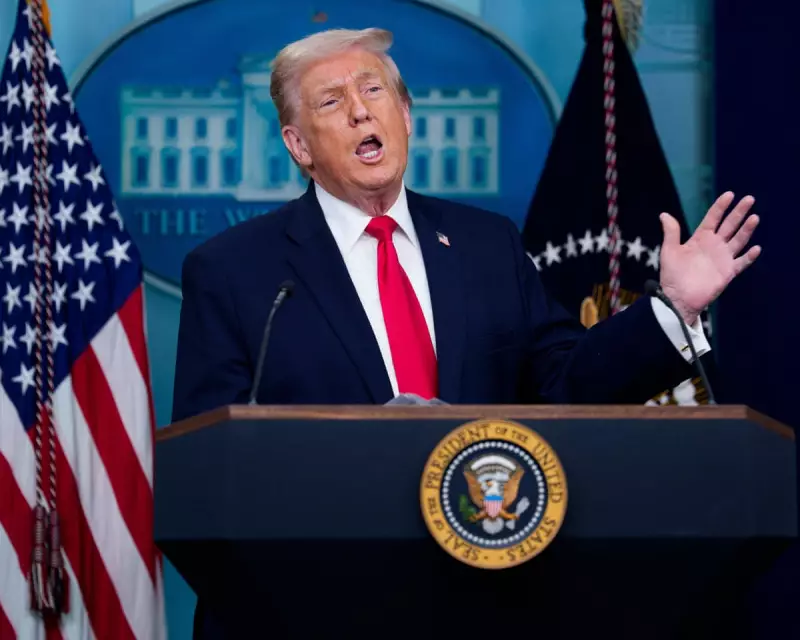
The International Monetary Fund appears determined to maintain a facade of global economic stability through carefully sanitised language, despite mounting evidence that the world faces unprecedented turmoil driven by the unpredictable actions of former US President Donald Trump. This calculated pretence of normality, critics argue, effectively grants Trump greater licence to pursue his disruptive whims without facing appropriate international condemnation.
The IMF's Sanitised Economic Assessment
This week, the IMF released an update to its World Economic Outlook titled "Global Economy: Steady amid Divergent Forces" – a description that seems increasingly detached from reality. The report makes no direct mention of Trump, Greenland, Venezuela, or numerous other geopolitical flashpoints that threaten global stability. Instead, it employs remarkably restrained language, describing escalating trade tensions merely as "subject to occasional flare-ups" while ignoring their root causes.
Trump's Escalating Trade Measures
The timing of the IMF report proved particularly jarring. Just one day before its release, Trump announced sweeping new tariffs targeting multiple European nations, including a 10% levy on all goods from Denmark, Norway, Sweden, France, Germany, the UK, the Netherlands and Finland effective from 1 February, with threats to increase this to 25% from 1 June unless the US gains control of Greenland. This aggressive move represents just the latest in a series of protectionist measures that have dramatically increased the effective tariff rates paid by Americans, which have now risen more than sixfold compared to the previous year.

The Language of Normalisation
The IMF's response to these developments exemplifies what critics describe as "sane-washing" – the practice of using calm, technical language to normalise extraordinary circumstances. The report describes tariff increases with clinical detachment, noting that "changes for specific countries can be meaningful" while failing to acknowledge their unprecedented scale or political motivations. This linguistic approach extends to other areas of concern, with the IMF acknowledging potential risks to AI investment while downplaying broader systemic threats.
Ignoring Geopolitical Realities
Beyond trade, the IMF report conspicuously avoids addressing numerous geopolitical developments that undermine its narrative of stability. Trump's recent invitation for countries to pay $1 billion to join his "board of peace," his threats of 200% tariffs on French wine following diplomatic disagreements, and the US withdrawal from 66 international organisations including the UN Conference on Trade and Development all represent significant disruptions to global governance that go unmentioned in the IMF's assessment.
The AI Distraction
While downplaying geopolitical risks, the IMF has increasingly focused on artificial intelligence as a potential driver of future economic growth. The report suggests that "rapid adoption of AI, possibly facilitated by the ongoing surge in AI-related investment in both hard and soft infrastructure, could significantly improve productivity and boost medium-term growth prospects sooner rather than later." However, this optimistic projection comes with significant caveats that the IMF acknowledges but minimises, including the risk that AI investments "fail to deliver earnings commensurate with their lofty valuations" potentially triggering "a more significant correction in equity markets" and global output losses.
The Consequences of Normalisation
Critics argue that the IMF's restrained language and avoidance of political realities creates dangerous complacency. By presenting Trump's disruptive actions as mere "flare-ups" within an otherwise stable system, the international community risks normalising behaviour that violates international norms and undermines global economic stability. This approach, they contend, effectively provides Trump with greater permission to pursue increasingly extreme measures without facing proportional diplomatic or economic consequences.

A False Sense of Security
The IMF's report concludes with the assertion that "against this backdrop of stabilising trade tensions and supportive financial conditions, the global economy has continued to be remarkably resilient, adapting to the shifting landscape and with momentum varying across countries and sectors." This assessment stands in stark contrast to the reality of escalating protectionism, geopolitical instability, and the normalisation of extraordinary political behaviour that characterises the current global landscape.
The fundamental concern remains that by pretending "all is calm and nice" when it manifestly is not, international institutions like the IMF are failing in their duty to provide accurate assessments of global economic risks. This pretence of normality, critics warn, doesn't merely misrepresent reality – it actively enables further disruption by refusing to name and confront its primary sources.