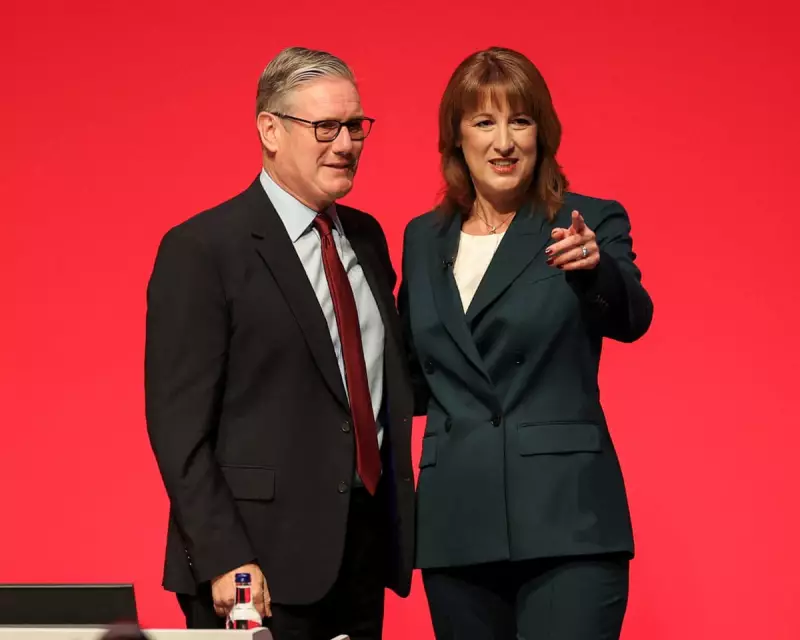
Chancellor Rachel Reeves and Prime Minister Keir Starmer appear to have stepped back from making bold changes to Britain's tax system, opting instead for the political safety of stealth taxes in their upcoming budget.
The Retreat from Transparent Taxation
This week revealed that plans to increase income tax have been formally abandoned, despite earlier signals that Labour would confront the difficult reality of funding public services with a hollowed-out tax system. The Chancellor's second budget, scheduled for November 26, now seems likely to follow the path of her predecessors by raising revenue through less visible means.
Less than two weeks ago, Reeves had positioned herself to grasp the political nettle, echoing Starmer's "country first, party second" approach following their general election victory. In a significant departure from recent political convention, she strongly hinted that income tax might need to rise and promised a comprehensive review of property taxes.

The Historical Pattern of Stealth Taxation
The retreat marks a continuation of a decades-long trend where British governments have preferred stealth taxes over transparent increases. Since Nigel Lawson's tenure as chancellor, the approach has been largely consistent: avoid direct income tax rises in favour of less visible alternatives.
Stamp duty and capital gains tax have become preferred mechanisms, despite economists arguing they create market distortions. The pattern extends across political parties, with Norman Lamont in the early 1990s implementing threshold freezes, Gordon Brown employing various stealth measures, and George Osborne raising VAT to 20% while breaking a manifesto commitment.
Osborne's former right-hand man, Rupert Harrison, has specifically warned Reeves against repeating the 2012 "omnishambles" budget, where numerous micro tax increases unravelled quickly. Harrison advocated for major, broad-based taxes that raise predictable revenue with fewer distortionary impacts.
The Political Reality Behind the Decision
The change in direction appears to stem from significant backbench pressure within the Labour Party. Multiple MPs reportedly warned that breaking manifesto promises would cost them their seats and potentially the next election, forcing a retreat from the initial bold stance.
Instead of fundamental reform, proposals now circulating suggest council tax reforms will be ditched in favour of minor adjustments to the existing system. Income tax thresholds will likely be frozen, creating a disguised tax increase as inflation pushes more workers into higher brackets. Any changes to pension taxes are expected to add further complexity to an already Byzantine system.
The decision raises fundamental questions about political courage and patriotism in governance. The initial approach suggested a willingness to ask those who have done well to contribute to rebuilding public services and infrastructure. The revised strategy indicates a return to the familiar pattern of avoiding difficult decisions in favour of political survival.
With this retreat, the hope that Starmer and Reeves would establish a more coherent and fairer tax system appears to have evaporated, leaving Britain with the same systemic problems that have plagued its public finances for decades.