Labour's Tax Policies Temporarily Reduce Government Borrowing
Official statistics have revealed that the UK government's borrowing decreased significantly in the financial year ending March, with Labour's substantial tax increases playing a crucial role. However, this positive trend faces imminent disruption due to the escalating Middle East crisis, particularly involving Iran, which is expected to fuel inflation and suppress economic growth in the coming months.
Borrowing Figures Show Notable Decline
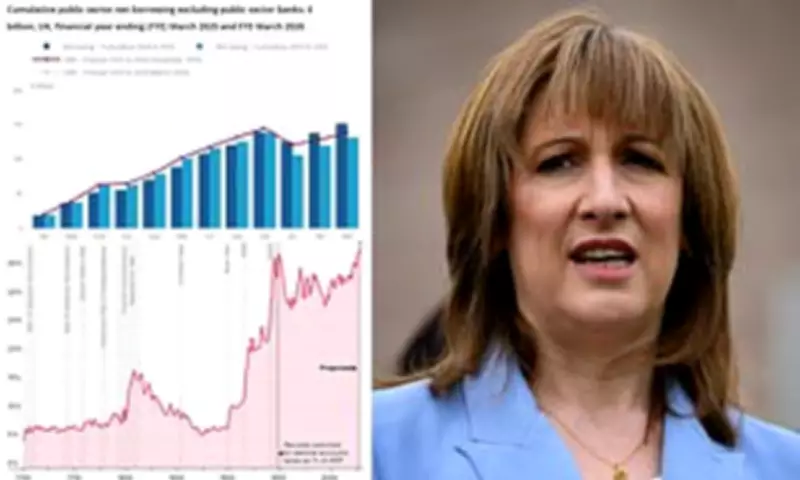
The Office for National Statistics reported that public sector net borrowing stood at £132 billion for the twelve months to March, representing a substantial reduction of £19.8 billion compared to the previous financial year. This figure came in slightly below the £132.7 billion forecast by the Office for Budget Responsibility, marking the lowest annual borrowing since 2022-23.
In March alone, borrowing fell to £12.6 billion, down £1.4 billion year-on-year and the lowest for that month since 2022, although slightly exceeding analysts' expectations. As a proportion of gross domestic product, borrowing reached its lowest level since 2019-20, just before the pandemic.

Tax Revenue Offsets Spending Increases
The reduction in borrowing was primarily driven by significantly increased tax revenues, which partially offset substantial government spending. Central government tax receipts surged by £54.7 billion to £845.4 billion over the twelve-month period. This included notable increases in income tax (£34.6 billion), VAT (£8.8 billion), and corporation tax (£5.4 billion).
Particularly impactful was the controversial hike in employer National Insurance contributions, implemented in April last year, which boosted social contributions by £33 billion to £206.8 billion. Since becoming Chancellor in July 2024, Rachel Reeves has imposed approximately £75 billion annually in additional taxes, making her the most significant tax-raising Chancellor in six decades, surpassing Gordon Brown's £62.1 billion increase.
Government Spending Continues to Rise
Despite reduced borrowing, government expenditure increased substantially across multiple areas. Central government departmental spending on goods and services rose by £27.9 billion to £461.6 billion, driven primarily by public sector pay settlements and inflationary pressures. Benefits payments increased by £20.7 billion to £327.3 billion, largely due to upratings including state pension adjustments.
Interest payments on the government's debt also climbed by £12.2 billion to £97.6 billion, reflecting heightened market anxiety. Much of the increased tax revenue has been directed toward spiraling welfare costs, with Labour MPs pressuring the government to abandon spending curbs and scrap the two-child benefits cap.
Economic Outlook Threatened by Geopolitical Crisis
The positive borrowing picture is expected to shift dramatically in coming months due to the Iran conflict. Economists anticipate this geopolitical crisis will fuel inflation and squash economic growth, potentially reversing recent gains. The tax burden is projected to reach an unprecedented 38.5 percent of GDP by 2030-31, according to figures released alongside the Spring Statement.
Treasury Chief Secretary James Murray commented: "Our deficit is down £19.8 billion because of our plan to cut borrowing. In a volatile world the decisions we are taking are the right ones to keep costs down, take back our energy security and cut borrowing and debt."
Tom Davies, ONS senior statistician, noted: "Borrowing was almost £20 billion lower than in the previous financial year, and broadly in line with the OBR's forecast. Although spending has risen this financial year, this was more than offset by increased receipts."