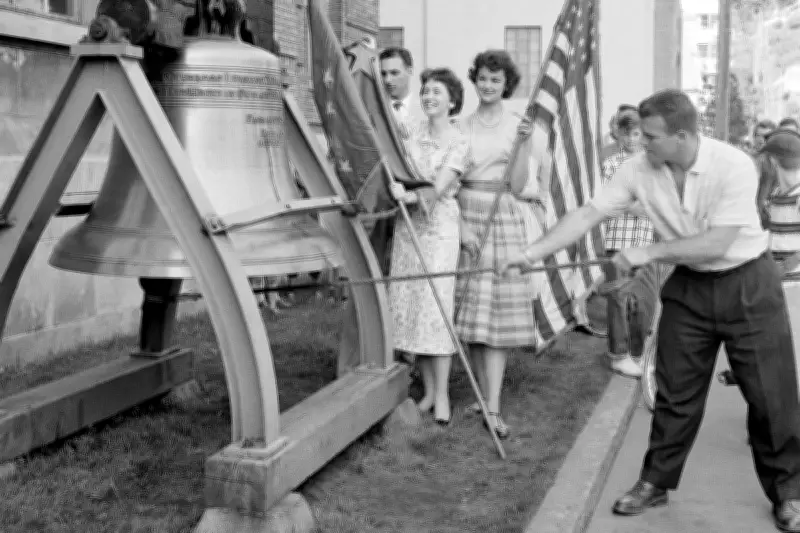
As the United States approaches its 250th anniversary, a unique piece of Americana is drawing attention: replicas of the Liberty Bell cast in 1950 for a national savings bond drive. While the original bell resides in Philadelphia, these lesser-known copies are scattered across state capitols, museums, and even fire stations, offering a tangible connection to history for those unable to make the pilgrimage.
The 1950 Treasury Department Initiative
In 1950, the U.S. Treasury Department commissioned exact replicas of the Liberty Bell for each state and several territories as part of a campaign to promote savings bonds. The Paccard Foundry in southeastern France, a family-run operation since 1796, cast the bells. Each replica weighs 2,080 pounds (944 kilograms) and features a faux crack, matching the original's famous flaw. However, the replicas differ metallurgically: the original bell was 70% copper, 25% tin, with trace impurities, while the replicas use a bronze alloy of 78% copper and 22% tin, resulting in superior acoustic quality, according to Anne Paccard, the foundry's communications director.
The Rise of Bell Hunters
Tom Campbell, a graphic designer originally from Philadelphia, stumbled upon his first replica in Denver in the late 1990s while cutting across the Capitol lawn. This chance encounter sparked a lifelong obsession. Together with his wife, Dawn Putney, Campbell began incorporating bell visits into their travels. She surprised him with a website, tomlovesthelibertybell.com, which has since become a hub for fellow enthusiasts. Over three decades, Campbell has visited 40 of the 55 replicas and is now considered the leading expert on these artifacts.

Zoe Murphy, a 14-year-old from Morris County, New Jersey, started her bell-hunting journey at age five after seeing her first replica in Allentown, Pennsylvania. She now runs her own website, zlovesamerica.com, and has visited 39 bells across the country. For Zoe, these travels have deepened her appreciation for America's diverse culture.
Challenges and Restoration Efforts
Many replicas have suffered from neglect. Originally gifted without preservation guidance or funding, over half have spent decades outdoors, exposed to the elements. Painted cracks have faded, clappers and yokes have been removed, and some bells are displayed in steel frames that prevent ringing. Campbell laments that some have become mere monuments rather than functional bells.
However, the upcoming semiquincentennial has spurred restoration. Kansas's bell, once disassembled in a Capitol parking garage, was restored and placed outside the Docking State Office Building in October 2024. Alabama and Idaho sent their bells to the Bell Foundry Christoph in South Carolina for restoration, expected to return by the Fourth of July. Other states have also undertaken touch-ups.
Inaccessible and Lost Replicas
Three replicas remain inaccessible to the public. Pennsylvania's bell, once displayed in Allentown's Zion's Reformed Church, is now off-limits due to renovations. North Carolina's bell was moved to secure storage during a museum renovation. The Washington, D.C., replica has been missing since the early 1980s, likely melted down for its bronze value. Campbell appeals for any information about the capital bell.
Despite these gaps, the bell-hunting community continues to grow. Campbell reflects on the Liberty Bell's symbolism: "The fact that a cracked bell is the symbol of the United States is really the perfect symbol of an imperfect union."