There is no ban. No raids. No agents smashing barrels in the street. No Al Capone raking in a fortune. But your next refreshing beer, sundowner cocktail, or red wine to accompany your steak is quietly being squeezed. From Washington to Dublin to Rio, a powerful network of public health groups, billionaire-backed foundations, and global policymakers is pushing a sweeping set of changes designed to make alcohol more expensive, harder to buy in bars and stores, and ultimately make you feel bad for drinking it.
The New Temperance Movement
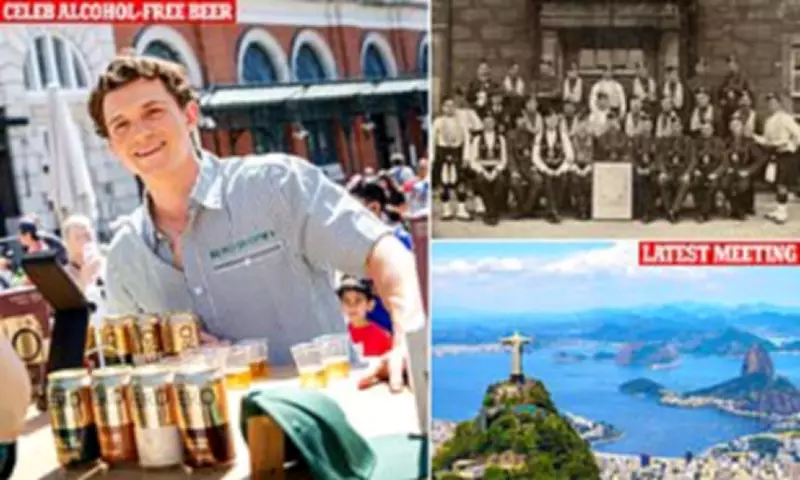
They are not calling it Prohibition. But the playbook is familiar, and critics are dubbing it Prohibition 2.0. Last week, the movement's leading figures gathered in Rio de Janeiro, Brazil, for a major World Health Organization-backed conference, where prestigious scientists and gung-ho activists mapped out the next phase of a global push to curb drinking. Entire sessions were dedicated to raising alcohol taxes, which the anti-fun lobby considers one of the most effective ways to curb drinking. Other proposals included restricting where and when alcohol can be sold, including government monopoly control of retail, or in other words, state-controlled stores. There were also plans to clamp down on alcohol advertising, with speakers discussing stronger rules to ban alcohol marketing across TV, social media, and digital platforms. They plotted the use of AI tools to monitor campaigns, track exposure, and enforce compliance.
Behind the scenes, a small but highly coordinated set of organizations, traceable back to the International Order of Good Templars, has spent years laying the groundwork for this moment. The International Order of Good Templars, which rebranded in 2019 to Movendi International, was part of a 19th-century temperance movement that pushed for Prohibition. Instead of curbing societal ills, prohibition brought a new age of Al Capone-esque kingpins in sharp suits, running empires built on illegal booze and shaking down local businesses. Celebrities like Tom Holland are also subscribing to a teetotaling lifestyle, signaling a societal shift for the younger generation, who are slowly turning their noses at alcohol.

Shifting Strategies
This time, they are not going for an outright ban as the 18th Amendment did in 1920. Instead, they want to make drinking harder, pricier, and increasingly stigmatized, until fewer people choose it at all. Their successful rebranding and growing involvement with the World Health Organization have led some critics to argue that the line between impartial science and lobbying is becoming increasingly blurred. The concern is especially pronounced as groups like Movendi International, headquartered in Stockholm, promote a 'no safe level of alcohol' stance that is now influencing government policy and media coverage. Both leading anti-alcohol groups, Movendi and Global Alcohol Policy Alliance (GAPA), trace their roots back to the 19th-century temperance movement, the same ideological force that helped drive Prohibition, as anti-alcohol lobbying researcher Christopher Snowdon explained to the Daily Mail.
While history shows that outright bans do not work in the long term, their mission has evolved. Now, the focus is on policies that reduce drinking: raising prices, limiting availability, and restricting advertising, making alcohol less accessible and less normalized around the world. 'Once moderate drinking is seen as unsafe, the path opens to treating alcohol like cigarettes. They aim to get governments worldwide to say there is no safe level of alcohol consumption,' Snowdon explained. And what is achievable aligns with what public health giants like the WHO want to push, according to Snowdon. 'It's really not difficult for them to infiltrate. The public health people are fairly happy to be infiltrated. They've got the same kind of agenda, which is basically to apply anti-tobacco legislation to everything else.' To gain respect as public health authorities, Snowdon explained, they had to shed their pious identity and modernize.

Roots in the Temperance Movement
Founded in 1851, the IOGT operated as a secret society modeled after Freemasonry, campaigning for a lifestyle free from alcohol and drugs. In the 1970s, it began removing ritualistic features, changed its name to the International Organization of Good Templars, and eventually rebranded as Movendi in 2019. 'They changed the name. I mean, 'International Order of Good Templars' sounds kind of sinister to anybody,' Snowdon explained. Today's Movendi and GAPA may present themselves as buttoned-up public health organizations, but their mission is unmistakably familiar: to reduce alcohol consumption worldwide. Membership comes with a condition. Applicants must pledge to abstain from alcohol and drugs, a requirement tucked into the application and mandatory to check off before proceeding.
That commitment reflects deeper roots, as the movement they emerged from was not just ideological but highly structured. Its inner workings were governed by ritual, hierarchy, and strict control over information. In the 1870s, Movendi's predecessor, the IOGT, ran a tightly organized operation at its peak. After the Civil War, its membership grew to around 400,000, spread across a global network of closely supervised lodges. Texts were not owned, only borrowed. Ritual books had to be returned, tracked, and redistributed, ensuring nothing strayed beyond the organization's reach, according to archived instructions on its now-defunct website. Meetings followed scripts, with symbols and signals dictating proceedings and carefully selected songs, while access to materials was restricted by rank. Nothing could be altered without approval from above. New members were not simply welcomed; they were initiated, led into the room, and asked to publicly commit to a life of total abstinence. At the center of the ceremony was a spoken oath, pledging not only to avoid alcohol but to promote that principle to others.
Modern Expansion and Influence
Modern members continue to carry the torch, but the mission has shifted to persuasion: lobbying governments to curb drinking indirectly through higher taxes, tighter advertising rules, and reduced availability. Now rebranded as Movendi, the organization has expanded significantly worldwide, with 173 member organizations across 63 countries, including 26 in Africa, 12 in the Asia-Pacific region, six in the Americas, and 19 in Europe. In many cases, involvement runs through families, passed from one generation to the next. Movendi's Slovakia-born president, Kristina Sperkova, who is in her 30s, has been involved with the organization since childhood, first attending its youth European summer camp in her home country. Her father helped establish the first IOGT chapter in Slovakia after seeing an advertisement on a tram about starting a local group, while her mother ran the organization's youth activities. Sperkova also works at the organization with her German partner, Maik Dunnbier, the current director of strategy and advocacy, whom she met while volunteering for the international youth organization that was previously part of the IOGT.
Movendi has become so intertwined with the WHO since they were officially listed as a partner in 2019 that Sperkova's partner, Maik, is listed as a contributor to a WHO guide for journalists titled 'Reporting About Alcohol', which gives clear guidelines on how alcohol-related issues should be covered in the media. The WHO's guide for journalists has raised eyebrows among critics who say it reads less like neutral media advice and more like a crash course in 'alcohol is always bad' messaging. The involvement of groups such as Movendi only adds fuel to the idea that abstinence-leaning advocates are helping set the tone for how journalists are supposed to cover drinking. Both Sperkova and Maik have also been pictured with WHO director-general Tedros Adhanom Ghebreyesus.
Powerful Allies and Funding
They have also cultivated powerful allies. Bloomberg Philanthropies, for example, funnels millions into initiatives targeting alcohol, sugary drinks, and tobacco. 'Bloomberg has a huge amount of money,' Snowdon said. 'He's on a mission to spend all his money on making everybody clean living before he dies.' He explained that the organization now mirrors Bloomberg's priorities: e-cigarette bans, soda taxes, and stricter alcohol regulations. With that financial backing, these anti-alcohol groups can shape policy and perception on a global scale. Bloomberg Philanthropies is also backing initiatives like RESET Alcohol, which was launched with WHO, Movendi, and GAPA, and explicitly focuses on increasing alcohol taxation and helping governments roll out those policies.
Then there is GAPA, founded by former IOGT international secretary Derek Rutherford. Rutherford first became involved with the IOGT as a child, after enrolling in clog dancing lessons at the age of nine at a local church. There, he encountered a banner advertising ice cream and jelly for children attending a youth meeting at the local IOGT lodge, which Rutherford described as enticing since food rations were still in place post-WW2 at the time. His father, whom Rutherford recounted in his GAPA autobiography, supported his involvement in the temperance movement, despite being known for a volatile temper when intoxicated. Rutherford's importance is that he helped translate old-style temperance into newer education, policy, and public-health institutions. That experience would translate when he branched off from the IOGT to help build GAPA. GAPA's early development included engagement with the World Health Organization, which co-sponsored meetings and provided support for participation from representatives in developing countries. WHO officials have been present at key conferences where GAPA-related initiatives and broader alcohol policy discussions have been advanced. This includes the most recent GAPA-hosted conference in Brazil last week, where WHO-affiliated experts and representatives gave presentations on alcohol control policies.
Key Tactics and Controversies
Snowdon highlighted some of the anti-alcohol groups' more aggressive tactics, including pushing for cancer warnings on all alcohol products. In Ireland, Reuters reported that from 2026, labels would state: 'There's a direct link between alcohol and fatal cancers.' In the United States, Surgeon General Dr Vivek Murthy called for updating alcohol warning labels to include cancer risks in 2025. However, the initiative stalled after the Trump administration axed explicit drinking guidance from the most recent US Dietary Guidelines, instead opting for wording such as 'less alcohol' rather than putting a specific limit. Trump, who famously abstains from alcohol and drugs, had one of his closest allies, Dr Mehmet Oz, tell reporters after the release of the guidelines that while people should not drink excessively, they could still enjoy alcohol as a 'social lubricant'. Controversy also arose in 2025 during discussions over the US Dietary Guidelines during the tail end of the Biden administration when competing alcohol research reviews were commissioned. The Interagency Coordinating Committee on the Prevention of Underage Drinking (ICCPUD) was commissioned by the Biden administration to carry out the same review as the National Academies of Sciences, Engineering, and Medicine (NASEM), but the ICCPUD's guideline leaned towards a 'no safe level' approach. One researcher from the ICCPUD was Tim Naimi, who was also instrumental in the Canadian evidence review which led to the risible recommendation that people should drink no more than two alcoholic beverages per week. In that Canadian report, Naimi was named as 'a member of an independent group of academics sponsored by Movendi International', although it clarifies that 'this person's involvement with Movendi is voluntary and limited in duration and frequency'. The ICCPUD, which consisted of six academics, was later called out in a report from the House Committee on Oversight and Government Reform that alleged that the process was biased and overly influenced by advocacy-aligned views. Ireland's labeling policy was delayed to 2028 after the government's trade forum warned the labels could hurt Irish products in international markets, including the US, which has taken a more permissive approach.
Minimum Pricing
Then there is minimum pricing, one of the main tactics these groups use, which sets a floor price on alcohol to eliminate cheap options. This approach has been successful and implemented in Scotland, Wales, and Ireland; Canada uses a similar system called social reference pricing. In Scotland, minimum pricing laws set a floor price per unit of alcohol, meaning cheap spirits and low-cost alcohol products can no longer be sold below a certain threshold. A budget bottle of vodka that once cost around $13, for example, now sells for roughly $20 or more. Six-packs that previously retailed for $8 to $10 can be pushed into the $12 to $15 range under similar price floors, while low-cost wine, often the main target, can rise by several dollars per bottle as the cheapest options are effectively removed from the market. Snowdon noted that while minimum pricing is often presented as a public health success, the evidence is mixed. For example, in Scotland, alcohol-related deaths actually rose after the policy was introduced, though government studies claimed the policy had prevented even higher increases. 'They brought in minimum pricing in Scotland to reduce the number of alcohol-related deaths and the number of alcohol-related hospitalizations by a certain amount. But in fact, they went through the roof. And yet, the government came back with a study saying, Well, essentially, they would have gone up even more if they had brought in minimum pricing. Therefore, minimum pricing saved lives.'
Advertising Restrictions
GAPA has lobbied to restrict alcohol advertising, a push reflected in the WHO's 2022–2030 action plan, which advises countries to impose bans or comprehensive limits across multiple media channels and platforms. Lithuania, which is one of the leaders in Europe's alcohol-attributable death rate, is one of the countries that took this push to heart, banning all alcohol advertising in 2018. These tactics have an appealing financial benefit for world governments. The WHO-backed '3x35' initiative, which is supported by both anti-alcohol groups and Bloomberg Philanthropies, aims to increase the price of alcohol, tobacco, and sugary drinks by at least 50 percent globally by 2035 through tax increases. This plan, coupled with minimum pricing, means a $40 Friday night at the bar could quietly edge closer to $60 as taxes and pricing policies push costs higher across the board, and that is not accounting for inflation. The plan expects that, through taxation, they will receive an additional $1 trillion in public revenue globally. 'They dress it up as a moral argument about public health, but it's somewhat contradictory. On one hand, they say tax it so people stop drinking. On the other hand, they say tax it to raise revenue. You can do both, depending on the tax rate, but if people truly stop drinking, you don't make any money.'
Cultural Shifts and Generational Trends
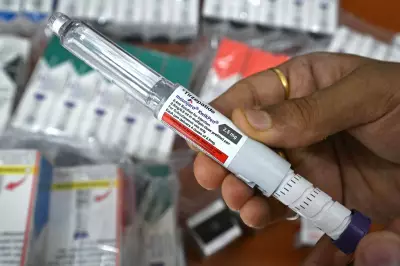
There is also the broader cultural effort to change public perception on alcohol, which has made some strides in the US with the rise of the 'lock in' mindset, the perception of working hard when you are young and having fun later in life, which has permeated areas like Silicon Valley. Teetotaling celebrities are cashing in, including Tom Holland, who famously abstained from alcohol after taking part in Dry January in 2022. Last year, he launched Bero, a non-alcoholic beer brand that sells a 12-pack of its Hazy IPA for $26.50. On social media, the so-called 'tech bro' culture reflects this shift. Instead of gathering at local bars like previous generations, young professionals focus on stacking cash, following a '996' workday consisting of 72-hour weeks, biohacking their bodies with peptide injections, and hitting the gym. In fact, Gen Z is driving a historic decline in alcohol consumption, consuming roughly 20 percent less than Millennials, Fortune reported, with nearly 40 percent looking to opt for mocktails, cannabis, or socializing online, according to data from Circana.
If these modern-day temperance movements were to succeed, Snowdon argues it is the 'people's freedom' that is at stake. 'These policies, like most nanny-state measures, end up making people's lives more difficult, but that is the purpose,' Snowdon explained. 'It works by increasing stigma, making people more fearful of what they're doing, even when there's a scientific basis. As a result, people don't enjoy something they once did, and that is a real human cost.'