

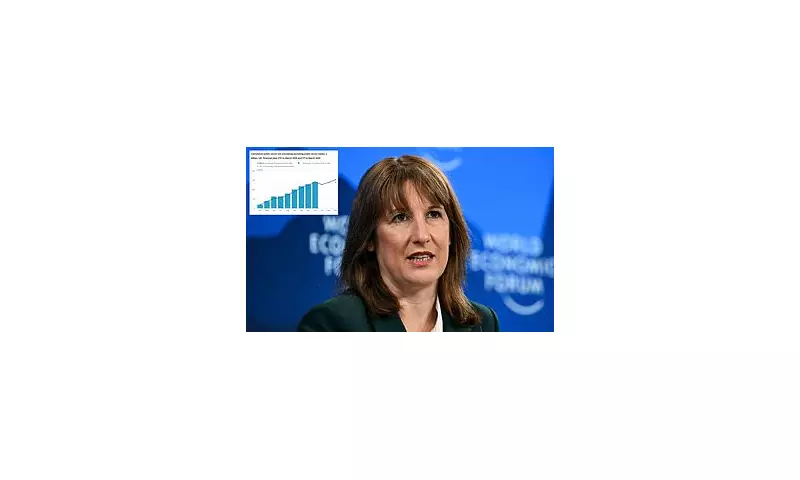
Chancellor Rachel Reeves' strategic decisions regarding increased taxation and public expenditure have been starkly illuminated by the latest official public finance statistics released today. The figures for December provide a comprehensive snapshot of the Treasury's fiscal position, revealing both significant revenue gains and substantial spending commitments.
December's Financial Performance: A Mixed Picture
Central government receipts experienced a substantial surge, climbing by 8.9 per cent to reach £94 billion during December. This impressive growth was primarily driven by a notable £4.6 billion increase in tax income. Additionally, there was a particularly strong national insurance collection following the Chancellor's decision to raise levies on employers earlier in the year.
Spending Pressures Offset Revenue Gains
However, this substantial revenue boost was partially counterbalanced by a 3.5 per cent rise in government expenditure. The spending increase included an additional £2.1 billion allocated to welfare payments, reflecting sharp rises in both benefits and the state pension. Furthermore, central government outlay on goods and services grew by £2.3 billion, with the Office for National Statistics attributing this increase to pay rises for public sector workers and ongoing inflationary pressures.

Borrowing Figures and Fiscal Context
Despite the increased revenue, the Treasury still needed to borrow £11.6 billion last month to balance the books. While this represents a significant financial requirement, it was actually more than a third lower than borrowing in the same period during 2024 and slightly better than most financial analysts had anticipated.
Tom Davies of the Office for National Statistics commented on the figures, stating: 'Borrowing in December was substantially down on the same month in 2024, as a result of receipts being up strongly on last year whereas spending is only modestly higher.' He added: 'However, across the first nine months of the financial year as a whole, borrowing was fractionally lower than in the same period in 2024.'
Government Perspective on Fiscal Management
Chief Secretary to the Treasury James Murray offered the government's interpretation of the financial situation: 'Last year we doubled our headroom and we are forecast to cut borrowing more than any other G7 country with borrowing set to be the lowest this year since before the pandemic.'
Murray continued with a pointed observation about debt costs: 'It cannot be right that £1 in every £10 we spend goes on debt interest - which could be better spent on our nurses, police officers and teachers - that's why we're tackling it.' He concluded by outlining the government's broader fiscal strategy: 'We are stabilising the economy, reducing borrowing, rooting out waste in the public sector and making sure that public services deliver value for taxpayers' money.'
Longer-Term Fiscal Trends and Implications
It is noteworthy that much of Chancellor Reeves' most recent Budget tax measures have yet to take full effect, suggesting that future revenue figures may show further increases. The December borrowing figure of £11.6 billion represents the tenth highest for that month since records began in 1993, when not adjusted for inflation.
Looking at the broader fiscal picture, borrowing over the financial year from April has totalled £140.4 billion, which is approximately £300 million lower than during the same period in 2024 according to ONS data. This indicates a modest improvement in the government's overall borrowing position despite the substantial December requirement.
The December figures collectively paint a detailed portrait of the Chancellor's fiscal approach, highlighting both the revenue benefits of increased taxation and the spending pressures facing the government across multiple departments and welfare commitments.






