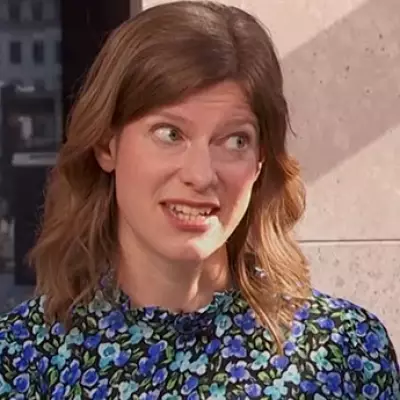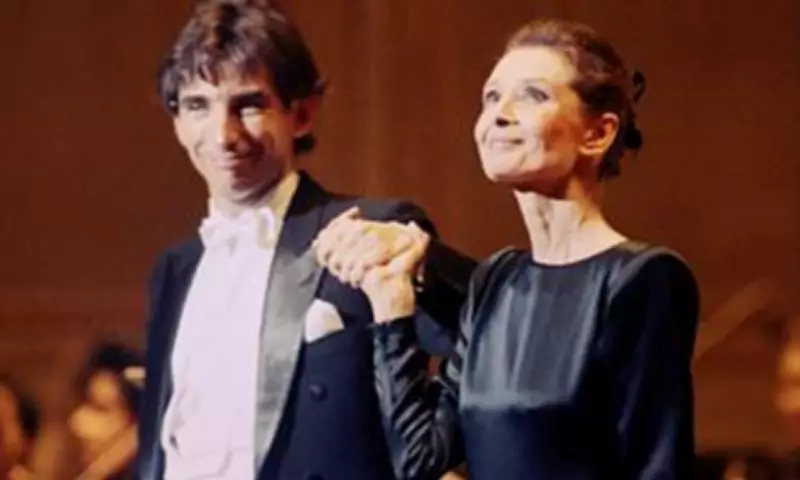
Michael Tilson Thomas, a towering figure in American classical music who led orchestras in London and San Francisco and was also a celebrated composer, passed away on Wednesday at the age of 81. His death was confirmed by spokesperson Connie Shuman, who stated that he died at his home in San Francisco.
Thomas had undergone surgery for a brain tumor in 2021 and subsequently returned to the podium, but announced in February 2025 that the tumor had recurred. He conducted his final concert with the San Francisco Symphony in April 2025.
Over his illustrious career, Thomas received 39 Grammy Award nominations and won 12. In 2019, he was among the recipients of the Kennedy Center Honors, one of the highest accolades for artistic achievement in the United States.

In a 2004 interview with The Associated Press, Thomas reflected on the nature of classical music, saying, 'It's meant to have various intriguing and alluring, questioning things that you hear on first hearing. But by its very nature it's holding a lot of other secrets or a lot of other perspectives much closer to its chest, which only with repeated hearing you start realizing are there.'
Born in Los Angeles in 1944 to a family deeply rooted in the arts, Thomas’s father, Ted, was a producer for the Mercury Theater Company and later worked in film and television. His mother, Roberta, headed research for Columbia Pictures. His grandparents, Bessie and Boris Thomashefsky, were pioneers of American Yiddish theater.
Thomas began playing piano at a young age and attended the University of Southern California, earning a degree in 1967. During his studies, he worked with renowned composers and conductors including Pierre Boulez, Aaron Copland, Igor Stravinsky, and Karlheinz Stockhausen.
Conductor Leonard Bernstein once said of him, 'I don't fling the word genius around lightly, but I fling it around about Michael. He reminds me of me at that age, except that he knows more than I did. Not only music, but things like the functions of the brain, cerebrology, physics, biochemistry.'
Thomas served as co-music director and then music director of California’s Ojai Festival in the late 1960s and early 1970s. He was an assistant at Germany’s Bayreuth Festival in 1966, won the Koussevitzky Prize at the Tanglewood Music Center in 1968, and became an assistant conductor for the Boston Symphony Orchestra in 1969.
His New York debut occurred on October 22, 1969, at Lincoln Center’s Philharmonic Hall, where he substituted mid-concert for an ailing William Steinberg. Critic Harold C. Schonberg wrote in The New York Times, 'A tall, thin young man, he came on stage with an air of immense confidence and authority, and showed that his confidence was not misplaced.'
Thomas was principal guest conductor of the Boston Symphony Orchestra from 1972 to 1974, music director of the Buffalo Philharmonic from 1971 to 1979, and principal guest conductor of the Los Angeles Philharmonic from 1981 to 1985. He co-founded Miami’s New World Symphony in 1987 and served as its artistic director until 2021. He was principal conductor of the London Symphony Orchestra from 1988 to 1995 and music director of the San Francisco Symphony from 1995 to 2020.
His compositions include Grace (1988), Four Preludes on Playthings of the Wind (2015–16), and Meditations on Rilke (2019).
Thomas is survived by his husband, Joshua Robison, who died on February 22 after a fall the previous August. The couple met while playing in the orchestra of North Hollywood Junior High School, became partners in 1976, and married in 2014.
In announcing his final concert in San Francisco on April 26, 2025, Thomas acknowledged his mortality, stating, 'At that point we all get to say the old show business expression, "It's a wrap." A coda is a musical element at the end of a composition that brings the whole piece to a conclusion. A coda can vary greatly in length. My life's coda is generous and rich.'