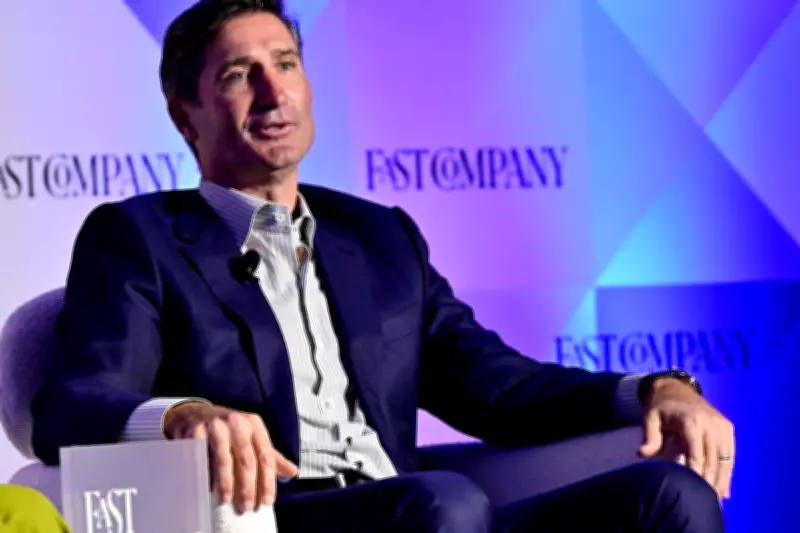
Is $9 for a Starbucks coffee a "premium experience"? The company's CEO has defended it as such, and the backlash is brewing. Social media lit up this week after Starbucks CEO Brian Niccol appeared on the Wall Street Journal's What News podcast to discuss how the world's largest coffee chain is navigating the current economic climate.
Niccol explained that Starbucks is performing "really well" with Gen-Z and millennial consumers, and that the K-shaped economy—referring to the growing disparity between high-income and low-income Americans—is not impacting Starbucks' business, where the "average spend" is just under $10.
"What we're seeing is people want to have a special experience. And regardless of what your income level is, in some cases, a $9 experience does feel like you're splurging. And then what that means is we have to make it worthwhile," Niccol said. "And then in other cases, people believe, 'Well, this is a really affordable premium experience,' because they're saying, 'Well, it's less than $10 and I get a really premium experience,'" he continued.

His remarks were widely shared on social media, where they met with immediate backlash. One Instagram commenter, who received more than 2,000 likes, called him "disconnected," while another X user remarked, "I gotta stop going to Starbucks."
One X user, whose post was reshared more than 5,000 times, wrote: "How out of touch could a person possibly be…"
Still, some social media users appeared to defend the CEO. "Unpopular opinion: Starbucks can charge whatever they want for their products," one X user said.
The Independent has contacted Starbucks for comment.
CEO's Strategy and Economic Context
Niccol was named CEO of Starbucks in September 2024 and has since focused on improving the customer experience, including by installing better seating and creating a smoother pick-up process, according to The WSJ.
The chain also reported higher-than-expected quarterly sales earlier this week.
Fast food prices are soaring in the U.S., which has reportedly led to lower-income households being priced out. Grocery prices are on the rise too, prompting growing concern among Americans. About 66 percent of U.S. adults are "very concerned" about the price of food and consumer goods, according to a Pew Research Center survey published in January. An April survey by Marquette University Law School also found 82 percent of Americans said grocery prices have gone up in the last six months, up from 70 percent in January.