

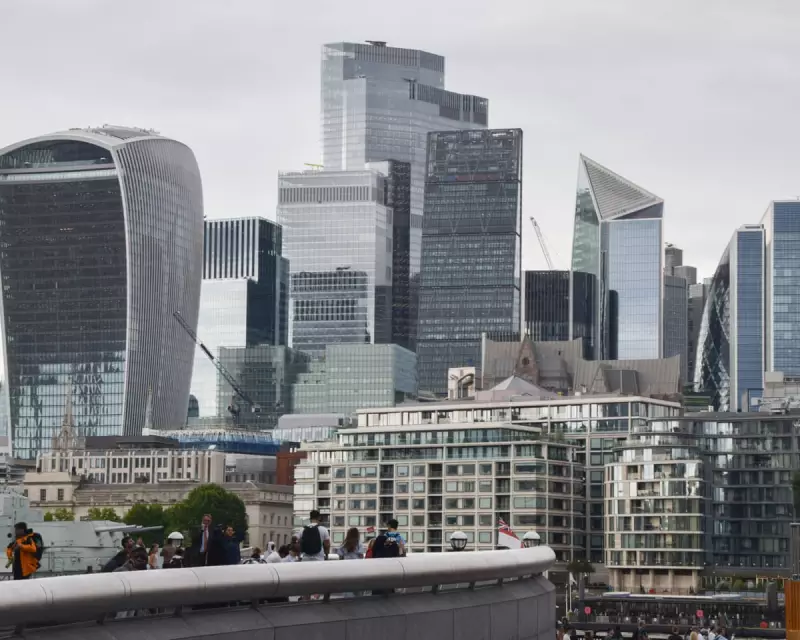
Chancellor Rachel Reeves arrives at the World Economic Forum in Davos this week to mingle with a global elite thick with back-slapping bankers. But a growing body of academic evidence suggests she would be wise to offer them a cool reception, not a warm embrace.
The Chancellor's Courting of the City
Thus far, Labour's approach has been one of active courtship. In her budget on 26 November, Reeves notably spared the banking sector from a proposed windfall tax. This followed summer reports that the Treasury had signalled its displeasure to thinktanks, like the Labour-leaning Institute for Public Policy Research (IPPR), after they recommended an £8bn levy on bank profits linked to quantitative easing.
The regulatory landscape has also shifted in the City's favour. For the first time since the financial crisis, the Bank of England has loosened capital requirements – the buffers banks must hold against losses. The Bank's Financial Policy Committee stated this would give banks "greater certainty and confidence" to lend to UK households and businesses, a move that followed Reeves's directive for all regulators to prioritise growth.

The logic was clear: with the economy stagnating, now is not the time to plunder what Reeves has called the "crown jewel". The message was received. JP Morgan CEO Jamie Dimon cited the government's pro-growth stance as a key reason for committing to a new £3bn headquarters in Canary Wharf.
The 'Too Much Finance' Problem
However, a significant catch exists, highlighted at a recent London School of Economics conference aptly titled 'Too Much Finance'. Experts presented a string of academic papers spanning over a decade which show that once a country's financial industry grows beyond a certain size, it ceases to boost the economy and instead becomes a drag.
"The research really consistently shows that the UK is far past the point where we would maximise the benefits of finance," said Alex Cobham, chief executive of the Tax Justice Network and a convener of the event. "And actually, it’s a drag on the economy, and has been for a long time."
This drag operates in two key ways. Firstly, a disproportionately large finance sector makes the economy more vulnerable to finance-driven crises, as the 2008 crash brutally demonstrated. Secondly, it skews the allocation of the nation's brightest talent and capital.
A landmark 2012 paper by Stephen Cecchetti and Enisse Kharroubi of the Bank for International Settlements argued that a bloated finance sector "literally bids rocket scientists away from the satellite industry", diverting innovation from productive sectors. This echoes the famous 2009 remark by the then Financial Services Authority chair, Adair Turner, that much City activity was "socially useless".
A Call for Restraint, Not Deregulation
The implication for policymakers is stark: rather than cosseting bank bosses, they should use tax and regulation to keep the sector in check. This view was underscored last week when former Bank of England chief economist John Vickers and David Aikman of the National Institute of Economic and Social Research criticised the decision to cut capital reserves.
They argued that with public finances tight and global risks looming, resilience should be strengthened, not weakened. They contended the move was more likely to fund higher shareholder payouts than increased lending to the real economy.
For now, with an AI boom in full swing, banks and private credit lenders are riding high. But as Cobham warns, the lesson of 2008 is that "the risks that the financial sector creates will end up being socialised when they crystallise – so we’ll all pay for them". As the Chancellor navigates the Davos slopes, the cold, hard data suggests the UK's long-term growth may depend on cooling the ardour for its crown jewel.






