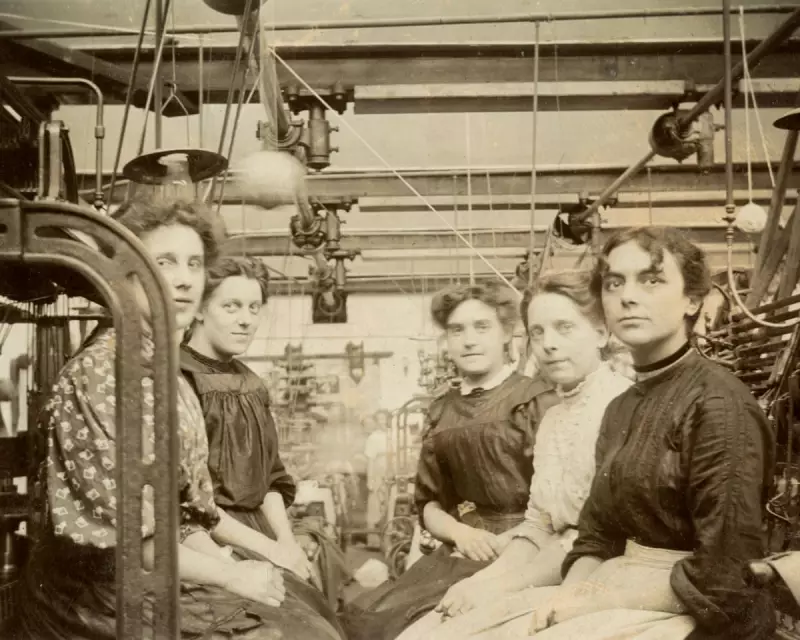
A fresh academic perspective is challenging long-held beliefs about the foundations of Britain's industrial might, arguing that the story taught in museums and books is incomplete. The review of Sven Beckert's book, Capitalism: A Global History, has ignited a debate over the true drivers behind the 19th-century supremacy of Lancashire's textile mills.
Beyond Machinery and Markets
It remains a common narrative within the United Kingdom to credit the global dominance of Lancashire textiles purely to technological innovation like new machinery and the forces of market competition. However, this view is now being robustly contested. Scholars like Beckert, and readers such as Mary Searle-Chatterjee from Halton, Lancashire, insist this is a Eurocentric interpretation that airbrushes a crucial, darker chapter from history.
The critical missing element, they argue, is the deliberate use of British military and naval power. This force was not incidental but instrumental in dismantling the hitherto dominant Bengali textile industry, which had been a world leader for centuries. By undermining this major competitor, Britain cleared a path for its own manufactured goods to flood global markets.

Re-examining the Foundations of Global Capitalism
Beckert's work is hailed as a necessary antidote to culturalist understandings of industrialisation's emergence. It frames the rise of industrial capitalism not as a purely organic, European phenomenon but as a violent, state-backed process of global economic restructuring. The photograph of mill workers in Rochdale from 1911 thus represents not just the endpoint of innovation, but the beneficiaries of a system secured by imperial power.
This call for a clearer view of global capitalism's history suggests that the economic landscape we recognise today was shaped as much by coercion and destruction as by competition and invention. It prompts a reassessment of how national success stories are curated and presented in cultural institutions across the UK.
Other Letters: From Calendars to Cyrillic
Alongside this historical debate, other Guardian readers contributed brief letters on diverse topics. Roger Dennis from Colchester noted the calendar quirk that 5 September 1752 did not exist in Great Britain, as the country switched from the Julian to the Gregorian calendar, jumping from 2 September directly to the 14th.
In a linguistic note, Caroline Ewans of London expressed her irritation with the faux Cyrillic in the Toys "Я" Us logo, insisting on pronouncing the 'R' correctly as 'Ya'. Meanwhile, Barbara Bain from London urged the Guardian's style editors to reintroduce the degree symbol for temperature clarity, preferring 18°C over 18C.
Finally, David Ranner recalled a whimsically amended Lincolnshire fingerpost sign that once read "To Old Bolingbroke and Mavis Enderby", with the added phrase "A son" creating a humorous couplet for passing motorists.