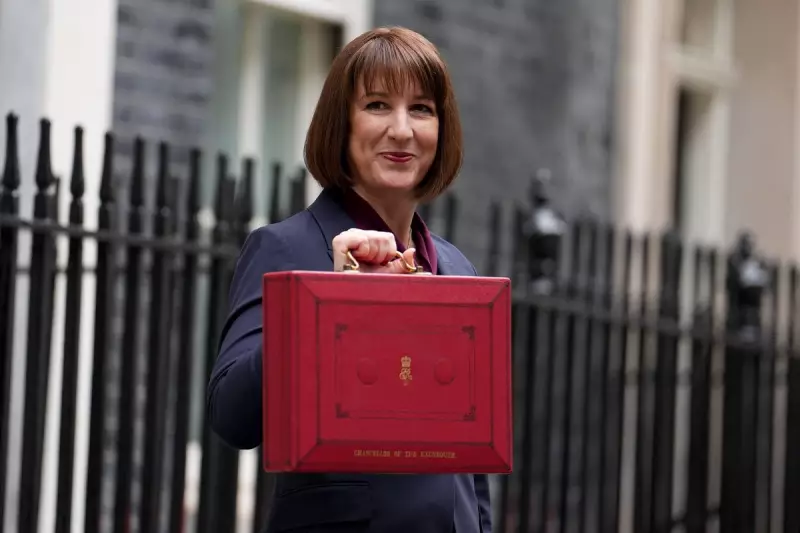
As Chancellor Rachel Reeves prepares to deliver her budget announcement on 26 November, Britain finds itself grappling with three substantial financial burdens that continue to shape economic discussions in Westminster. Yet these crucial factors often remain unmentioned in current debates about welfare cuts and pension reforms.
The Unspoken Truths Behind Britain's Financial Challenges
Current budget discussions appear to occur in a peculiar vacuum where politicians and voters alike avoid addressing the three massive expenditures that fundamentally shaped the UK's current financial position. The country faces what can only be described as three financial ghosts: pandemic-related debt, energy support schemes, and the economic consequences of Brexit.
According to spending watchdog estimates, COVID support measures totalled £169 billion between 2020 and 2022, representing approximately 7% of UK GDP. The furlough scheme alone accounted for £100 billion of this expenditure. This massive intervention saw public debt surge from 80.4% of GDP in 2018 to 107.4% in 2021.

While the government initially paid minimal interest on this debt, current higher interest rates have transformed it into a substantial burden for taxpayers. Debt interest spending now exceeds the education budget and is more than double what it was in 2018.
The Lingering Impact of Pandemic Decisions
The COVID inquiry has examined government failures during the pandemic, yet crucial questions remain unanswered. There has been little public discussion about how much risk the nation is willing to accept or what price we're prepared to pay to mitigate future threats.
Beyond the financial costs, the country continues to assess the impact of lockdowns on schoolchildren's education. Meanwhile, the ongoing choice to cease vaccination programmes represents another uncharted economic territory. The fundamental challenge of preparing for future global pandemics remains largely unaddressed in current budget considerations.
Energy Support and Its Long-Term Consequences
When Russia invaded Ukraine and triggered energy price spikes, the UK government opted to subsidise consumption rather than reduce demand. This decision resulted in support packages costing £78.2 billion, representing over 4% of GDP compared to less than 3% on average across Europe.
While preventing fuel poverty during a cost-of-living crisis presented strong justification for this approach, the policy essentially provided substantial public handouts to maintain existing consumption patterns. This occurred amid an ongoing energy transition aimed at decarbonisation and reducing dependence on fossil fuels from authoritarian regimes.
The government's intervention, though necessary in the short term, may have undermined the collective commitment required for meaningful energy transition, demonstrating that when costs rise, the state will intervene rather than demanding lifestyle changes.
The Brexit Deficit: An Uncomfortable Reality
Britain's relationship with Brexit grows increasingly complex as economic realities become clearer. Only 11% of British adults consider Brexit more successful than unsuccessful, while 56% would vote to rejoin the EU. Yet Nigel Farage, widely associated with the Brexit campaign, enjoys soaring popularity and is touted as a potential future prime minister.
Comprehensive studies comparing the UK's performance with other nations, including detailed data from Bank of England business surveys, estimate that Brexit has reduced UK GDP by 6% to 8%. These figures represent the most pessimistic projections made during the referendum campaign.
To contextualise this economic damage, with UK tax receipts at 40% of GDP, a 7% higher GDP would provide an additional £77 billion annually to the Treasury. This sum represents more than half of the 2024-25 budget deficit of £137 billion.
The UK has neither secured a massive trade deal with the US nor found alternative partnerships to replace EU trade. The nation continues to pay a substantial price for choosing one of the hardest possible versions of Brexit without clearly defining what economic benefits this approach might eventually deliver.

Confronting Britain's Financial Ghosts
These three financial spectres will undoubtedly haunt Chancellor Reeves's budget announcement. The UK cannot adequately prepare for future pandemics without learning from its COVID experience. The energy transition cannot succeed without honest conversations about cost distribution. The nation cannot develop a coherent economic strategy without determining how to address Brexit's consequences.
Until Britain confronts these fundamental issues, budget discussions will remain focused on minor austerity measures rather than substantive solutions to the country's most pressing financial challenges.