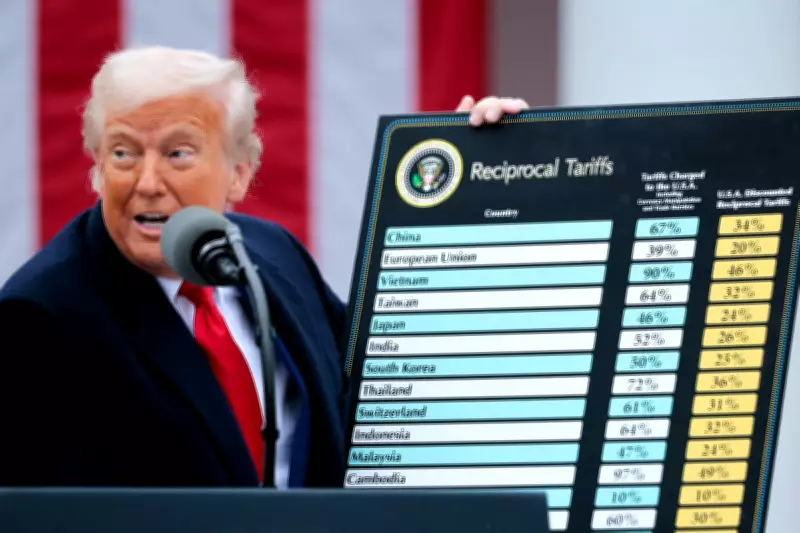
Over a year has passed since President Donald Trump’s "Liberation Day," when he introduced a sweeping tariff regime that imposed steep duties on most foreign imports, fundamentally reshaping U.S. trade policy. Now, according to Mark Zandi, chief economist at Moody’s Analytics, the economic data paints a deeply troubling picture.
"We have a year’s worth of economic data since Liberation Day," Zandi wrote on Monday. "The data are definitive; the tariffs have done significant damage to the economy."
Employment and Inflation Woes
Zandi highlighted key figures on inflation and employment growth, both exacerbated by the ongoing Iran war. U.S. job growth has nearly ground to a halt, with only the non-traded healthcare industry adding meaningfully to payrolls. Last year, 693,000 domestic healthcare jobs were added; without them, net hiring would have been negative. Overall, employers added an average of just 9,700 jobs per month last year, the weakest hiring since 2002, excluding recession years.

Inflation has accelerated, with the consumer expenditure deflator rising at a 3% year-over-year pace, up from 2.5% before the tariffs and well above the Federal Reserve’s 2% target. The U.S.-Iran war has worsened the outlook, driving oil prices higher.
"The higher energy and other commodity prices caused by the war threaten to do even more economic damage than the tariffs, further undermining growth and pushing inflation higher," Zandi noted. "The U.S. economy is resilient, but just how resilient is set to be tested."
Tariff Revenue and Consumer Costs
Trump’s tariffs, first implemented last April, imposed a blanket 10% levy on most countries, plus higher country-specific duties. They generated $195 billion in revenue in fiscal year 2025 alone, a figure Treasury Secretary Scott Bessent has cited as a positive step toward reducing the federal deficit. However, U.S. national debt now exceeds GDP, reaching levels not seen since World War II.
Studies show the cost of tariffs is borne by Americans. A January report from the Kiel Institute for the World Economy found U.S. consumers have paid for "nearly all" of the tariffs. A February report from the Tax Foundation estimated the levies will cost the average household $1,300 more this year.
Public Opinion and Legal Challenges
Multiple polls indicate the tariffs are deeply unpopular. A March survey commissioned by The Guardian found 7 in 10 Americans believe the tariffs have cost them more. Facing widespread pushback, Trump has repeatedly paused, revised, or walked back numerous duties, including on coffee, beef, and other foodstuffs. Critics have branded these retreats as "TACO" (Trump Always Chickens Out).
The tariff regime hit a major snag in February when the Supreme Court ruled that Trump exceeded his authority by using the International Emergency Economic Powers Act of 1977 to impose duties. Trump called the ruling "deeply disappointing" and later said he would pursue a global 10% tariff under a law limiting such measures to 150 days, while continuing to advance his trade agenda through other means.