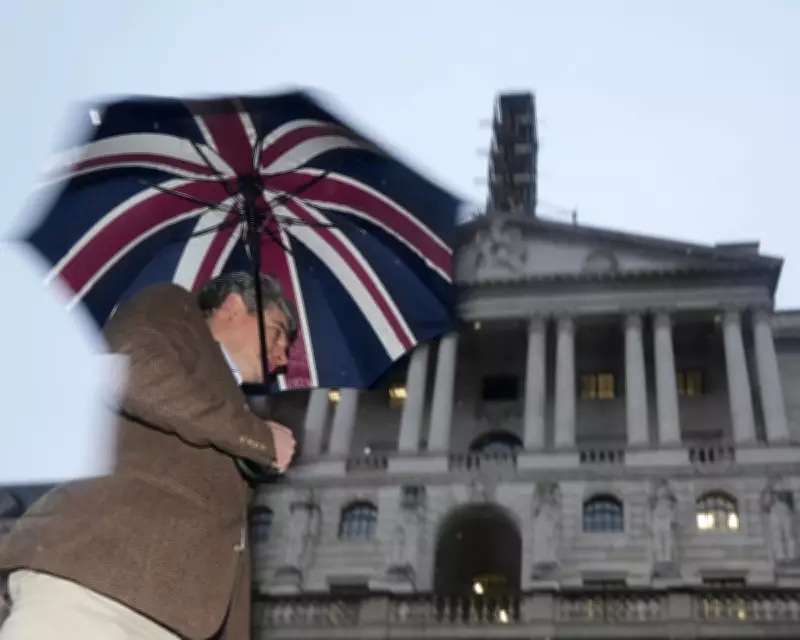
TUC Demands Bank of England Rate Cuts to Revive Stagnant Economy
The Trades Union Congress has issued a stark call for the Bank of England to slash interest rates, aiming to jumpstart economic growth as official data reveals a mere 0.1% expansion in GDP during the final quarter of last year. This plea comes amid concerns that high borrowing costs are crippling consumer demand, with the Bank's base rate holding at 3.75%.
Consumer Demand Lags Behind International Peers
According to TUC analysis, consumer demand in the UK has grown more slowly over the past three years than in 32 out of 37 industrialised economies within the Organisation for Economic Co-operation and Development. Many of these nations have managed to maintain low inflation rates despite stronger consumer activity. Historically, consumer demand has driven about two-thirds of economic growth since the 2008 financial crisis, but over the last two years, it has contributed nothing to growth, highlighting a severe downturn.
Paul Nowak, the TUC's general secretary, emphasised the urgency, stating: "The Bank of England has a crucial role to play here. Last year they were overly cautious and too slow to act. They should go for growth with a sequence of quick-fire cuts this year." He argued that lower interest rates would inject money into households, support high street businesses, and boost confidence among both consumers and companies.

Monetary Policy Committee's Divided Stance
The Bank's monetary policy committee recently voted 5-4 to keep borrowing costs unchanged this month, following six rate cuts since mid-2024. Some committee members remain wary that high wage growth could trigger renewed inflation, but the TUC contends that weak growth poses a more immediate threat. The Bank is widely anticipated to implement a rate cut at its next meeting in March, although markets do not expect a repeat of last year's series of reductions.
Chancellor's Economic Strategy and Inflation Concerns
Chancellor Rachel Reeves has attempted to pave the way for further rate cuts through policies in her November budget, including measures to reduce energy bills from April. The monetary policy committee believes these actions could help lower inflation to the 2% target by spring, down from 3.4% in December. However, some businesses argue that Reeves's decisions to increase employer national insurance contributions and the national minimum wage have inadvertently fueled inflation as companies pass on costs through higher prices.
Huw Pill, the Bank's chief economist, expressed concerns on Friday, suggesting that interest rates might already be "a little bit too low" and estimating underlying inflation at around 2.5% when excluding the effects of Reeves's price-cutting policies. Upcoming data on the jobs market and inflation will provide further insights this week.
Labour's Commitment to Growth Amid Political Turmoil
Following a period of Labour party instability, Chancellor Reeves is determined to uphold her growth strategy, which focuses on enhancing infrastructure investment, liberalising planning reforms, and tackling inflation. She plans to deliver a low-key Commons statement on 3 March in response to updated economic forecasts from the Office for Budget Responsibility, a contrast to last year's spring statement that involved hastily reversed welfare cuts.
Later in the spring, Reeves will reiterate her commitment to "securonomics," a policy blending activist industrial approaches with supply-side changes like reducing red tape. Responding to the lacklustre growth figures, she stated: "I'm confident that the decisions that we have made to return stability to the economy, to bring investment to our economy, and the changes we're making around planning and regulation will help deliver stronger growth this year."
Potential Impacts on Economic Policy and Markets
Labour's economic policies are likely to feature prominently in any potential leadership contest, with city analysts assessing the possibility that some candidates might advocate for more relaxed tax and spending measures. Such shifts could have ripple effects on government bond markets, adding another layer of complexity to the ongoing economic debate.