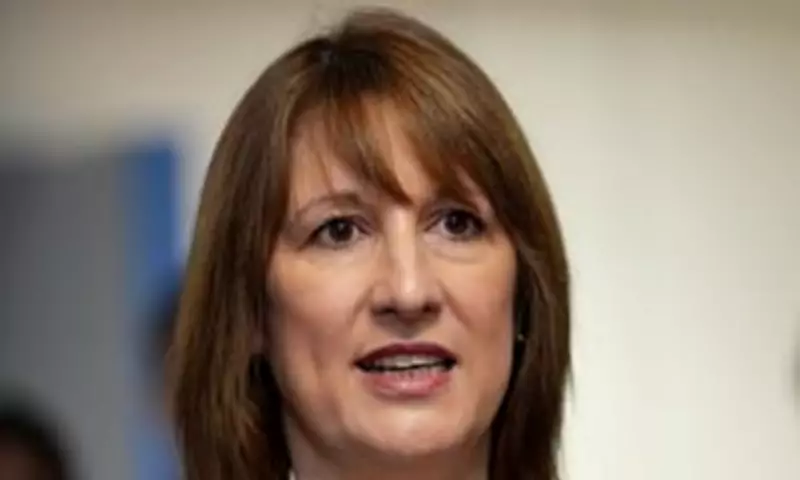
Chancellor Rachel Reeves faced severe political humiliation on Thursday as newly released official statistics confirmed the British economy has slowed to a virtual standstill, with experts warning the nation is now confronting its most dismal decade for growth in a full century.
Stagnant Growth Figures Revealed
The Office for National Statistics reported that gross domestic product increased by a mere 0.1 per cent during the final quarter of last year. For the entirety of 2025, the annual growth figure was recorded at just 1.3 per cent, a performance that fell short of the International Monetary Fund's earlier 1.4 per cent estimate for Labour's first complete year back in government.
A Far Cry from Promised Recovery
Leading economists stated the data demonstrates Britain is firmly entrenched in the economic slow lane, representing a stark contrast to Chancellor Reeves's previous boasts that the country was on the verge of turning a corner. The quarterly trajectory reveals a sharp deceleration over the course of the year: growth began at 0.7 per cent in the first quarter, stuttered to 0.2 per cent in the second, and then limped to just 0.1 per cent in each of the final two quarters.

Policies Blamed for Crushing Business
Analysts and critics are placing blame for the economic stagnation squarely on the Government's policy suite. This includes a series of tax rises, a steep increase in the national minimum wage, a botched reform of business rates, and new workers' rights regulations, which are collectively accused of placing a heavy burden on the private sector.
Former Bank of England monetary policy committee member Andrew Sentance was particularly scathing, asserting that the private sector is being 'clobbered' by current measures. He described the latest growth statistics as 'pretty compelling evidence that UK Government policies are not generating economic growth'.
The Spectre of a Historic Low-Growth Decade
Mr Sentance delivered a grave historical assessment, noting that average annual growth throughout the 2020s is on track to be the weakest witnessed since the 1920s. This trajectory would officially render the current period 'the most dismal decade for growth in 100 years'.
Political Fallout and Contradictory Claims
The dismal figures have ignited a fierce political row. Prime Minister Keir Starmer attempted to frame the growth data positively, suggesting it meant 'more money back in your pocket' for citizens. However, Andrew Sentance dismissed this as economically illiterate, remarking, 'With such statements coming out of No 10, it is not surprising Starmer is in trouble'.
In her response to the statistics, Chancellor Rachel Reeves struck a defensive tone, admitting, 'We can't turn things around overnight', but insisted her government had 'created the conditions now for the economy to grow and it is doing just that'. She maintained that Labour's policies 'will help deliver stronger growth this year'.
This optimism directly contradicts the Bank of England's own forecast, which anticipates growth will slow further to just 0.9 per cent in 2026.
Tory Opposition Seizes on 'Humiliation'
Shadow Chancellor Sir Mel Stride launched a forceful attack, highlighting the Chancellor's declared mission to prioritise growth. 'Having promised growth and declared it her number one mission, growth has flatlined,' he stated. 'GDP per head has also fallen for the second quarter in a row, and people are poorer because of Labour's choices. It's humiliating for the Chancellor.'
The combination of anaemic growth data, expert condemnation, and political pressure paints a challenging picture for the Treasury, as Britain's economic engine shows alarming signs of seizing up.