Colorado Springs Residents Take Legal Action Against Outdoor Concert Venue Over Noise Pollution
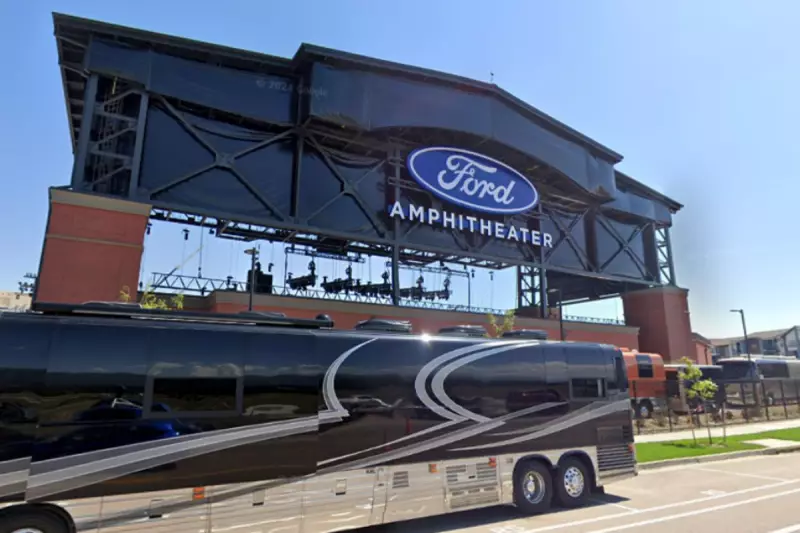
Eight residents of Colorado Springs have initiated legal proceedings against the Ford Amphitheater, alleging that the outdoor concert venue generates excessive noise that significantly impairs their quality of life. The lawsuit, filed in El Paso County District Court, contends that sound levels during performances breach Colorado's established noise regulations, creating an ongoing disturbance for nearby homeowners.
Legal Complaint Alleges Violation of State Noise Limits
The plaintiffs, who reside in the Gleneagle, Northgate Highlands, and Northgate Estates neighbourhoods, assert that concert noise measured between 60 and 77 decibels exceeds the Colorado Noise Abatement Act limits of 45 to 50 decibels for residential zones. Their legal complaint emphasises that no individual should endure harmful pollutants that invade their home, destroy sleep, harm health, and deprive them of peaceful enjoyment of their private property.
These residents purchased their homes between 2002 and 2019, prior to the amphitheater's opening in 2024. The venue's stage faces east, with seating oriented west toward Interstate 25, the Air Force Academy, and the mountains. Notably, the affected neighbourhoods lie north and east of the venue at a higher elevation than the stage, potentially amplifying sound transmission to their properties.

Residents Document Noise Levels and Health Impacts
Danielle Frye, a Northgate Highlands resident living approximately one mile from the amphitheater, recorded noise levels of 71.7 decibels during a September 2025 concert using a hand-held sound meter. A city-commissioned report further confirmed that three concerts in October 2024 consistently surpassed state residential noise limits, with measurements up to 60 decibels and concerts clearly audible in nearby communities.
"I have had some events where I haven't heard anything inside or outside my house, but I've also had ones where I can hear it inside with the doors and windows closed," Frye remarked. She clarified her support for the venue as a community asset, advocating for volume reduction rather than closure: "Turn it down, not tear it down."
Severe Impact on Vulnerable Family Member
Marianna Bailey, residing about two miles from the venue, describes how the noise and vibrations severely affect her 23-year-old son, who has Level 3 autism. The concert sound disrupts his sleep, triggers manic episodes, and necessitates the use of medication, noise-cancelling headphones, and a sensory room to help him cope during performances.
"He won't even sit in his swing that would calm him down. He sits in front of the swing, and he doesn't realise what we can do," Bailey explained, highlighting the profound personal toll of the noise pollution.
Venue Response and Mitigation Efforts
J.W. Roth, CEO of VENU, which owns the Ford Amphitheater, stated he only saw the lawsuit moments before his interview but was not initially concerned about the complaint. "I don't mean to say I'm dismissive of it. It's not concerning to me, to be honest," Roth commented.
He detailed that the venue has implemented several sound mitigation measures following complaints after its 2024 opening, including constructing a sound wall on the east side that evolved into an entertainment complex, and spending millions on additional barriers on the north and south ends.
Broader Context of Noise Complaints in Colorado Springs
In 2025, Colorado Springs received 1,700 noise complaints, with 61 residents responsible for nearly half of the 905 complaints that included contact information. The lawsuit seeks to enforce compliance with state noise limits and prevent further disturbances from concerts at the 8,000-capacity outdoor venue, reflecting growing community concerns over noise pollution in residential areas.