

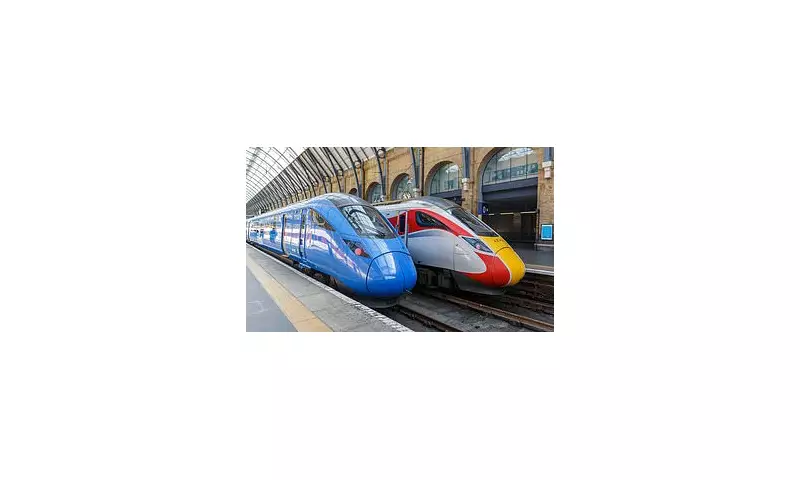
A new Labour government scheme designed to increase social mobility by restricting civil service internships to students from lower socio-economic backgrounds has sparked controversy after it emerged it will include the children of train drivers earning up to £80,000 a year.
The Class Conundrum: Salaries vs. Official Classifications
Ministers have admitted that the initiative, which opens for applications in October with the first placements in summer 2026, will cover the offspring of well-paid locomotive operators. This is because driving a train is officially classified as a 'lower supervisory and technical occupation' by the Office for National Statistics (ONS), a status that remains unchanged irrespective of a driver's salary.
Under a related system used by the Social Mobility Commission, this categorisation means train drivers are deemed 'skilled working class' for the purpose of government assistance. The ONS confirmed it "does not incorporate income in the methodology" for these class definitions.

Police and Prison Officers' Children Excluded
In a contrasting move, the children of police and prison officers who typically earn less than train drivers will be barred from the scheme. This is because their professions are classified as 'intermediate' or 'middle class'. Rank-and-file police officers sit above the working class in the 'intermediate' category, while senior officers are in the top 'higher professional and managerial' tier.
The policy, announced in August by then Chancellor of the Duchy of Lancaster Pat McFadden, aims to ensure Whitehall "harnesses the broadest range of talent and truly reflects the country." Eligibility is determined by the occupation of an applicant's parents when they were 14.
High Salaries and Political Backlash
The revelation about train drivers' inclusion comes amid significant pay rises in the rail sector. In November, the RMT union and Transport for London agreed a deal that will see Tube drivers' pay in the capital reach almost £80,000 by 2027, with a similar agreement struck by LNER for mainline services.
The information came to light in a low-key government response to a question from Tory peer Lord Jackson of Peterborough. It has since drawn sharp criticism from Shadow Cabinet Office minister Alex Burghart, who labelled the policy "incoherent, unfair and arbitrary."
"Children of working people face active discrimination in public life because of their parents' occupation," Burghart told the Telegraph. The scheme has also faced scrutiny from within the Labour party itself, with peer Baroness Sue Gray, a former No10 chief of staff and civil servant, questioning the "evidence base" for the move.
While calling the intentions "good," Gray suggested the policy could limit exposure to a diverse range of colleagues and that there were other ways to open up the Civil Service.






