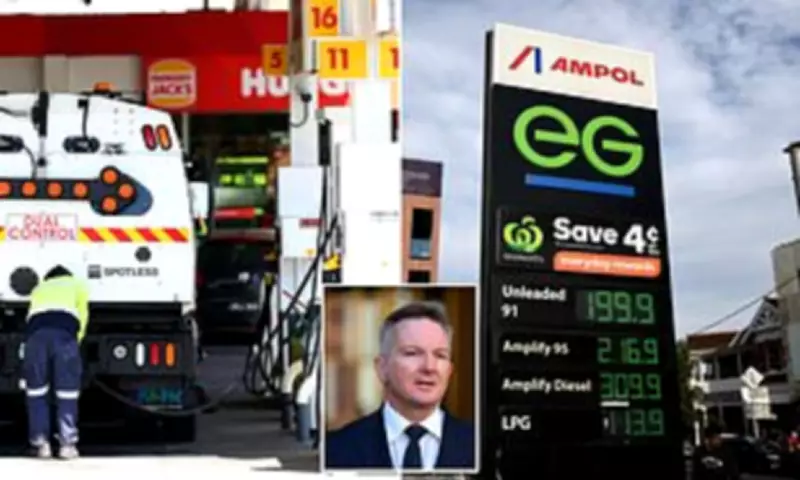
Australia Secures Fuel Supply Until May Amid Global Market Disruption
Australia has successfully secured its fuel supply for an additional month, extending its reserves from mid-April into May. This development comes as consumers and motorists across the nation brace for persistently high prices at petrol stations and supermarkets.
Energy Minister Chris Bowen confirmed the extension, stating that all fuel orders are now contracted and legally locked in. 'Once it's contracted, the fuel belongs to the Australian company that's bought it, so that is legally locked in. That's encouraging,' he told ABC's Radio National on Monday.
International Agreements Bolster Supply Chain
The Australian government has obtained crucial guarantees from key Asian trading partners to ensure the continued flow of fuel imports. Assistant Foreign Affairs and Trade Minister Matt Thistlethwaite revealed that he secured pledges from Japan, South Korea, and Singapore during recent diplomatic engagements.

'I met last week with the Japanese minister and requested that supply continue,' Thistlethwaite explained to Sky News. 'They've given us an assurance that normal supply will continue. I've done a similar thing with the South Koreans, and they've given us assurances and Singapore as well.'
This international cooperation is vital for Australia, which imports approximately 90 percent of its refined fuel, predominantly from Asian refineries. According to the Institute for Energy Economics and Financial Analysis:
- South Korea supplies about a quarter of Australia's fuel imports
- Malaysia, Singapore's neighbour, contributes another 13 percent
Price Relief Measures Fall Short of Global Pressures
While the federal government has implemented temporary measures to alleviate fuel costs—including halving taxes on petrol and diesel—these interventions have not fully offset the impact of global market volatility. The combined savings, worth more than 30 cents per litre, are being undermined by disruptions to shipping routes.
The Strait of Hormuz, a critical passage for fuel shipments, has been effectively blockaded by Iran, creating bottlenecks in supply chains. University of Sydney associate economics professor David Ubilava warned that even if the US-Israeli conflict with Iran concludes soon, market disruptions will persist.
'The market disruption and the war has dragged on long enough that its effects will be felt for months to come,' Professor Ubilava told AAP. 'Not only will the price of fuel go up, but so will transportation costs and, as a result of fuel surcharges, deliveries, groceries and restaurants will become more expensive as those costs are passed onto the consumer.'
Long-Term Economic Implications and Geopolitical Tensions
The Albanese government acknowledges that the impacts of the conflict will continue affecting Australia's economy regardless of how swiftly hostilities end. Professor Ubilava highlighted that the longer-term inflationary pressures could prompt the Reserve Bank to raise interest rates to curb household spending.
Current crude oil prices hover near $US110 ($A159) per barrel, significantly above pre-war levels of approximately $US70 ($A101). Professor Ubilava noted that forecasting remains challenging due to market volatility, but a return to previous price points appears unlikely in the near term.
Geopolitical tensions further complicate the situation, with former US President Donald Trump recently threatening Iran in a social media post, demanding the opening of the Strait of Hormuz. The Australian government continues to monitor these developments while working to stabilise domestic fuel supplies through international diplomacy and strategic planning.