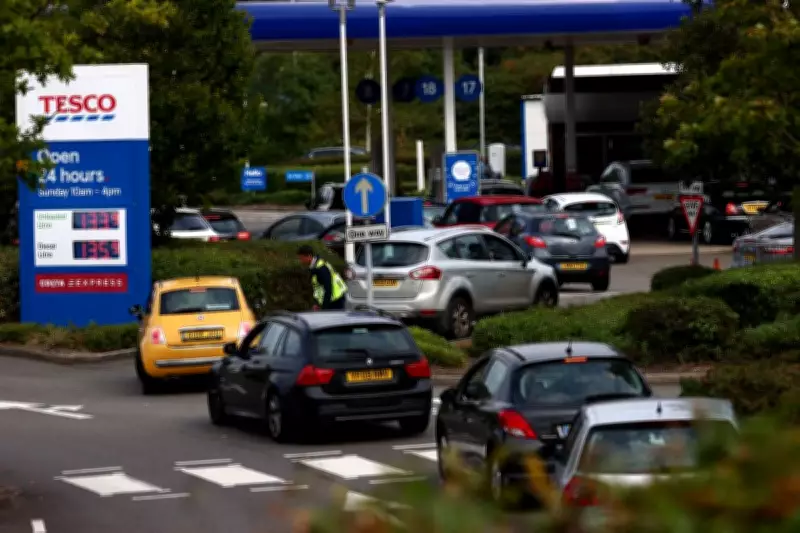
New figures have revealed a sharp escalation in fuel costs across the United Kingdom, with diesel prices surging by an average of 18 pence per litre since the onset of the Middle East conflict. According to data from the RAC, the average price at British forecourts reached 160.3p per litre on Sunday, marking a significant jump from the 142.4p recorded on 28 February. This increase coincides with the start of the US-Israeli campaign against Iran, representing a 13% rise that places diesel at its most expensive level since November 2023.
Petrol Prices Also Climb as Oil Costs Soar
Petrol prices have not been immune to the upward trend, climbing 7% over the same period from 132.8p to 141.5p per litre. This level has not been witnessed since August 2024, adding further strain to household budgets. The escalating conflict has driven global oil prices – a key determinant in wholesale fuel costs – above 100 dollars a barrel for the first time since 2022. Industry analysts attribute this surge to Iran's perceived control over oil tankers navigating the critical Strait of Hormuz, a vital maritime chokepoint for global energy supplies.
RAC Warns of Growing Financial Burden on Drivers
RAC head of policy Simon Williams highlighted the severe impact on motorists, stating: “Drivers with diesel cars are really feeling the heat. Prices have shot up 18p a litre in just two weeks, adding £10 to the cost of a full tank.” He further explained that the average cost of filling a standard 55-litre family car with diesel has now reached £88, compared to £78 for petrol. Williams pointed to structural issues in the UK's refining capacity, noting: “The UK has fewer refineries than ever and those we do have are more geared towards petrol production than diesel, so we’re reliant on imports which has contributed to diesel prices rising faster.”
Government Confronts Industry Over Pricing Practices
In response to mounting public concern, Chancellor of the Exchequer Rachel Reeves convened a meeting with petrol retailers last week, emphasising their “shared obligation” to keep prices down for motorists. The gathering at 11 Downing Street on March 13 included executives from major forecourt operators and firms such as Asda, BP, ExxonMobil, and Shell. Energy Secretary Ed Miliband issued a stern warning to industry representatives, stating that the Government would not tolerate “unfair practices” in the sector.
Retailers Voice Concerns Over Government Rhetoric
The meeting followed tensions with the Petrol Retailers Association (PRA), which had threatened to withdraw from the Downing Street discussions. The PRA claimed that the Government's “inflammatory language” regarding rising fuel prices had led to increased abuse against forecourt workers. Despite these concerns, the Chancellor hosted industry chiefs to address the broader economic impact of the Middle East crisis on household finances, underscoring the urgent need for collaborative solutions to stabilise fuel costs.
As global oil markets remain volatile, experts warn that further price increases could be imminent unless geopolitical tensions ease. The situation underscores the interconnected nature of international conflicts and domestic economic stability, with UK consumers bearing the direct brunt of these global disruptions.