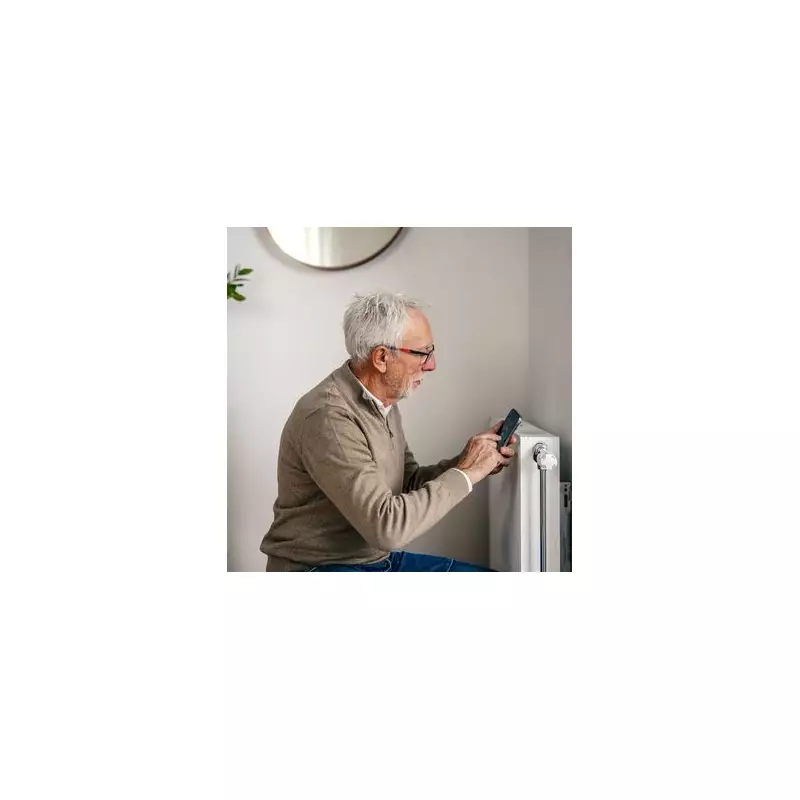
A long-standing debate over the most cost-effective way to heat our homes has finally been settled by a leading energy specialist. The common practice of leaving the heating on a low setting all day, often touted as a thrifty method, has been declared a myth that fails to save energy or money.
The 'Low and Slow' Method: A Costly Myth?
Industrial engineer and energy consumption expert Jorge Morales de Labra delivered his definitive verdict during an interview on the Spanish radio station COPE. He stated clearly that keeping the heating on all day at a low temperature does not save energy. "It's a myth from an energy point of view," Morales de Labra asserted, explaining that any heating system consumes energy whenever it is running.
This finding adds a new perspective to a divided expert opinion. While some specialists, like those at Heat Geek, argue the 'low and slow' approach has merits for homes with modern boilers or for people who are home all day, other authorities disagree. Martin Lewis's MoneySavingExpert website firmly states that leaving heating on constantly leads to greater heat loss and higher costs, a view now strongly supported by Morales de Labra's analysis.

The Smart Approach to Thermostats and Temperature
The energy specialist provided clear, actionable advice for households looking to reduce their consumption. He emphasised that turning the heating off, even for short trips like a five-minute errand, is financially worthwhile as it prevents unnecessary energy use.
For those who find constant adjustments impractical, he recommends setting the main thermostat to a sensible range. Keeping your thermostat between 19 and 21 degrees Celsius is ideal for occupied rooms. Crucially, he warns that each single degree increase in temperature can raise your energy bill by a significant 6% to 8%.
Embracing Technology and Simple Habits
Morales de Labra is a strong advocate for smart thermostats, highlighting their utility in programming and managing daily consumption. "I have six at home because each room has a different temperature. I control it with my mobile phone," he shared, illustrating their potential for granular control.
He described a practical scenario: if his daughter is returning home on a Sunday, he can remotely activate the heating two hours before her arrival, ensuring comfort without wasting energy on an empty house. While not everyone needs multiple devices, he stresses that investing in one smart thermostat is a very good idea for efficient home management.
Beyond technology, he offered broader winter warmth advice:
- Keep windows and doors firmly closed to retain heat.
- Avoid covering radiators with furniture or curtains.
- Insulate drafts and leaks around the home as much as possible.
- Consider running high-energy appliances during off-peak hours where feasible.
The core message from the expert is clear: the path to lower bills isn't about a constant low burn, but about intelligent, responsive control and addressing basic heat loss in the home.