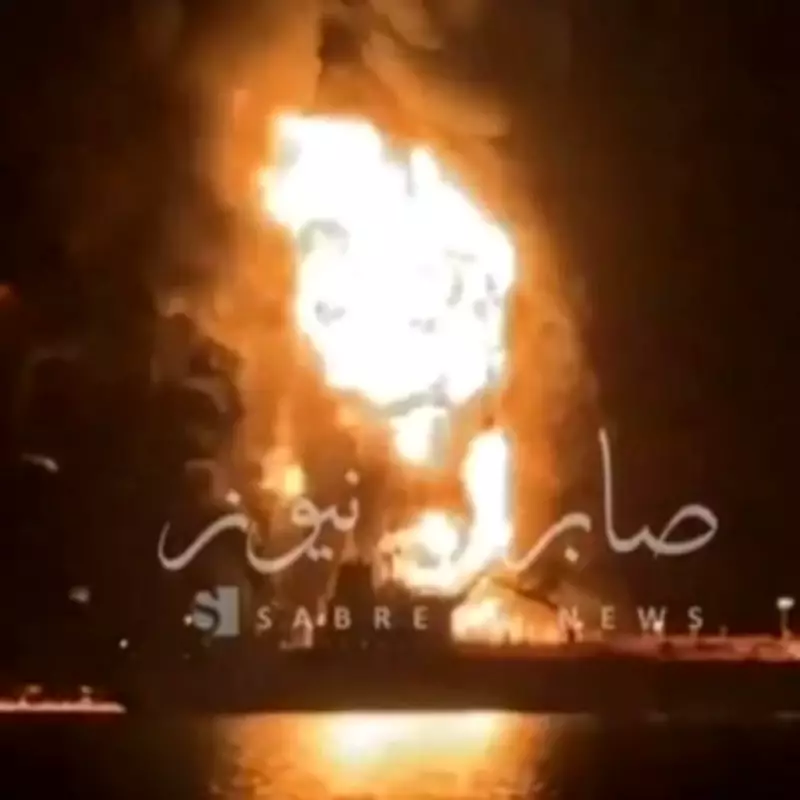
In a dramatic escalation of regional tensions, Iran has claimed responsibility for a series of strikes targeting at least two oil tankers operating in Iraqi waters. Shocking footage and images from the scene depict one of the massive vessels erupting into a deadly ball of fire and smoke, highlighting the severity of the attack.
Details of the Attack
According to Farhan al-Fartousi, Iraq's director general of the General Company for Ports, the incident occurred on Thursday while the ships were within Iraqi territorial waters. He stated, "Two foreign tankers carrying Iraqi fuel oil were subjected to unidentified attacks inside territorial waters, causing them to catch fire." Later, it was revealed that Iranian boats filled with explosives were responsible for the assault.
Casualties and Rescue Efforts
Iraqi officials reported that 38 crew members were successfully rescued from the burning vessels, but tragically, at least one person lost their life in the attack. The rescue operation was launched swiftly, yet the danger posed by the fires and explosions complicated efforts.

Impact on Oil Operations and Prices
In response to the attacks, Iraqi officials confirmed that all oil ports have "completely stopped operations," a move that could significantly disrupt global oil supplies. This development comes as Iran has issued warnings that the world should prepare for oil prices to potentially reach a staggering $200 a barrel. Such a surge would likely have a profound and shocking impact on fuel costs and broader economic stability worldwide.
Regional Tensions and Broader Implications
The strikes are part of a broader pattern of hostilities in the Middle East, with Iran's actions raising concerns about further escalation. The attack not only threatens immediate human safety and environmental damage but also exacerbates existing geopolitical strains, potentially leading to more volatile market conditions and increased uncertainty in global energy sectors.
As investigations continue, the international community is closely monitoring the situation, with fears that continued aggression could drive oil prices even higher, affecting consumers and economies far beyond the region.