Iran War and Oil Price Surge Hit Consumers at Pump and Across Economy
Iran War Oil Price Surge Impacts Consumers Beyond Gas Pump

Iran War and Surging Oil Prices Create Widespread Consumer Impact

As the price of crude oil surged beyond $110 per barrel on Monday, reaching levels not witnessed since 2022, consumers globally are experiencing the direct consequences of the Iran war and its disruption to worldwide energy production. The escalating conflict has inflicted significant damage on energy infrastructure, leading to a sharp increase in costs that extend far beyond the gas pump.

Immediate Pain at the Gas Pump

Gasoline prices are climbing rapidly, with many consumers feeling the most immediate economic strain when refueling their vehicles. However, the effects are not limited to drivers. Nearly all goods, including essential food items, must be transported from production sites to markets. These transportation costs are rising in tandem with higher prices for gasoline, diesel, and jet fuel.

The spike in oil prices is poised to become a major driver of U.S. inflation. As the war persists, experts caution that the price of virtually everything could be affected. Gregory Daco, chief economist at consulting firm EY-Parthenon, emphasized, "The longer this lasts, the more significant the shock would be."

How Rising Oil and Gas Costs Affect Consumers

Here is a detailed breakdown of how the growing cost of oil and gas could impact consumers as the conflict continues:

At the Pump: Gas Prices Continue to Climb

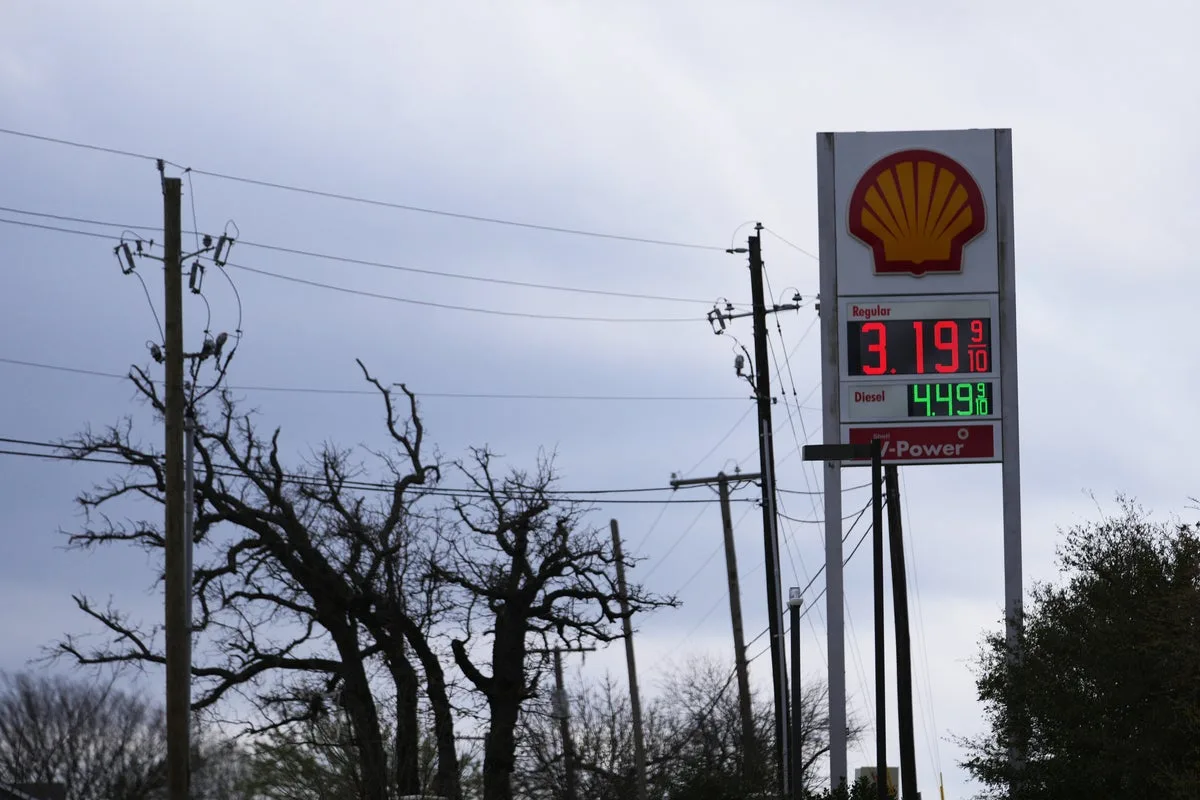
Gasoline, diesel, and jet fuel are derived from crude oil. As crude costs increase, so do the prices of these essential products that power equipment, cars, buses, delivery trucks, and airplanes. Across the United States, drivers paid an average of $3.48 for a gallon of regular gasoline on Monday, compared to $2.98 before the war began. This represents an approximate 17% increase since the U.S. and Israel initiated attacks on Iran.

Prices vary significantly by state. In California, drivers faced prices of $5.20, up 12% from the previous week. California's reliance on imports of gasoline and refined products from Asia has intensified due to refinery shutdowns in recent years. In contrast, Louisiana, with its own oil production and refineries, recorded an average price of $3.04.

The surge in oil prices is expected to further elevate gasoline costs, with more pronounced effects in Asia and Europe, which depend more heavily on Middle Eastern oil and gas than the United States.

Shipping and Goods Costs Escalate with Diesel Prices

The price of diesel, which fuels 18-wheeler trucks, also rose sharply on Monday, reaching $4.65 per gallon in the U.S.—a 23% jump since the war started. Patrick De Haan, a petroleum analyst at GasBuddy, noted on social media, "Can’t underscore what a massive jolt this is to the logistics, trucking, (agriculture) sectors."

The effective closure of the Strait of Hormuz, a critical waterway transporting a fifth of the world’s crude oil and liquefied natural gas, has already created challenges for the shipping industry. Rapidly increasing oil and gas prices will exacerbate these burdens.

According to Patrick Penfield, professor of supply chain practice at Syracuse University, fuel prices constitute 50% to 60% of the total operating cost of shipping goods by sea. Thus, higher fuel prices have a substantial impact on the industry. Penfield explained, "When fuel prices start to go up, everything starts to slow down. So your ships slow down, your trucks slow down. People are less apt to ship things via air. And it really kind of causes a drag on the economy when fuel prices go up."

Fuel surcharges are also expected to rise as shipping companies pass higher costs onto customers, ultimately making goods more expensive for consumers.

Home Energy Bills and Plastic Product Prices Likely to Increase

Heating homes and cooking with natural gas are anticipated to become more costly as the war continues. Europe’s benchmark natural gas price has risen 75% since the conflict began, according to data from the Intercontinental Exchange. This increase could also affect products made from natural gas, such as petrochemical feedstock used in plastic, rubber, and nitrogen fertilizer production.

Grocery Prices May Rise Eventually

The spike in oil prices may not immediately affect U.S. grocery stores, said David Ortega, a professor of food economics and policy at Michigan State University. However, if oil prices remain elevated for a month or more, the situation could change significantly. Higher oil prices impact the agricultural sector in two primary ways:

  • Increasing costs for inputs like fuel for farm equipment and fertilizer derived from natural gas.
  • Boosting demand for soybean oil, palm oil, and other vegetable oils that can substitute petroleum-based fuels.

Ortega noted that on-farm costs represent only a small portion of consumer prices at supermarkets. A larger share comes from processing and transporting food, which requires substantial energy. "Food gets to the grocery store on diesel, whether it’s on a truck or on a boat," he stated.

If oil prices stay high, fresh foods requiring rapid transportation could see price hikes sooner than less perishable packaged goods.

Inflation Concerns Mount as Everything Gets More Expensive

With U.S. oil prices increasing by roughly 42% from pre-war levels—from about $67 to $95 per barrel—this could push U.S. inflation from 2.4% in January to 3% or higher in coming months, according to rough estimates by JPMorgan economists.

Economist Gregory Daco estimated that the rise in gas prices could drive monthly inflation to as high as 1% in March, marking the highest monthly increase in four years. Annual inflation could approach 3% in such a scenario. Daco described this as "a significant shock in and of itself."

Consumer Spending Expected to Decrease

Mark Mathews, chief economist and executive director of research at the National Retail Federation, warned that higher gas prices would likely reduce consumer spending, particularly among lower-income shoppers. U.S. households spend an average of $2,500 annually, or nearly $50 weekly, on fuel. An additional $10 per week could strain budgets significantly.

"How do they offset that?" Mathews questioned. "Going out to a movie theater or going to a theme park or going out to eat—all those areas would be more likely to see cuts."

Hope for Temporary Price Stability

Mathews anticipates that retailers may absorb higher transportation costs temporarily, similar to their response to increased tariffs, before raising prices. Italian Finance Minister Giancarlo Giorgetti cautioned against passing higher energy costs to consumers, referencing lessons from the Russia-Ukraine conflict. "We must act immediately to stop energy prices from spreading to all consumer goods, as happened in 2022," he stated at a G7 meeting in Brussels.

Ed Anderson, a professor of supply chain and operations management at the University of Texas, noted that shippers might not immediately transfer costs to customers. "If the conflict is only in the short run, companies will eat it," he said.

This report includes contributions from Associated Press journalists Nicole Winfield in Rome, Dee-Ann Durbin in Detroit, and Anne D'Innocenzio in New York, with Rugaber reporting from Washington.